
Heating and cooling options for your new Fort Totten garage conversion
Converting your Fort Totten garage into a livable space means choosing the right heating and cooling system. The humid summers and cold winters in Washington DC demand reliable climate control. Standard home HVAC often fails to meet the needs of detached or semi-detached garages. This guide covers the best HVAC options for your garage apartment, DC-specific codes, and how to keep energy costs low while staying comfortable year-round. DC Department of Consumer and Regulatory Affairs.
Why garage apartments need special HVAC attention
Garage conversions in Fort Totten face unique challenges. Many garages are detached from the main house or built with thinner walls and minimal insulation. This makes temperature control harder and energy bills higher. DC’s climate swings from muggy summers to freezing winters, so your system must handle both extremes efficiently. Without proper HVAC, your new space can become uncomfortable or even unsafe. DC Sustainable Energy Utility.
Fort Totten sits near the Metro Red Line and is surrounded by older homes and new developments. Many garages here are brick or cinder block, which can trap heat in summer and lose warmth in winter. These materials also affect how you size and place your HVAC equipment. Choosing the right system means understanding your garage’s construction and the local climate demands. How to Choose the Right Air Conditioning Replacement for Your Foggy Bottom Townhouse.
Top 3 HVAC options for DC garage conversions
Selecting the best HVAC system for your Fort Totten garage depends on your space, budget, and local regulations. Here are the three most popular and effective options.. Read more about How to Right-Size a New HVAC System for Large Multi-Generational Homes in Spring Valley.
Ductless mini-split systems
Ductless mini-splits are the gold standard for garage apartments. They use an outdoor compressor and one or more indoor air handlers. No ductwork is needed, making them perfect for detached garages or spaces where running ducts is impractical.. Read more about Where to Put Your New AC Unit When You Have a Tiny Kingman Park Backyard.
Benefits include zoned temperature control, high efficiency, and quiet operation. Mini-splits handle both heating and cooling, so you stay comfortable in all seasons. Installation is faster and less invasive than traditional systems. The main drawback is the upfront cost, which can be higher than window units or portable heaters. The Best Heating and Cooling Solutions for Adams Morgan Condos.
In Fort Totten, mini-splits are ideal because they avoid the need to extend your home’s ductwork. They also work well with the area’s historic brick and cinder block garages, where adding ducts can be difficult or costly.
Air source heat pumps
Heat pumps are another strong option for garage apartments. They move heat rather than generate it, making them very efficient. Modern heat pumps work well even in DC’s cold winters, thanks to advances in technology.. Read more about Comparing Dual Fuel Heat Pumps and Traditional Furnaces for Michigan Park Homeowners.
Heat pumps can be ducted or ductless. Ductless versions are similar to mini-splits and offer the same benefits. Ducted heat pumps require running ducts to your garage, which may not be possible in older or detached structures.
Heat pumps are a good choice if you want an all-in-one system for both heating and cooling. They also qualify for DCSEU rebates, which can lower your installation cost.. Read more about Why the DCSEU rebate makes 2026 the best time to upgrade in Marshall Heights.
High-velocity HVAC systems
High-velocity systems use small, flexible ducts that fit into tight spaces. They are a good option if you want to connect your garage to your home’s HVAC but can’t install traditional ductwork.. Read more about The Pros and Cons of Solar-Ready HVAC Systems for Modern Fort Totten Developments.
These systems are compact and efficient. They deliver air at high speed, which helps maintain even temperatures. However, they can be more expensive to install and may require electrical upgrades.. Read more about Dealing with construction dust in your HVAC system during a home remodel in Kent.
High-velocity systems work well in Fort Totten’s older homes where space is limited. They also reduce the need for major construction inside your garage.. Read more about Choosing the best air scrubber for homes near busy Trinidad intersections.
| System Type | Installation Cost | Efficiency | Best For |
|---|---|---|---|
| Ductless Mini-Split | $$$-$$$$ | High | Detached garages, quick install |
| Air Source Heat Pump | $$$-$$$$ | Very High | All-in-one heating/cooling |
| High-Velocity | $$$$ | High | Tight spaces, connected to home |
Navigating DC building codes and permits for garage HVAC
Installing HVAC in your Fort Totten garage conversion means following DC’s building codes and permit rules. The Department of Consumer and Regulatory Affairs (DCRA) oversees permits for mechanical work. You must get approval before installing any new heating or cooling system.. Read more about Choosing the Best Heating and Cooling Setup for Your Ledroit Park Basement Rental Unit.
DC’s historic districts, including parts of Fort Totten, have extra rules. The Historic Preservation Review Board (HPRB) may limit where you can place outdoor units. Condensers must often be hidden from street view or placed on the side or rear of the property. Noise ordinances also apply, so choose quiet models to avoid complaints.
Electrical work is another key consideration. Many older DC garages lack the wiring needed for modern HVAC. You may need to upgrade your electrical panel or add new circuits. A licensed electrician must do this work and pull the proper permits.
Always check with DCRA before starting. Skipping permits can lead to fines or having to remove your system. A professional HVAC contractor familiar with DC codes can guide you through the process and ensure your installation meets all requirements.
Cost factors for garage apartment HVAC in the District
Garage HVAC costs in DC vary based on system type, garage size, and needed upgrades. Mini-splits typically cost between $3,000 and $7,000 installed. Heat pumps range from $4,000 to $8,000. High-velocity systems can run $8,000 or more.
Electrical upgrades add to the cost. If your garage needs new wiring or a panel upgrade, expect to pay $1,000 to $3,000 more. Insulation improvements, while not part of HVAC installation, are often needed to make your system efficient and can add $500 to $2,000.
DCSEU offers rebates for energy-efficient systems. You can save $300 to $500 on qualifying heat pumps or mini-splits. These rebates help offset the higher upfront cost of efficient equipment.
Maintenance is another factor. Mini-splits and heat pumps need annual servicing to keep them running well. Budget $100 to $200 per year for tune-ups and filter changes.
Why insulation matters more in a DC garage
Good insulation is critical for garage HVAC efficiency. Many DC garages are built with brick or cinder block, which are poor insulators. Without proper insulation, your HVAC system works harder and costs more to run.
Focus on sealing air leaks around doors, windows, and the garage door. Add insulation to walls and ceilings to improve comfort and reduce energy use. In Fort Totten, where summers are humid and winters can be cold, insulation helps maintain steady indoor temperatures.
Proper insulation also affects the size of HVAC equipment you need. A well-insulated garage may require a smaller, less expensive system. A contractor can perform a heat load calculation to determine the right size for your space.
Upgrading insulation is often the best first step before installing HVAC. It improves comfort, lowers energy bills, and can extend the life of your equipment.
Frequently asked questions about DC ADU heating and cooling
How long do mini-split systems last?
With proper maintenance, mini-splits typically last 15 to 20 years. Regular cleaning and annual service help maximize their lifespan.
Can I install HVAC myself?
No. DC law requires a licensed HVAC contractor to install heating and cooling systems. DIY installation can void warranties and violate building codes.
Will my garage HVAC work if the power goes out?
No. All the systems discussed require electricity. Consider a backup generator if you need heat or cooling during outages.
How do I control the temperature in my garage apartment?
Most mini-splits and heat pumps come with remote controls or smartphone apps. You can set schedules and adjust temperatures from anywhere.
Are there any tax credits for garage HVAC?
Federal tax credits may be available for high-efficiency heat pumps. Check with your contractor or the IRS for current programs.

Diagram showing how a ductless mini-split system connects an outdoor compressor to one or more indoor air handlers in a garage apartment.
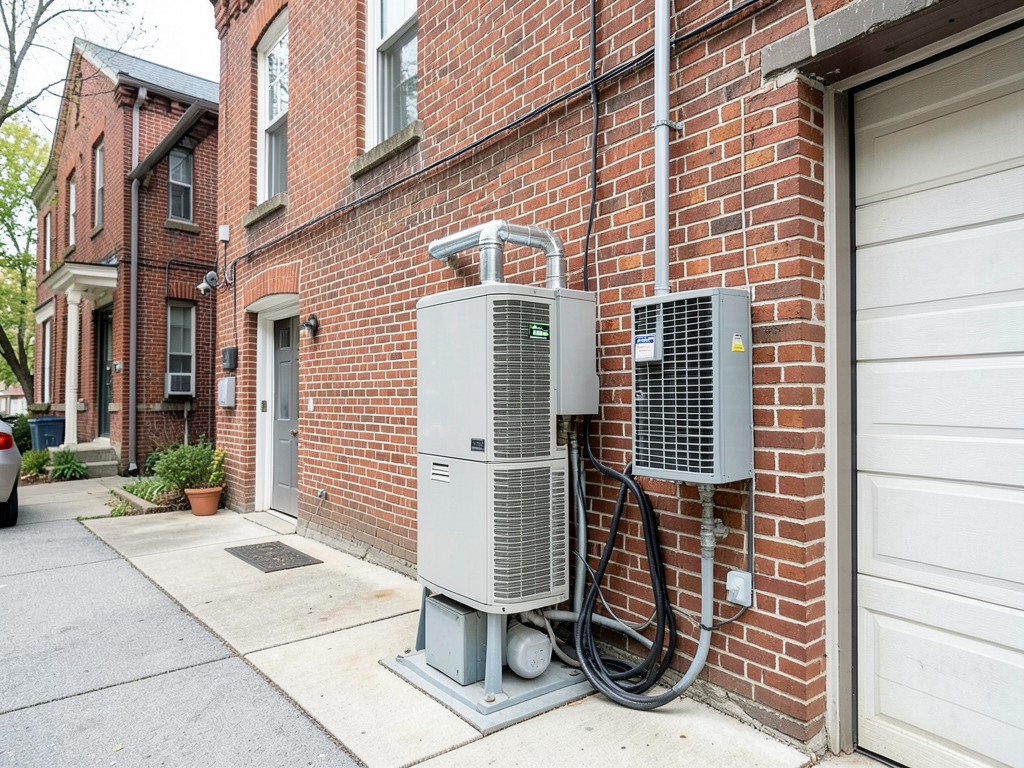
Photo of a quiet, low-profile outdoor condenser unit installed on the side of a Fort Totten brick garage, complying with DC historic district rules.
Technician using a digital manifold gauge to check refrigerant levels and system performance during a mini-split installation in a DC garage.
Take the next step toward a comfortable garage apartment
Choosing the right HVAC system for your Fort Totten garage conversion is key to making your new space livable and efficient. Whether you go with a ductless mini-split, heat pump, or high-velocity system, proper installation and insulation make all the difference.
Don’t let DC’s humid summers or cold winters make your garage apartment uncomfortable. Call (771) 218-6322 today to schedule your inspection and get a free estimate. Our team knows the local codes, the best equipment for your space, and how to keep your energy bills low.
Ready to get started? Pick up the phone and call (771) 218-6322 before the next storm hits. We’ll help you choose the perfect HVAC solution for your Fort Totten garage conversion.
Ready for year-round comfort?
Call (771) 218-6322 now to schedule your free consultation and learn how we can make your garage apartment the perfect retreat, no matter the season.
{
“@context”: “https://schema.org”,
“@type”: “BlogPosting”,
“headline”: “Heating and cooling options for your new Fort Totten garage conversion”,
“description”: “Explore HVAC solutions for Fort Totten garage apartments. Learn about mini-splits, DC codes, insulation, and rebates to create a comfortable, code-compliant ADU.”,
“wordCount”: 1488,
“datePublished”: “2026-04-04T13:36:00.000Z”,
“dateModified”: “2026-04-04T13:36:00.000Z”,
“inLanguage”: “en-US”,
“mainEntityOfPage”: {
“@type”: “WebPage”,
“@id”: “https://patriothvacwashingtondc.com”
},
“publisher”: {
“@type”: “LocalBusiness”,
“name”: “Patriot HVAC Washington DC”,
“url”: “https://patriothvacwashingtondc.com”
},
“author”: {
“@type”: “Organization”,
“name”: “Patriot HVAC Washington DC”,
“url”: “https://patriothvacwashingtondc.com”
},
“image”: {
“@type”: “ImageObject”,
“url”: “https://patriothvacwashingtondc.com/wp-content/uploads/2026/03/heating-and-cooling-options-for-your-new-fort-tott-1.png”
}
}
{
“@context”: “https://schema.org”,
“@type”: “HVACBusiness”,
“name”: “Patriot HVAC Washington DC”,
“url”: “https://patriothvacwashingtondc.com”,
“address”: {
“@type”: “PostalAddress”,
“addressLocality”: “Washington DC”
},
“areaServed”: {
“@type”: “City”,
“name”: “Washington DC”
}
}
{
“@context”: “https://schema.org”,
“@type”: “FAQPage”,
“mainEntity”: [
{
“@type”: “Question”,
“name”: “How long do mini-split systems last?”,
“acceptedAnswer”: {
“@type”: “Answer”,
“text”: “With proper maintenance, mini-splits typically last 15 to 20 years. Regular cleaning and annual service help maximize their lifespan.”
}
},
{
“@type”: “Question”,
“name”: “Can I install HVAC myself?”,
“acceptedAnswer”: {
“@type”: “Answer”,
“text”: “No. DC law requires a licensed HVAC contractor to install heating and cooling systems. DIY installation can void warranties and violate building codes.”
}
},
{
“@type”: “Question”,
“name”: “Will my garage HVAC work if the power goes out?”,
“acceptedAnswer”: {
“@type”: “Answer”,
“text”: “No. All the systems discussed require electricity. Consider a backup generator if you need heat or cooling during outages.”
}
},
{
“@type”: “Question”,
“name”: “How do I control the temperature in my garage apartment?”,
“acceptedAnswer”: {
“@type”: “Answer”,
“text”: “Most mini-splits and heat pumps come with remote controls or smartphone apps. You can set schedules and adjust temperatures from anywhere.”
}
},
{
“@type”: “Question”,
“name”: “Are there any tax credits for garage HVAC?”,
“acceptedAnswer”: {
“@type”: “Answer”,
“text”: “Federal tax credits may be available for high-efficiency heat pumps. Check with your contractor or the IRS for current programs.”
}
},
{
“@type”: “Question”,
“name”: “Ready for year-round comfort?”,
“acceptedAnswer”: {
“@type”: “Answer”,
“text”: “Call (771) 218-6322 now to schedule your free consultation and learn how we can make your garage apartment the perfect retreat, no matter the season.”
}
}
]
}
{
“@context”: “https://schema.org”,
“@type”: “BreadcrumbList”,
“itemListElement”: [
{
“@type”: “ListItem”,
“position”: 1,
“name”: “Home”,
“item”: “https://patriothvacwashingtondc.com”
},
{
“@type”: “ListItem”,
“position”: 2,
“name”: “Blog”,
“item”: “https://patriothvacwashingtondc.com/blog”
},
{
“@type”: “ListItem”,
“position”: 3,
“name”: “Heating and cooling options for your new Fort Totten garage conversion”
}
]
}
{
“@context”: “https://schema.org”,
“@type”: “Service”,
“serviceType”: “HVAC”,
“provider”: {
“@type”: “LocalBusiness”,
“name”: “Patriot HVAC Washington DC”,
“url”: “https://patriothvacwashingtondc.com”
},
“areaServed”: {
“@type”: “City”,
“name”: “Washington DC”
},
“description”: “Explore HVAC solutions for Fort Totten garage apartments. Learn about mini-splits, DC codes, insulation, and rebates to create a comfortable, code-compliant ADU.”
}