Menu

Iced Up Evaporator Coil in Washington, D.C. – Expert Diagnosis and Fast Repairs That Stop System Failure

When your air conditioner coil freezes up, you need accurate diagnostics and immediate repairs to prevent compressor damage. Patriot HVAC Washington DC identifies the root cause of frozen cooling coils and restores your system before a minor issue becomes a complete system failure.

Slider Image 1
Slider Image 2
Slider Image 3
Slider Image 4
Slider Image 5
Slider Image 7
Slider Image 8
Slider Image 9
Slider Image 10
Slider Image 11

Why Your AC Evaporator Coil Freezes in Washington, D.C.'s Humid Climate

You walk past your air handler and see ice creeping across the evaporator coil. The air feels warm. Your system is running, but nothing is cooling. This is not normal, and it is not fixing itself.

An iced up evaporator coil happens when the refrigerant inside the coil drops below 32 degrees. The moisture in the air freezes on contact. Washington, D.C.'s high humidity makes this worse. More moisture in the air means faster ice buildup once the temperature drops.

The freeze happens for specific reasons. Low refrigerant charge from a leak causes the remaining refrigerant to expand too quickly and drop temperature. A dirty air filter blocks airflow across the coil, preventing heat exchange and causing the coil to super-cool. A failing blower motor does the same thing. The coil cannot absorb heat without airflow, so it freezes.

Frozen cooling coils also form when return air ducts leak or collapse. If your system is pulling unconditioned air from an attic or crawlspace instead of from inside the home, the evaporator coil cannot maintain the correct temperature differential. The coil ices over.

You might see ice on the evaporator coil after running the system non-stop during a D.C. heat wave. Continuous operation without proper airflow or refrigerant balance will freeze the coil. The system works harder, burns more energy, and delivers no cooling.

The longer the coil stays frozen, the worse the damage. Ice blocks airflow completely. The compressor runs without cooling, overheats, and fails. That turns a fixable problem into a full system replacement. If you see ice, you need diagnostics now, not later.

Why Your AC Evaporator Coil Freezes in Washington, D.C.'s Humid Climate
How We Diagnose and Fix a Frozen AC Evaporator Coil

How We Diagnose and Fix a Frozen AC Evaporator Coil

We do not guess. Fixing a frozen evaporator coil starts with finding the actual cause. Ice is the symptom, not the problem.

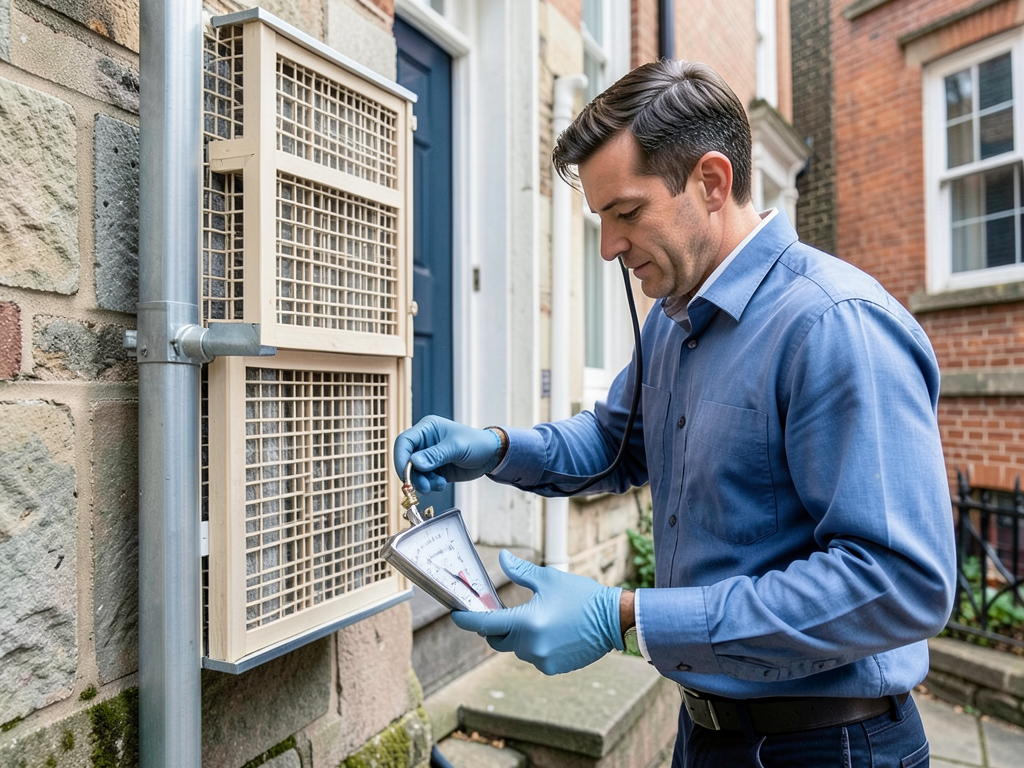
First, we shut the system down and let the coil thaw completely. Running the system with ice on the coil damages the compressor. We measure the static pressure across the air handler to check for airflow restriction. High static pressure means a clogged filter, blocked return ducts, or a failing blower motor.

Next, we check refrigerant charge using superheat and subcooling measurements. If the system is low on refrigerant, we locate the leak using electronic leak detectors and nitrogen pressure testing. We do not just top off the system and leave. A refrigerant leak will freeze the coil again in a few weeks.

We inspect the blower motor and capacitor. A weak blower cannot move enough air across the coil. The motor might run, but if the CFM output is below spec, the coil will freeze. We measure amp draw and compare it to the nameplate rating.

We also check the metering device. A clogged thermostatic expansion valve or a failed piston will starve the evaporator coil of refrigerant, causing localized freezing. We check for debris in the liquid line and refrigerant filter drier.

For systems with ductwork issues, we inspect return air paths. Leaky or disconnected ducts in attics pull hot, humid air into the system, throwing off the temperature balance. We seal leaks and reattach ducts to restore proper airflow.

After repairs, we run the system through a full cooling cycle and monitor coil temperature, airflow, and refrigerant pressures. The coil should stay between 40 and 50 degrees during operation. Anything lower means the repair did not address the root cause.

What Happens When You Call Us for an Iced Up Evaporator Coil

Iced Up Evaporator Coil in Washington, D.C. – Expert Diagnosis and Fast Repairs That Stop System Failure
01

System Shutdown and Thaw

We turn off the air conditioner and switch the fan to continuous run. This circulates warm air over the frozen coil and melts the ice without forcing the compressor to run. Depending on ice thickness, this takes one to three hours. We do not skip this step. Running the compressor with a frozen coil causes permanent damage.
02

Airflow and Refrigerant Testing

Once the coil thaws, we measure static pressure, blower motor performance, and refrigerant charge. We check superheat at the evaporator outlet and subcooling at the condenser. If the charge is low, we perform a leak search using electronic detectors and pressure testing. We also inspect the air filter, ductwork, and return air pathways for blockages or leaks.
03

Repair and Verification

We fix the identified issue, whether it is a refrigerant leak, blower motor failure, or airflow restriction. After repairs, we run the system through a complete cooling cycle and monitor coil temperature, refrigerant pressures, and airflow. We verify the evaporator coil stays within the correct operating range and that the system cools properly before leaving the site.

Why D.C. Homeowners Trust Patriot HVAC Washington DC for Evaporator Coil Repairs

Washington, D.C. has a mix of historic row houses, mid-century split levels, and modern condos. Each building type has different HVAC challenges. Older homes have undersized ductwork and outdated air handlers. Newer buildings have high-efficiency systems that require precise refrigerant charge and airflow balance. We work on all of them.

A frozen evaporator coil in a D.C. row house is often caused by ductwork that was retrofitted into tight spaces. Return air ducts get crimped, blocked, or disconnected in basements and crawlspaces. We find these issues because we know the common ductwork layouts in D.C. neighborhoods like Capitol Hill, Dupont Circle, and Shaw.

In newer construction, we see frozen coils caused by oversized air conditioners that short cycle. The system cools too quickly, the evaporator coil does not stay in operation long enough to stabilize temperature, and ice forms during the off cycle. We diagnose this using runtime data and temperature differentials, not guesswork.

We also understand D.C.'s building codes and permitting requirements. If your evaporator coil needs replacement, we pull the necessary permits and coordinate inspections. We do not cut corners or leave you with an unpermitted install that creates problems when you sell the home.

Our technicians carry refrigerant recovery equipment, leak detection tools, and replacement components on every truck. We do not make multiple trips to fix an iced up evaporator coil. We diagnose, repair, and verify the fix in one visit whenever possible.

You are not hiring a call center that dispatches random technicians. You are hiring a local team that knows D.C.'s housing stock, climate, and HVAC infrastructure. That makes a difference when the problem is complex and the fix needs to be right the first time.

What to Expect When We Repair Your Frozen Evaporator Coil

Same-Day Service Availability

We offer same-day service for iced up evaporator coils in Washington, D.C. when you call before noon. Our technicians carry diagnostic tools and common replacement parts, so most repairs happen during the first visit. If your system froze overnight, we arrive, thaw the coil, diagnose the cause, and fix it the same day. You are not waiting three days in the heat while the coil refreezes and damages the compressor.

Complete System Diagnostics

We do not assume the cause. We measure refrigerant pressures, airflow, blower motor performance, and duct static pressure. We check for leaks using electronic detectors and nitrogen pressure testing. We inspect the metering device, filter drier, and liquid line for blockages. If your coil froze because of a refrigerant leak, we find it and fix it. If the problem is airflow, we identify the restriction and clear it. You get an accurate diagnosis, not a guess.

Verified Cooling Performance

After repairs, we run your system through a full cooling cycle and monitor coil temperature, refrigerant charge, and airflow. We verify the evaporator coil stays between 40 and 50 degrees during operation and that your home cools to the setpoint. We do not leave until the system runs correctly. You get confirmation that the repair worked, not a call back three days later when the coil freezes again.

Post-Repair Monitoring and Maintenance

We provide a written report of the repairs and any additional maintenance recommendations. If your coil froze because of a dirty filter or clogged drain line, we show you how to prevent it from happening again. For systems with refrigerant leaks, we offer follow-up inspections to confirm the leak is sealed and the charge remains stable. You also get access to our maintenance plans, which include filter changes, coil cleaning, and refrigerant checks to prevent future freeze-ups.

Frequently Asked Questions

You Have Questions,
We Have Answers

What causes ice on an evaporator coil? +

Ice forms on evaporator coils when airflow drops or refrigerant pressure changes. Clogged air filters are the most common culprit, restricting air across the coil. Dirty coils also trap dust, blocking heat exchange. Low refrigerant from leaks causes the coil to run too cold. In Washington, D.C., high humidity worsens the problem because moisture freezes faster on cold surfaces. Blower motor failures, closed supply vents, or ductwork issues can also starve the coil of warm air. Even thermostat problems that run the system too long contribute to ice buildup.

What is the best way to thaw out an iced up evaporator coil? +

Turn off your AC at the thermostat and switch the fan to ON. This circulates air without running the compressor, speeding up thaw time. Open the panel to expose the coil if safe to do so. Place towels beneath the unit to catch melt water. Thawing takes two to eight hours depending on ice thickness. Do not chip ice off or use heat guns, which can damage fins and refrigerant lines. If you need cooling restored fast in Washington, D.C.'s summer heat, call a technician who can thaw the coil professionally and fix the root cause immediately.

Will low refrigerant cause an evaporator to ice up? +

Yes. Low refrigerant drops the pressure inside the evaporator coil, causing the temperature to plummet below freezing. The coil cannot absorb enough heat, so moisture in the air freezes on contact. Refrigerant leaks often start small, so you might notice gradual ice buildup before total system failure. In Washington, D.C.'s humid climate, even a minor leak accelerates frost formation. A technician will locate the leak, repair it, and recharge the system to the correct level. Never just add refrigerant without fixing the leak. That wastes money and harms the environment.

How to melt ice on an evaporator coil? +

Shut off the AC completely and let the system sit. Turn the thermostat fan to ON to blow room-temperature air across the coil. This is the safest method. Avoid pouring hot water on the coil or using space heaters, which can crack metal or damage insulation. If you are in a rush during a Washington, D.C. heatwave, a technician can safely expedite the process and inspect what caused the freeze. Most units thaw within four to six hours. Check the drain pan and condensate line for overflow during the melt.

What is the likely cause for heavy icing in the evaporator coil? +

Heavy icing signals severe airflow restriction or a major refrigerant issue. A completely clogged filter, frozen blower wheel, or collapsed ductwork can starve the coil of air. Significant refrigerant loss from a large leak also causes extreme icing. In older Washington, D.C. homes with undersized return ducts, airflow problems are common. Failed expansion valves or metering devices can flood the coil with too much refrigerant, dropping temperatures dangerously low. If ice covers the entire coil and extends to refrigerant lines, shut the system down and call a technician before you damage the compressor.

Can I turn my AC back on after it thaws? +

Not yet. First, identify and fix what caused the freeze. If you restart the AC without addressing a dirty filter, refrigerant leak, or airflow issue, the coil will freeze again within hours. Replace the filter, check all vents are open, and inspect the condensate drain for clogs. If you are unsure of the cause, have a technician diagnose the system before restarting. In Washington, D.C.'s muggy summers, running a compromised AC risks compressor failure, which costs thousands to replace. Fix the problem first, then restart safely.

What are the six common causes of evaporator freezing? +

The six common causes are dirty air filters, low refrigerant from leaks, dirty evaporator coils, blower motor failure, closed or blocked supply vents, and faulty thermostats. Dirty filters restrict airflow, causing the coil to run too cold. Low refrigerant drops coil temperature below freezing. Dust buildup on coils blocks heat transfer. A weak or failed blower cannot move enough air. Closed vents in unused rooms reduce system airflow. Thermostats stuck in cooling mode run the AC nonstop. In Washington, D.C., humidity accelerates coil icing when any of these issues occur.

What is the 3 minute rule for AC? +

The three-minute rule prevents compressor damage after shutdown. Wait at least three minutes before restarting your AC. This allows refrigerant pressures to equalize between the high and low sides of the system. Starting too soon forces the compressor to work against high pressure, stressing internal components and shortening lifespan. Some systems have built-in time delays, but manual restarts bypass this protection. After thawing a frozen coil or addressing a power outage in Washington, D.C., always wait three full minutes before switching the thermostat back to cool.

Can you run AC with frozen coils? +

No. Running an AC with frozen coils risks compressor failure. The coil cannot absorb heat when encased in ice, so the compressor works harder without cooling your home. This overheats the motor and can cause permanent damage. Ice also blocks airflow, starving the blower motor. Liquid refrigerant can flood back to the compressor, causing slugging that cracks internal components. Shut the system down immediately if you see ice. In Washington, D.C.'s heat, you may be tempted to keep it running, but repair costs skyrocket if you destroy the compressor.

What is the $5000 AC rule? +

The five thousand dollar rule is a repair versus replace guideline. Multiply the age of your AC by the repair cost. If the result exceeds five thousand, replace the unit instead of fixing it. For example, a twelve-year-old system needing a four hundred fifty dollar repair equals five thousand four hundred, so replace it. This rule helps you avoid throwing money into an aging system. In Washington, D.C., where high humidity stresses older units, this calculation helps homeowners make smart financial decisions about worn-out equipment nearing end of life.

How D.C.'s High Humidity and Heat Waves Accelerate Evaporator Coil Freeze-Ups

Washington, D.C. has some of the highest humidity levels on the East Coast during summer. Relative humidity stays above 70 percent for weeks at a time. When your air conditioner coil freezes up, that moisture freezes on contact with the cold coil surface. The ice builds faster here than in drier climates. A system that might take hours to freeze in a low-humidity area will ice over in 30 minutes in D.C. The combination of high outdoor temperatures and high humidity also forces air conditioners to run continuously, which amplifies any airflow or refrigerant problem that causes freezing.

Patriot HVAC Washington DC works exclusively in the D.C. metro area. We know the building types, the ductwork layouts, and the common HVAC problems in neighborhoods from Georgetown to Anacostia. When you call us for a frozen evaporator coil, you get a technician who has fixed this exact problem in your type of home dozens of times. We know what to look for, how to fix it, and how to prevent it from happening again. Local expertise matters when the repair needs to be right the first time.
HVAC Services in The Washington DC Area

Easily locate Patriot HVAC and explore our service area on the map below. We are strategically positioned to provide prompt and efficient heating, ventilation, and air conditioning services across Washington D.C. and its neighboring communities. Whether you're seeking a quick repair or a new installation, our team is ready to serve your comfort needs.

Address:
Patriot HVAC Washington DC, 20 F St NW, Washington, DC, 20001

Additional Services We Offer

Our news updates

Latest Articles & News from The Blogs

The Best Air Filter Upgrades for Georgetown Homes with Sensitive Historic Woodwork Georgetown's Federal-style rowhouses and Victorian homes need special…

The Best Air Filter Upgrades for Georgetown Homes with Sensitive Historic Woodwork

The Best Air Filter Upgrades for Georgetown Homes with Sensitive Historic Woodwork Georgetown's Federal-style rowhouses and Victorian homes need special…

The Best Air Filter Upgrades for Georgetown Homes with Sensitive Historic Woodwork

The Best Air Filter Upgrades for Georgetown Homes with Sensitive Historic Woodwork Georgetown's historic rowhouses and Federal-style homes face a…

The Best Air Filter Upgrades for Georgetown Homes with Sensitive Historic Woodwork

The Best Air Filter Upgrades for Georgetown Homes with Sensitive Historic Woodwork Georgetown's historic rowhouses and Federal-style homes feature exquisite…

Contact Us

Your air conditioner coil is frozen right now. The longer it stays frozen, the worse the damage. Call Patriot HVAC Washington DC at (771) 218-6322 for same-day diagnostics and repairs. We find the cause, fix it, and verify the system works before we leave.