Menu

AC Unit Leaking Water in Washington, D.C. – Expert Diagnosis Stops Damage Before It Spreads

When your AC system leaking water goes undiagnosed, you risk ceiling stains, mold growth, and compressor failure. Our technicians identify the exact cause of air conditioning leaking water and fix it right the first time.

Slider Image 1
Slider Image 2
Slider Image 3
Slider Image 4
Slider Image 5
Slider Image 7
Slider Image 8
Slider Image 9
Slider Image 10
Slider Image 11

Why Your Air Conditioner Is Dripping Water in Washington, D.C.

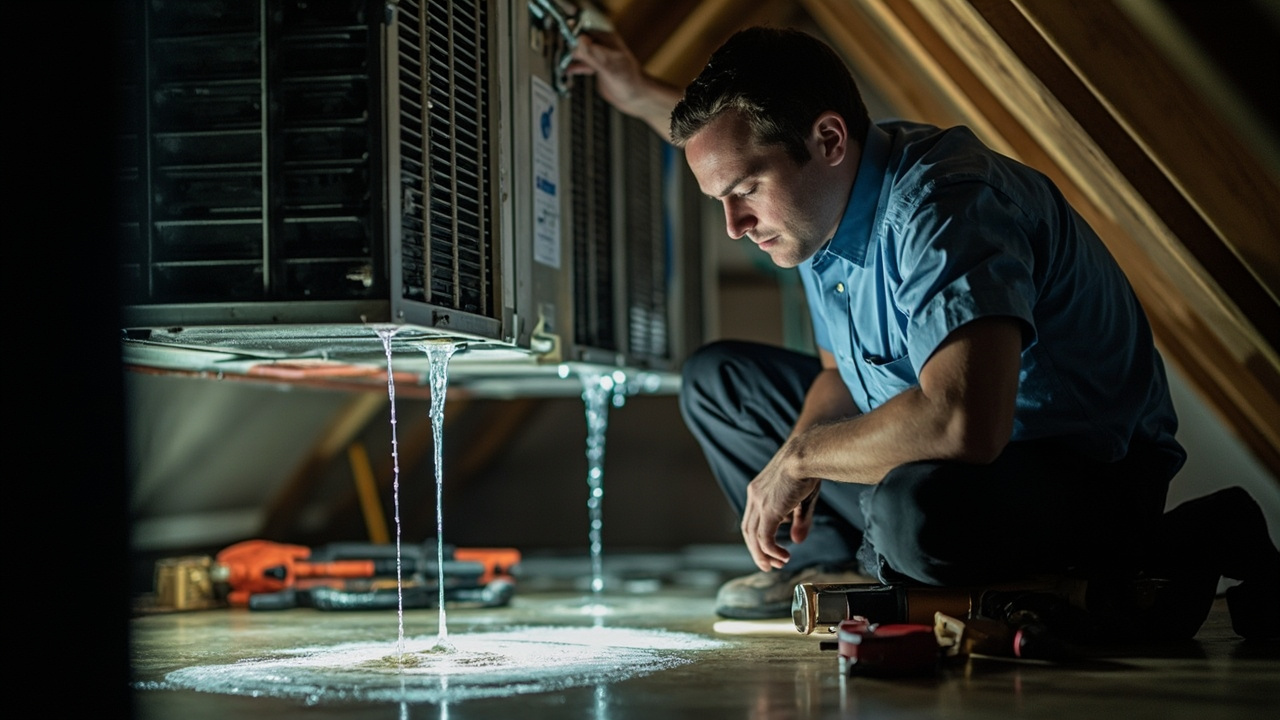
You walk downstairs and find a puddle spreading across your hardwood floor. Your air conditioner dripping water is not just an inconvenience. It signals a malfunction that can destroy your home and shut down your cooling when you need it most.

Washington, D.C.'s brutal summer humidity makes your AC work harder than units in drier climates. Your evaporator coil pulls gallons of moisture from the air every day. When that water does not drain correctly, you get an AC water leak. The condensate drain line clogs with algae and sludge faster here because of our high moisture levels. One blocked drain line forces water to back up into your drip pan, overflow onto your ceiling, and soak insulation.

A cracked drip pan, a disconnected drain line, or low refrigerant can also cause water dripping from AC unit. Low refrigerant makes your evaporator coil freeze. When the ice melts, it floods your system. You see water pooling near your indoor unit or dripping from ceiling vents.

Ignoring an AC unit leaking water leads to mold growth inside your ductwork within 48 hours. You also risk damaging your compressor when water reaches electrical components. The longer you wait, the more expensive the repair becomes. Washington, D.C. homeowners in Capitol Hill, Georgetown, and Dupont Circle neighborhoods see this problem spike in July and August when humidity climbs above 70 percent. Your AC system was designed to handle moisture, but not when something breaks. You need a technician who can diagnose the exact failure point and stop the leak before it costs you thousands in water damage.

Why Your Air Conditioner Is Dripping Water in Washington, D.C.
How We Stop Air Conditioning Leaking Water at the Source

How We Stop Air Conditioning Leaking Water at the Source

Generic troubleshooting wastes your time and money. We use a methodical diagnostic process to pinpoint why your AC system leaking water. Our technicians do not guess. We test each component in sequence to isolate the failure.

First, we inspect your condensate drain line. We check for blockages using a camera scope to see inside the pipe. Algae, dust, and biofilm accumulate in the P-trap and create a dam. We clear the line with a wet-dry vacuum and nitrogen purge, then flush it with a biocide tablet to prevent future clogs. This solves 60 percent of water dripping from AC unit cases.

Next, we examine your drip pan. Older pans crack and corrode. We test for leaks by pouring water into the pan and watching where it escapes. If the pan is damaged, we replace it with a corrosion-resistant model that fits your exact unit specifications.

We also measure refrigerant levels using manifold gauges. Low refrigerant causes your evaporator coil to freeze. When the ice melts, you get flooding. If refrigerant is low, we locate the leak using electronic detectors, repair it, and recharge your system to factory specifications.

Finally, we check your condensate pump if your unit drains upward into an attic or crawlspace. A failed pump motor or stuck float switch stops water from evacuating. We replace faulty pumps with high-capacity models rated for Washington, D.C.'s humidity load.

Patriot HVAC Washington DC technicians carry replacement parts on every truck. We fix most air conditioner dripping water problems the same day. You get a detailed explanation of what failed, why it failed, and what we did to prevent it from happening again.

What Happens When You Call About Your AC Water Leak

AC Unit Leaking Water in Washington, D.C. – Expert Diagnosis Stops Damage Before It Spreads
01

Immediate Dispatch and Assessment

You call our office and speak with a dispatcher who logs your AC unit leaking water issue. We schedule a technician to arrive within hours, not days. Our team brings diagnostic tools including infrared cameras, refrigerant gauges, and drain line inspection equipment. When we arrive, we assess visible damage to floors, ceilings, and walls. We shut off your system if necessary to prevent additional water intrusion while we diagnose the root cause.
02

Component Testing and Diagnosis

We systematically test your condensate drain line, drip pan, evaporator coil, and refrigerant charge. Using camera scopes and electronic leak detectors, we identify blockages, cracks, or refrigerant loss. We check your condensate pump operation if your system uses one. You receive a clear explanation of what caused the air conditioning leaking water and what repair is required. We provide upfront pricing before starting any work so you can make an informed decision.
03

Repair and Verification Testing

Once you approve the repair, we clear drain blockages, replace damaged components, or recharge refrigerant. We run your system through a full cooling cycle to verify proper drainage. We monitor the evaporator coil temperature, check airflow, and confirm water flows through the drain line without backing up. You see your AC unit leaking water problem resolved before we leave. We clean up any water intrusion and provide maintenance tips to prevent future clogs.

Why Washington, D.C. Homeowners Trust Our AC Leak Repairs

You need a technician who understands how Washington, D.C.'s climate affects your HVAC system. Our team works on hundreds of air conditioner dripping water calls every summer. We know the specific failure patterns in Carrier, Trane, Lennox, and Rheem units common in Capitol Hill row homes, Georgetown townhouses, and Northwest D.C. single-family residences.

Local building codes require proper condensate drainage to prevent water intrusion into living spaces. We install drain lines that meet District of Columbia mechanical code requirements. We also understand the unique challenges of older homes where drain lines snake through cramped crawlspaces or terminate in antiquated floor drains that no longer function.

Patriot HVAC Washington DC technicians receive ongoing training on the latest diagnostic equipment and refrigerant handling procedures. We use EPA-certified refrigerant recovery methods when repairing leaks. You get a technician who follows industry best practices, not shortcuts.

We also respond faster than national chains. You are not waiting three days for an appointment while water damages your ceiling. We prioritize AC system leaking water calls because we know the cost of delay. Most repairs are completed the same day.

Our trucks stock the parts you need. We carry drip pans, condensate pumps, float switches, and drain line fittings for every major brand. You avoid the frustration of multiple appointments while a technician orders parts from a distant warehouse.

Washington, D.C. residents in Foggy Bottom, Shaw, and Columbia Heights choose us because we show up prepared, diagnose accurately, and fix the problem correctly the first time. You get transparency, speed, and skilled repair work without the runaround.

What You Can Expect From Our AC Water Leak Service

Same-Day Response for Urgent Leaks

We prioritize water dripping from AC unit calls because we know the damage spreads quickly. Most appointments are scheduled within four hours of your call. If you contact us before noon, we typically arrive the same day. Our dispatchers coordinate with technicians in real time to minimize your wait. You receive a call 30 minutes before arrival so you can plan your day. Emergency leaks that threaten electrical panels or structural components receive immediate priority. We do not leave you waiting while water destroys your home.

Thorough System Diagnostics

Our technicians do not stop at the obvious symptom. We inspect your entire condensate management system from the evaporator coil to the exterior drain termination. We use infrared cameras to detect hidden leaks inside walls or ceilings. We measure refrigerant superheat and subcooling to verify your charge is correct. If your drain line repeatedly clogs, we investigate why. Poor airflow, dirty filters, or an oversized unit can cause excessive condensation. You get a complete explanation of what caused your air conditioner dripping water problem and what we recommend to fix it permanently.

Guaranteed Drainage Performance

After we complete the repair, we test your system under full load. We verify water drains freely without backing up. We check for proper pitch in horizontal drain lines and confirm P-traps hold water to prevent sewer gas from entering your home. If we install a new condensate pump, we cycle it multiple times to ensure the float switch and motor operate correctly. You see your AC unit leaking water issue resolved before we pack our tools. We provide written documentation of what was repaired and what components were replaced.

Preventive Maintenance Plans Available

Most AC water leak problems are preventable. We offer maintenance plans that include annual drain line flushing, drip pan inspection, and refrigerant level checks. Our technicians clean your evaporator coil and replace your filter during each visit. You receive priority scheduling and discounted service rates. Maintenance plan members experience fewer emergency breakdowns because we catch small problems before they cause water damage. Regular service extends the life of your equipment and keeps your condensate system functioning correctly through Washington, D.C.'s demanding summer season.

Frequently Asked Questions

You Have Questions,
We Have Answers

How do I stop my air conditioner from leaking water? +

First, turn off your AC to prevent water damage. Check your condensate drain line for clogs. In Washington, D.C.'s humid summers, algae and mold build up fast in drain pans. Look for a clogged air filter, which restricts airflow and causes the evaporator coil to freeze. If the drain pan is cracked or rusted, you need a replacement. Low refrigerant also causes freezing and subsequent leaking. Most leaks stem from blocked drains or frozen coils. If you cannot locate the source quickly, call a licensed HVAC technician to diagnose the issue before water damages your floors or walls.

Can I still use my AC if it's leaking water? +

No, you should not run your AC if it is leaking water. Continuing to operate the unit can worsen the problem. Water leaks often mean a frozen evaporator coil, a clogged drain line, or a refrigerant issue. Running the system risks water damage to your home, electrical hazards, and compressor failure. In Washington, D.C.'s older row homes and historic properties, water intrusion can quickly damage wood floors and plaster walls. Turn off the system, soak up standing water, and contact an HVAC professional. Running a malfunctioning AC causes more expensive repairs down the line.

Is a leaking AC unit an emergency? +

It depends on the severity. A small drip from a clogged drain line is not an emergency, but you should address it within 24 hours. Heavy leaking, water pooling near electrical components, or a completely frozen coil requires immediate attention. In Washington, D.C., where summer humidity can exceed 70 percent, ignoring leaks leads to mold growth and structural damage fast. If water is spreading across your floor or dripping near outlets, turn off the unit and call for emergency HVAC service. Water and electricity create serious safety risks. Act quickly to prevent costly damage.

How do I unclog my AC condensate drain line? +

Locate the condensate drain line, usually a PVC pipe near your indoor air handler or furnace. Turn off your AC. Remove the cap from the drain line access point. Use a wet/dry vacuum to suction out clogs from the exterior drain opening. Alternatively, pour a cup of white vinegar or a bleach-water solution into the drain pan to dissolve algae buildup. Wait 30 minutes, then flush with water. In Washington, D.C.'s muggy climate, clean your drain line every three months. If the clog persists or you cannot access the line, call an HVAC technician to clear it professionally.

Is AC leaking water expensive to fix? +

Repair costs vary by the cause. Clearing a clogged drain line typically runs between basic service rates and minor repair costs. Replacing a cracked drain pan or rusted overflow pan costs more. If low refrigerant or a frozen evaporator coil caused the leak, expect higher repair bills due to refrigerant recharge and potential coil damage. In Washington, D.C., older AC units in historic homes may require custom parts, adding to the expense. Simple drain line clogs are affordable fixes. Compressor or coil issues escalate quickly. Get a diagnostic from a licensed technician before assuming the worst.

What is the 3 minute rule for AC? +

The 3 minute rule prevents compressor damage. After turning off your AC, wait at least three minutes before restarting it. This allows refrigerant pressure to equalize throughout the system. Restarting too quickly forces the compressor to work against high pressure, which can cause mechanical failure. In Washington, D.C.'s hot summer months, rapid cycling stresses your system. If your AC is leaking water and you turned it off, respect the 3 minute rule before attempting a restart. Better yet, leave it off and call a technician to fix the leak before restarting.

How long can I run my AC if it is leaking water? +

You should not run your AC at all if it is leaking water. Every minute of operation worsens the problem. A clogged drain line or frozen coil needs immediate repair. Running the system risks compressor burnout, electrical shorts, and extensive water damage to your Washington, D.C. home. Hardwood floors, drywall, and insulation absorb water quickly in the humid Mid-Atlantic climate. Turn off the unit, mop up standing water, and schedule service. Temporary cooling from a fan is safer than running a malfunctioning AC. Ignoring the leak costs you more in repairs and potential mold remediation.

Can I fix a leaking AC myself? +

Basic troubleshooting is possible. You can clear a clogged drain line with a wet/dry vacuum or vinegar flush. Changing a dirty air filter takes minutes. However, diagnosing refrigerant leaks, frozen coils, or damaged drain pans requires professional tools and training. In Washington, D.C., incorrect refrigerant handling violates EPA regulations. If you cannot identify the leak source in 15 minutes, call a licensed HVAC technician. Misdiagnosing the issue wastes time and money. Professionals carry the right equipment to fix leaks correctly the first time. DIY fixes work for simple clogs, not complex mechanical failures.

What happens if I ignore an AC leak? +

Ignoring an AC leak leads to serious consequences. Water damages floors, walls, and ceilings. In Washington, D.C.'s humid climate, standing water breeds mold within 24 to 48 hours. Mold remediation costs thousands. A frozen evaporator coil can crack, requiring expensive replacement. Electrical components exposed to water create fire hazards. Continued operation with low refrigerant damages the compressor, the most expensive AC component. Leaks also waste energy and spike your utility bills. What starts as a minor drip escalates into major structural damage, health risks, and system failure. Address leaks immediately.

What is the $5000 rule for AC? +

The $5000 rule is a replacement guideline. Multiply the cost of repair by your AC unit's age in years. If the result exceeds $5000, replace the unit instead of repairing it. For example, a $500 repair on a 12-year-old system equals $6000, suggesting replacement. In Washington, D.C., older units are less efficient and struggle with humid summers. If your leaking AC is over 10 years old and needs major repairs, replacement often makes financial sense. New systems offer better efficiency, lower utility bills, and fewer breakdowns. Consult an HVAC professional for a cost analysis.

How Washington, D.C.'s Humidity Accelerates Condensate System Failures

Washington, D.C. experiences average summer humidity levels between 65 and 75 percent. Your AC pulls moisture from the air continuously during cooling cycles. A three-ton residential unit can generate 30 gallons of condensate per day in peak conditions. That water must drain through a three-quarter-inch PVC line without backing up. The combination of high humidity and frequent rain creates ideal conditions for algae and biofilm growth inside drain lines. Drain pans in attics reach 130 degrees, accelerating plastic degradation and cracking. Homes near Rock Creek Park or the Potomac waterfront face even higher moisture loads. Your condensate system works harder here than in drier climates, which means components fail faster.

Washington, D.C. building codes require proper condensate drainage with overflow protection for units installed in attics or above living spaces. Many older homes in historic districts have undersized drain lines or improperly pitched pipes that violate current standards. Patriot HVAC Washington DC understands these local requirements and brings every repair up to code. We work in row homes where drain lines must route through shared walls and townhouses where condensate pumps must lift water three stories. Our technicians know the unique challenges of Georgetown Federal-style homes, Capitol Hill brick structures, and mid-century ramblers common in Chevy Chase. You get a team familiar with Washington, D.C. architecture and mechanical code compliance.
HVAC Services in The Washington DC Area

Easily locate Patriot HVAC and explore our service area on the map below. We are strategically positioned to provide prompt and efficient heating, ventilation, and air conditioning services across Washington D.C. and its neighboring communities. Whether you're seeking a quick repair or a new installation, our team is ready to serve your comfort needs.

Address:
Patriot HVAC Washington DC, 20 F St NW, Washington, DC, 20001

Additional Services We Offer

Our news updates

Latest Articles & News from The Blogs

The Best Air Filter Upgrades for Georgetown Homes with Sensitive Historic Woodwork Georgetown's Federal-style rowhouses and Victorian homes need special…

The Best Air Filter Upgrades for Georgetown Homes with Sensitive Historic Woodwork

The Best Air Filter Upgrades for Georgetown Homes with Sensitive Historic Woodwork Georgetown's Federal-style rowhouses and Victorian homes need special…

The Best Air Filter Upgrades for Georgetown Homes with Sensitive Historic Woodwork

The Best Air Filter Upgrades for Georgetown Homes with Sensitive Historic Woodwork Georgetown's historic rowhouses and Federal-style homes face a…

The Best Air Filter Upgrades for Georgetown Homes with Sensitive Historic Woodwork

The Best Air Filter Upgrades for Georgetown Homes with Sensitive Historic Woodwork Georgetown's historic rowhouses and Federal-style homes feature exquisite…

Contact Us

Do not wait while water damages your ceilings and floors. Call Patriot HVAC Washington DC now at (771) 218-6322 for same-day AC leak diagnosis and repair. Our technicians arrive prepared to fix your problem today.