Menu

Emergency Heat Pump Repair in Washington, D.C. – 24/7 Dispatch and Technicians Onsite Within the Hour

When your heat pump fails during a freezing January night or a sweltering August afternoon, you need immediate emergency heat pump service from certified technicians who understand Washington, D.C.'s demanding climate and can restore comfort fast.

Slider Image 1
Slider Image 2
Slider Image 3
Slider Image 4
Slider Image 5
Slider Image 7
Slider Image 8
Slider Image 9
Slider Image 10
Slider Image 11

Why Heat Pumps Fail Without Warning in the District

Your heat pump stopped working. No heat in winter. No cooling in summer. You are stuck.

Washington, D.C.'s climate puts extreme stress on heat pumps. The District swings from sub-freezing winters to 95-degree summers with suffocating humidity. Heat pumps work harder here than in moderate climates because they pull double duty as heating and cooling systems. When outdoor temperatures drop below 25 degrees, the defrost cycle runs constantly. Ice builds up on outdoor coils. The reversing valve sticks. The compressor strains under load and eventually fails.

Summer is no easier. When heat indices hit 105 degrees in July, your heat pump runs 18 hours a day trying to keep your home at 72 degrees. Capacitors blow. Contactors weld shut. Refrigerant leaks develop at stressed joints. The system shuts down when you need it most.

Add in the humidity. Washington, D.C. averages 66 percent relative humidity year-round. Moisture corrodes electrical connections, promotes mold growth in ductwork, and accelerates wear on blower motors. A heat pump that would last 18 years in Arizona fails in 12 years here.

You need urgent heat pump repair from technicians who stock the right parts and understand how District weather kills systems. Waiting until morning risks frozen pipes in winter or heat exhaustion in summer. After hours heat pump repair is not a luxury in this climate. It is survival. When your system fails at 11 p.m. on a Saturday, you need same day heat pump repair capability and a team that answers the phone on the first ring.

Why Heat Pumps Fail Without Warning in the District
How We Diagnose and Fix Heat Pump Failures Fast

How We Diagnose and Fix Heat Pump Failures Fast

We do not guess. We diagnose with precision tools and 20 years of field experience in Washington, D.C. homes.

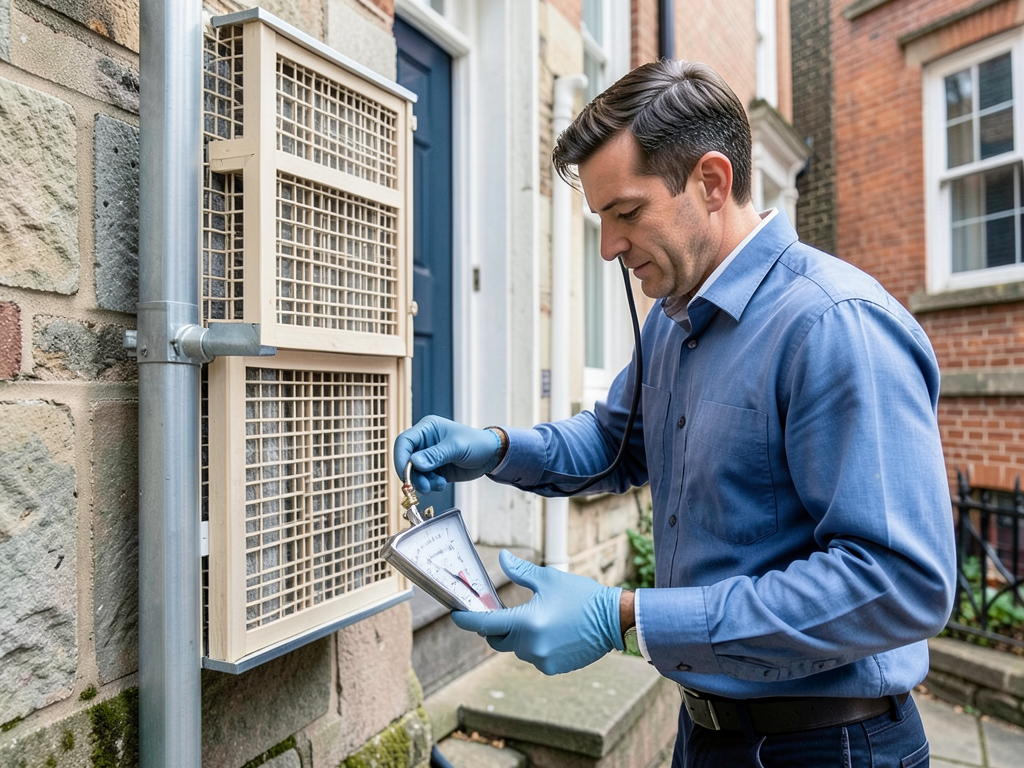
Our trucks carry manifold gauge sets, megohm meters, and thermal imaging cameras. When we arrive, we check refrigerant pressures first. Low suction pressure means a refrigerant leak or a failed metering device. High head pressure points to a dirty condenser coil or an overcharged system. We measure superheat and subcooling to pinpoint exactly where the system is failing.

Next, we test electrical components. We check voltage at the contactor, measure capacitance on start and run capacitors, and test the defrost control board. A failed capacitor reads zero microfarads. A stuck reversing valve clicks but does not shift refrigerant flow. These are not abstract problems. They are measurable failures with specific fixes.

If the compressor is locked, we check the windings for shorts using a megohm meter. A reading below 1 megohm means the compressor has failed and needs replacement. If the system is low on refrigerant, we use nitrogen pressure testing and electronic leak detectors to find the leak before we recharge. Adding refrigerant without fixing the leak is a waste of your money.

We carry the parts that fail most often in District homes. Contactors rated for high-humidity environments. Capacitors sized for sustained high-load operation. Reversing valves built to handle temperature swings. Defrost sensors calibrated for freeze-thaw cycles.

Patriot HVAC Washington DC trains every technician on heat pump thermodynamics and refrigerant cycle physics. We do not throw parts at problems. We measure, diagnose, and fix the root cause so your system runs reliably after we leave.

What Happens When You Call for Emergency Heat Pump Repair

Emergency Heat Pump Repair in Washington, D.C. – 24/7 Dispatch and Technicians Onsite Within the Hour
01

Immediate Phone Diagnosis

You call our 24 hour heat pump repair line at (771) 218-6322 and speak with a trained dispatcher, not an answering service. We ask targeted questions about your symptoms. Is the outdoor unit running? Are you hearing clicking sounds? Is the thermostat displaying an error code? These answers help us load the right parts and tools before we leave. We confirm your address in the District, estimate arrival time, and dispatch the closest available technician.
02

Onsite System Testing

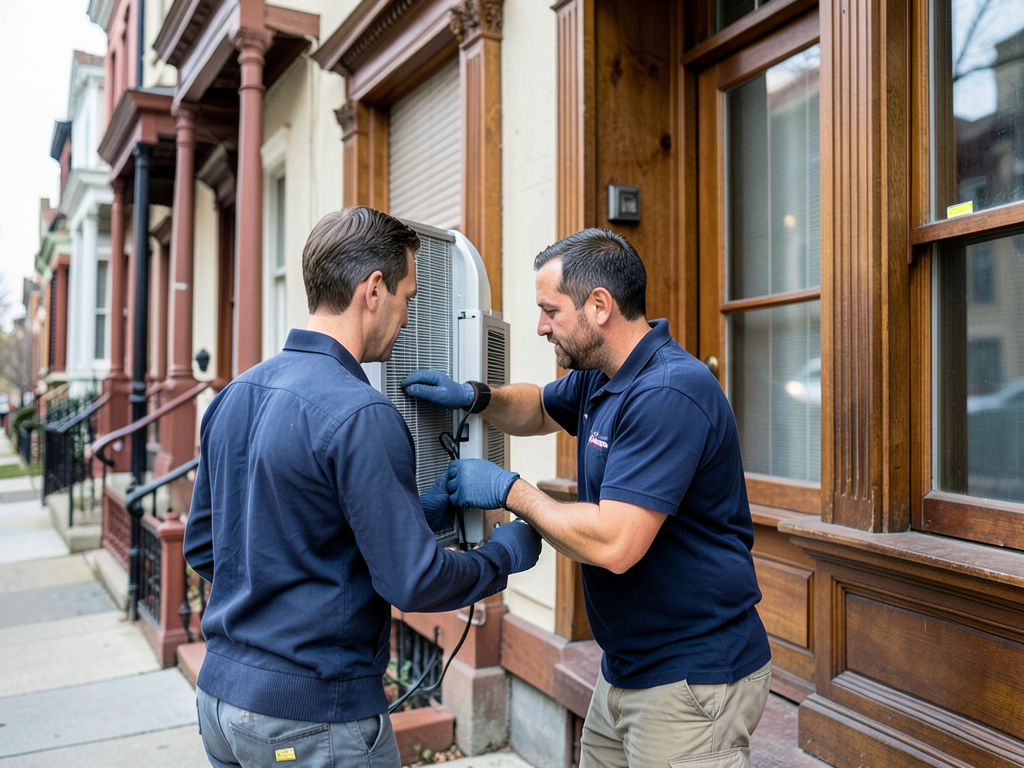
Our technician arrives in a fully stocked van with diagnostic equipment and common replacement parts. We test refrigerant pressures, electrical voltages, and airflow at the air handler. We inspect the outdoor coil for ice buildup or debris blockage. We check the defrost control board and reversing valve operation. Most emergency heat pump service calls in Washington, D.C. involve capacitor failure, refrigerant leaks, or defrost control issues. We identify the failure mode within 20 minutes and explain the repair before starting work.
03

System Restoration and Testing

We replace the failed component, restore refrigerant charge if needed, and test the system through a complete heating or cooling cycle. We measure temperature split at the registers, confirm proper defrost operation, and check amp draw on the compressor. Before we leave, your heat pump is running at factory specifications. We explain what failed, why it failed, and what you can do to prevent future breakdowns. You get a written invoice with part numbers and labor details.

Why Washington, D.C. Homeowners Trust Us With Emergency Repairs

You need a company that understands District homes and shows up when promised.

Patriot HVAC Washington DC has repaired heat pumps in every neighborhood from Capitol Hill to Chevy Chase. We know the old Federal rowhouses with original ductwork and the new construction in Navy Yard with high-efficiency zoned systems. We have worked on heat pumps installed in 1990 and systems installed last year. This experience matters when you are diagnosing a failure at 2 a.m.

Washington, D.C. mechanical codes require specific installation standards for heat pumps. Outdoor units must be elevated above the 100-year floodplain in low-lying areas near the Potomac and Anacostia. Refrigerant line sets must be properly insulated to prevent condensation in our humid climate. Electrical disconnects must meet NEC standards for outdoor installations. We know these codes because we work in the District every day.

Our technicians carry licenses and insurance required by the D.C. Department of Consumer and Regulatory Affairs. You are not letting an unlicensed handyman touch your HVAC system. You are hiring trained professionals who understand heat pump refrigerant cycles, electrical systems, and airflow dynamics.

We answer our emergency line 365 days a year. No voicemail. No callbacks on Monday. When you call for urgent heat pump repair on Christmas Eve or the Fourth of July, a real person answers and dispatches a technician. We quote flat-rate pricing before we start work so you know exactly what the repair costs. No surprise charges at midnight.

We also understand the urgency. A failed heat pump in January can freeze your pipes and cause thousands in water damage. A failed system in August can trigger heat exhaustion in elderly residents or young children. We treat emergency calls with the seriousness they deserve.

What You Can Expect From Our Emergency Heat Pump Service

Response Time and Availability

We dispatch technicians 24 hours a day, seven days a week, including holidays. When you call our emergency line at (771) 218-6322, we answer immediately and send a technician to your location within 60 minutes in most District neighborhoods. Our vans are staged throughout Washington, D.C. to minimize travel time. We do not schedule emergency calls for the next business day. We come now. If weather or traffic delays our arrival, we call you with an updated ETA so you are not left waiting. Emergency heat pump repair means immediate response, and we deliver on that promise.

Thorough Diagnostic Process

We do not rush the diagnosis to save time. Our technicians spend 20 to 30 minutes testing your system with calibrated instruments. We measure refrigerant pressures at the service valves, check electrical voltages at the contactor and capacitors, and test the defrost control board operation. We inspect the outdoor coil for blockages and the indoor air handler for airflow restrictions. We also check your thermostat settings and wiring to rule out simple issues before diagnosing major component failure. You get a clear explanation of what failed and why before we start any repair work.

Quality of Repair Work

We use OEM or equivalent-quality replacement parts designed for the high-humidity, high-load conditions in Washington, D.C.. If we replace a capacitor, it is rated for continuous duty in extreme temperatures. If we repair a refrigerant leak, we braze the joint with silver solder and pressure-test the repair before recharging. We do not use quick fixes or temporary patches. Every repair is done to factory specifications. After the repair, we test the system through a full heating or cooling cycle and measure performance at the registers. You get a system that works correctly, not a band-aid that fails again in two weeks.

Follow-Up and Maintenance Options

After we restore your heat pump, we provide a written invoice detailing the parts replaced and labor performed. We explain what caused the failure and offer recommendations to prevent future breakdowns. Many emergency repairs happen because of deferred maintenance. Dirty coils, clogged filters, and neglected defrost sensors all lead to premature failures. We offer maintenance plans that include twice-yearly inspections, coil cleaning, and refrigerant level checks. Regular maintenance extends the life of your heat pump and reduces the chance of another middle-of-the-night failure. We also keep your service history on file so future technicians know exactly what work has been done.

Frequently Asked Questions

You Have Questions,
We Have Answers

What to do if the heat pump stops working? +

First, check your thermostat settings and ensure the system is on. Verify the circuit breaker has not tripped. Look for obvious issues like blown fuses or tripped breakers. If these quick checks do not restore heat, call a qualified technician immediately. Washington, D.C.'s humid summers and cold winters mean a broken heat pump puts your home at risk for frozen pipes or dangerous indoor temperatures. Do not attempt repairs on refrigerant lines or electrical components yourself. A failed compressor, refrigerant leak, or frozen coil requires professional diagnosis within hours, not days, especially during extreme weather.

What is the $5000 rule for HVAC? +

The $5000 rule is a repair guideline. Multiply the age of your HVAC system by the cost of the repair. If the total exceeds $5000, replacement usually makes more financial sense than repair. For example, a 12-year-old heat pump needing a $600 repair equals $7200, suggesting replacement. This rule helps homeowners avoid sinking money into aging equipment prone to repeated failures. In Washington, D.C., where heat pumps work hard year-round against humidity and temperature swings, units over 10 years old often fail multiple times. Weigh repair costs against efficiency gains and warranty coverage on new systems.

What is emergency heat for a heat pump? +

Emergency heat is a backup heating mode that bypasses the heat pump and activates electric resistance heating strips. It is less efficient and costs significantly more to run but provides warmth when the heat pump fails or cannot keep up during extreme cold. In Washington, D.C., you may need emergency heat when outdoor temperatures drop below 25 degrees and the heat pump cannot extract enough heat from frozen air. Only use emergency heat temporarily during breakdowns or severe weather. If your system stays in emergency heat mode, you have a malfunction requiring immediate professional repair to avoid high electric bills.

Can anyone service a heat pump? +

No. Heat pumps require specialized training, tools, and EPA certification to service safely and legally. Technicians must handle refrigerants, diagnose reversing valves, and understand heat pump cycle mechanics. Unlicensed work voids warranties and risks expensive damage or safety hazards. In Washington, D.C., the District Department of Energy and Environment mandates proper refrigerant handling. Hiring unqualified contractors can lead to improper refrigerant charges, electrical fires, or compressor failure. Always verify technicians hold HVAC licenses and EPA 608 certification. Emergency repairs demand experienced professionals who can diagnose complex issues quickly, especially during winter cold snaps or summer humidity spikes.

What is the average cost of a heat pump replacement? +

Heat pump replacement in Washington, D.C. typically ranges based on system size, efficiency rating, and installation complexity. Costs vary with equipment brand, ductwork modifications, and refrigerant type. Factors affecting price include your home's square footage, insulation quality, and whether you choose a standard efficiency or high-efficiency unit with advanced features. Historic District homes or row houses may require custom installations. Rebates and tax credits can offset expenses. Emergency replacements during peak season may carry premium pricing. Get multiple written quotes detailing equipment specifications, labor, permits, and warranty coverage. Avoid estimates that seem unusually low, as they often signal substandard equipment or unlicensed work.

How to hard reset a heat pump? +

Turn off the heat pump at the thermostat. Locate your circuit breaker panel and switch off the breaker labeled for your HVAC system. Wait at least three to five minutes to allow capacitors to discharge and the system to fully reset. Turn the breaker back on, then restore power at the thermostat. A hard reset clears minor electronic glitches but will not fix mechanical failures, refrigerant leaks, or frozen coils. If the system fails to restart or trips the breaker again, stop and call a technician immediately. Repeated resets can damage compressors. Washington, D.C.'s power fluctuations during storms sometimes require resets, but persistent issues need professional diagnosis.

What is the 3 minute rule for air conditioners? +

The three-minute rule prevents compressor damage by requiring a minimum three-minute wait between system shutdowns and startups. This delay allows refrigerant pressures to equalize inside the compressor, reducing strain on startup. Modern heat pumps have built-in delay timers that enforce this rule automatically. Manually cycling your system on and off rapidly can bypass this protection and burn out the compressor, an expensive failure requiring replacement. In Washington, D.C., where heat pumps switch between heating and cooling modes frequently, respect this delay. If your system short-cycles or restarts constantly, you have a serious malfunction requiring immediate emergency repair to prevent compressor failure.

What are signs my HVAC needs replacing? +

Watch for frequent breakdowns, rising energy bills, uneven temperatures between rooms, and excessive noise during operation. Systems over 12 years old with major component failures like compressor or coil issues often need replacement rather than repair. Look for visible rust, refrigerant leaks, or ice buildup on outdoor units. If your heat pump struggles to maintain comfort during Washington, D.C.'s humid summers or cold winter nights, efficiency has declined. Strange odors, constant cycling, or dust accumulation signal failing components. When repair costs approach half the price of replacement, or you face a second major repair within two years, replacement makes financial sense.

Do HVAC companies give free quotes? +

Most reputable HVAC companies in Washington, D.C. provide free estimates for system replacements or major installations. However, emergency diagnostic visits and repair quotes typically carry service call fees, often applied toward repair costs if you proceed. Free quotes usually cover straightforward replacements where technicians measure your home, calculate load requirements, and propose equipment options. Complex diagnostics for intermittent failures or multi-point inspections generally require paid service calls. During emergencies, expect diagnostic fees but ask if they credit toward repairs. Get written quotes detailing all costs, equipment specifications, labor, permits, and warranties. Avoid companies pushing high-pressure sales without thorough system evaluation.

Why is my heat pump not turning on emergency heat? +

Your heat pump may not activate emergency heat due to thermostat settings, wiring issues, or a failed backup heating element. Check if your thermostat is set to emergency heat mode rather than normal heat mode. Blown fuses in the air handler can disable electric heating strips. In Washington, D.C., if outdoor temperatures are not extremely low, the system may not need emergency heat. However, if the heat pump compressor has failed and emergency heat will not engage, you have both a primary and backup system failure requiring immediate repair. Call a technician to diagnose electrical issues, control board failures, or damaged heating elements before indoor temperatures drop dangerously low.

How Washington, D.C.'s Freeze-Thaw Cycles Destroy Heat Pumps Faster Than Normal Wear

The District sits in a climate transition zone where winter temperatures swing wildly. A January week can start at 15 degrees and end at 50 degrees. These freeze-thaw cycles force your heat pump to work harder than systems in stable climates. When outdoor temperatures drop below 32 degrees, frost accumulates on the outdoor coil. The defrost cycle reverses refrigerant flow to melt the ice, but repeated defrost cycles stress the reversing valve and drain the system's efficiency. Over years, this constant cycling causes refrigerant leaks at brazed joints, defrost sensor failures, and reversing valve sticking. Heat pumps in the District need more frequent emergency heat pump service than systems in milder climates because the weather beats them up faster.

We have repaired heat pumps in every District neighborhood, from the brick rowhouses in Georgetown to the high-rise condos in Southwest Waterfront. We understand the unique HVAC challenges in older homes with outdated electrical panels and undersized ductwork. We know which heat pump models perform well in District humidity and which manufacturers have parts available locally. When you need 24 hour heat pump repair, you want a company that knows your neighborhood, understands local building codes, and keeps the parts your system needs in stock. Patriot HVAC Washington DC is based in the District and serves only the Washington, D.C. metro area. We are not a national franchise dispatching the nearest available contractor. We are your neighbors, and we show up when you call.
HVAC Services in The Washington DC Area

Easily locate Patriot HVAC and explore our service area on the map below. We are strategically positioned to provide prompt and efficient heating, ventilation, and air conditioning services across Washington D.C. and its neighboring communities. Whether you're seeking a quick repair or a new installation, our team is ready to serve your comfort needs.

Address:
Patriot HVAC Washington DC, 20 F St NW, Washington, DC, 20001

Additional Services We Offer

Our news updates

Latest Articles & News from The Blogs

A seasonal guide to the best day to switch from cooling to heating in Washington DC Washington DC homeowners face…

A seasonal guide to the best day to switch from cooling to heating in Washington DC

A seasonal guide to the best day to switch from cooling to heating in Washington DC Washington DC homeowners face…

The Ultimate Spring HVAC Checklist for Large Family Homes in Crestwood

The Ultimate Spring HVAC Checklist for Large Family Homes in Crestwood Spring in Washington DC means the humid summer heat…

Keeping construction dust out of your Buzzard Point apartment during nearby building projects

Keeping construction dust out of your Buzzard Point apartment during nearby building projects Construction dust from new developments along the…

Contact Us

Your heat pump will not fix itself. Every hour you wait risks more damage and discomfort. Call Patriot HVAC Washington DC at (771) 218-6322 right now. We answer 24/7, dispatch immediately, and restore your comfort fast.