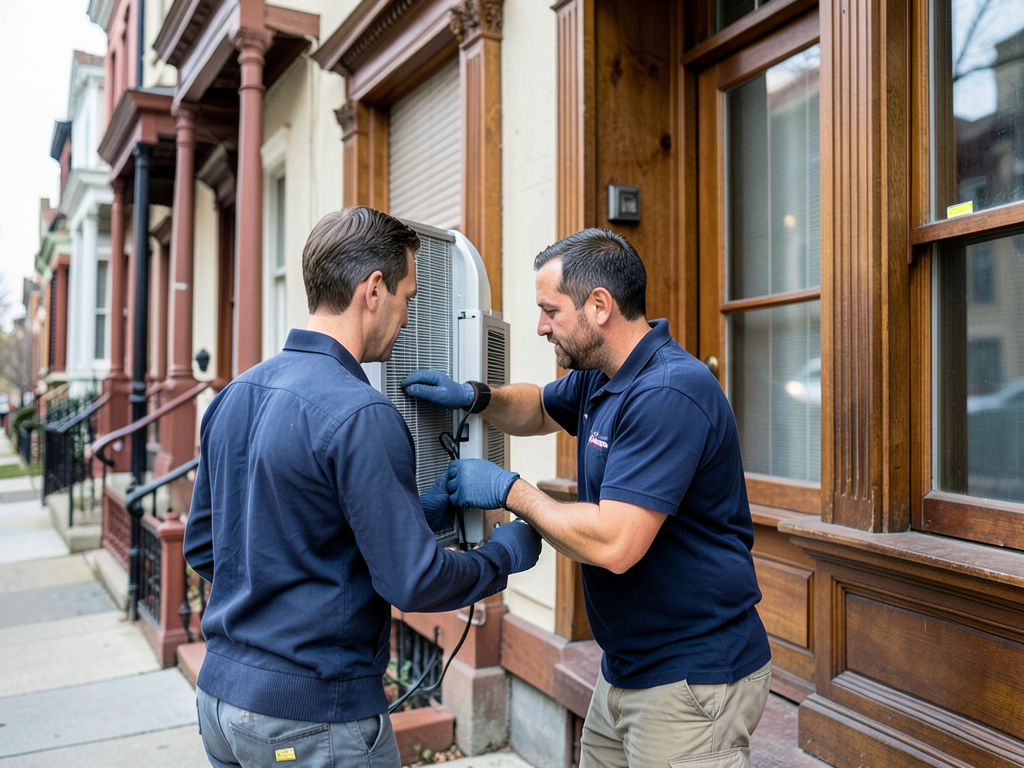
Washington, D.C. has more rowhouses per capita than any major U.S. city. These narrow, multi-story homes create vertical temperature stratification that single-zone HVAC cannot solve. A three-story rowhouse in Shaw or Logan Circle has 12-foot ceilings on the first floor and 8-foot ceilings on the third floor. Heat rises into the top floor during summer, making bedrooms unbearable. Cold air sinks into the basement during winter, leaving the first floor fighting for warmth. Forced air zoning gives each floor independent control, eliminating the hot-room, cold-room cycle that defines rowhouse living.
Washington, D.C. rowhouses also feature rear additions, converted attics, and English basements that were never part of the original HVAC design. A home built in 1920 and renovated in 2005 has ductwork that barely reaches the addition. A zone control system lets you balance airflow between the original structure and the new space without replacing your entire duct system. We work with D.C.'s Historic Preservation Office requirements when installing systems in protected neighborhoods. We know how to route ductwork and control wiring without compromising architectural integrity or triggering permit violations.