Menu

AC Repair Services in Washington, D.C. – Fast Expert Repairs for Residential and Commercial Systems

Patriot HVAC Washington DC delivers complete air conditioning repair and HVAC service for homes and businesses across the District, from Georgetown row homes to Capitol Hill office buildings.

Slider Image 1
Slider Image 2
Slider Image 3
Slider Image 4
Slider Image 5
Slider Image 7
Slider Image 8
Slider Image 9
Slider Image 10
Slider Image 11

Why Washington, D.C. Air Conditioners Work Harder and Break Down Faster

Washington, D.C. sits at the intersection of two brutal climate zones. You get the humid, swampy summers from the coastal plain and the freeze-thaw cycles from the mid-Atlantic transition zone. Your air conditioner battles 90-degree days with 80 percent humidity from June through September, then sits dormant through winters that can swing from 20 degrees to 55 degrees in a single week.

That thermal stress destroys compressors. The humidity corrodes coils. The freeze-thaw cycle cracks condensate lines.

Add in the District's aging housing stock. Georgetown row homes built in the 1800s never had central air. Capitol Hill townhouses from the 1920s got window units retrofitted into ductwork designed for radiators. Adams Morgan brownstones have HVAC systems jury-rigged into spaces with seven-foot ceilings and zero crawl space access.

You need air conditioning repair that understands these constraints. A technician who knows how to route refrigerant lines through brick walls two feet thick. Someone who can diagnose whether your system is undersized for the load or if your ductwork is leaking 40 percent of your cooled air into unconditioned spaces.

When your AC service involves historic preservation restrictions or condo association approval processes, generic repairs do not work. You need HVAC repair expertise that accounts for the District's unique architectural and regulatory landscape. Patriot HVAC Washington DC knows these buildings because we work in them every day.

Why Washington, D.C. Air Conditioners Work Harder and Break Down Faster
How We Diagnose and Repair AC Systems in the District

How We Diagnose and Repair AC Systems in the District

Most air conditioner repair starts with the wrong question. The homeowner asks, "Can you fix it?" The tech answers, "Yes," then replaces a capacitor without checking subcooling or measuring static pressure.

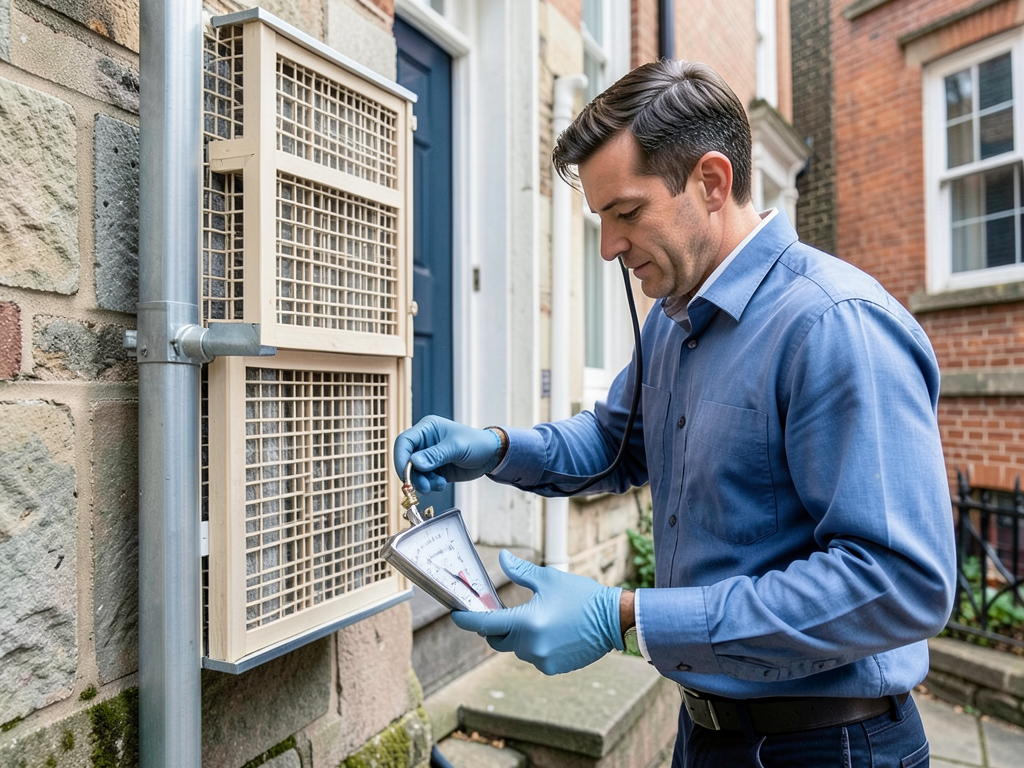
We start with system performance testing. We measure supply and return temperatures. We check refrigerant charge with superheat and subcooling calculations, not just gauge pressures. We test airflow with a manometer to verify your blower is moving the CFM your tonnage requires.

If your evaporator coil is freezing, we do not just thaw it and leave. We find out why. Is your filter clogged? Is your blower motor failing? Is your refrigerant charge low because you have a leak in the lineset running through your crawl space? Is your expansion valve stuck?

We use thermal imaging to find hot spots in electrical connections before they fail. We inspect condensate drains for algae blockages that flood your air handler. We check compressor amperage draw against manufacturer specs to catch motors on the edge of failure.

For central air repair in older District homes, we evaluate ductwork integrity. If your ducts are in an unconditioned attic hitting 140 degrees in July, and they are wrapped in R-4 insulation from 1975, you are losing half your cooling capacity before the air reaches your registers. We document this. We show you the math.

Our air conditioning repair service includes load calculations when needed. If someone installed a three-ton system in a space that needs four tons, no amount of repair will make you comfortable. We tell you that up front.

What Happens When You Call for AC Repair

AC Repair Services in Washington, D.C. – Fast Expert Repairs for Residential and Commercial Systems
01

Emergency Dispatch and Diagnosis

You call (771) 218-6322 and speak with someone who asks the right questions. Is your system running but not cooling? Is it not turning on at all? Is it making noise? We dispatch a certified technician with a fully stocked van to your location in the District. Same-day service is available for emergencies. We arrive with diagnostic tools, not just parts we hope will fix the problem.
02

System Testing and Repair

Our technician performs the full diagnostic protocol. We test electrical components, measure refrigerant levels, inspect the compressor and condenser, check the evaporator coil, and verify blower operation. You get a detailed explanation of what failed and why. We provide upfront pricing before starting repairs. No surprise charges. We complete most air conditioner repairs the same day using OEM-quality parts from our van inventory.
03

Verification and System Optimization

After repairs, we do not just pack up and leave. We run your system through a full cooling cycle. We verify temperature split across the coil. We check that refrigerant charge is exact. We measure airflow at your registers. We make sure your thermostat is calibrated correctly. You get documentation of all work performed and recommendations for preventing future breakdowns, including filter change schedules and maintenance intervals.

Why District Residents Choose Patriot HVAC Washington DC for Air Conditioning Repair

Washington, D.C. has specific code requirements that most regional HVAC companies ignore. The District adopted the 2017 International Mechanical Code with local amendments. If you are adding cooling capacity, you need a permit. If you are replacing a condensing unit in a historic district, you need approval for exterior equipment placement.

We navigate this process regularly. We know which AHJ inspectors cover which wards. We know the permitting timeline. We know how to spec equipment that meets energy code requirements without breaking your budget.

Our technicians work across every neighborhood in the District. We have repaired split systems in Dupont Circle condos where the air handler is in a closet the size of a phone booth. We have serviced rooftop package units on Columbia Heights apartment buildings. We have replaced compressors on chiller systems in Foggy Bottom office towers.

You get a technician who has worked on your type of building before. Someone who knows that row homes in Shaw have shared party walls that make ductwork routing a puzzle. Someone who understands that Cleveland Park homes on sloped lots often have condensate drainage issues because the outdoor unit sits eight feet below the indoor coil.

We also understand the urgency. When your AC fails during a heat wave and the temperature in your home hits 95 degrees, you cannot wait three days for an appointment. We prioritize emergency air conditioning repair calls. We stock the parts that fail most often in District systems, so we are not running to a supply house while you sweat.

Patriot HVAC Washington DC focuses exclusively on the Washington, D.C. metro area. We are not a national franchise following a corporate script. We are local technicians who live and work in the same climate you do.

What to Expect from Our AC Repair Service

Response Time and Availability

We offer same-day service for most air conditioning repair calls in Washington, D.C. Emergency service is available seven days a week. When you call (771) 218-6322, you get a live person who can dispatch a technician to your location within hours, not days. We do not put you on a waiting list during peak summer months. Our technicians carry the most common replacement parts in their vans, which means most repairs are completed in a single visit. For complex repairs requiring special-order components, we provide temporary cooling solutions when possible and prioritize your job once parts arrive.

Diagnostic Process and Transparency

Every AC service call starts with a complete system evaluation. We do not guess at problems or throw parts at your system hoping something works. Our technicians use calibrated diagnostic equipment to measure actual system performance. You get a clear explanation of what is wrong, what caused the failure, and what it will cost to fix. We provide written estimates before starting work. If we find multiple issues, we prioritize them by urgency and safety, so you can make informed decisions about repairs. No pressure tactics. No upselling services you do not need.

Quality of Repairs and Parts

We use OEM or equivalent-quality parts for all air conditioner repairs. Your compressor gets replaced with the manufacturer-specified model, not a generic substitute that will fail in two years. Refrigerant is charged by weight and verified with superheat and subcooling measurements, not just gauge readings. Electrical connections are properly torqued and insulated. Condensate drains are cleared and tested under load. When we finish your central air repair, your system operates at the efficiency and capacity it was designed for. You get documentation of all work performed, including part numbers, refrigerant quantities, and performance measurements.

Maintenance Recommendations and Follow-Up

After completing your HVAC repair, we provide a detailed maintenance plan to prevent future breakdowns. This includes filter change schedules, recommended cleaning intervals for coils and blowers, and early warning signs of component wear. We explain which parts are approaching end-of-life so you can budget for replacements before they fail during the next heat wave. If you choose to enroll in our preventive maintenance program, we schedule seasonal tune-ups that catch small problems before they become expensive emergencies. You get reminders when service is due, priority scheduling, and discounted rates on future repairs.

Frequently Asked Questions

You Have Questions,
We Have Answers

What is the $5000 AC rule? +

The $5000 AC rule helps you decide whether to repair or replace your system. Multiply the repair cost by your unit's age. If the result exceeds $5000, replace the unit. For example, a $600 repair on a 10-year-old unit equals $6000, suggesting replacement makes financial sense. In Washington, D.C., where high humidity and summer heat stress systems, older units often fail repeatedly. This rule prevents throwing money at repairs when replacement offers better long-term value. Consider energy efficiency gains and local utility rebates when making your decision.

How much does an AC service call cost? +

AC service calls in Washington, D.C. typically include a diagnostic fee that covers the technician's time and initial inspection. This fee usually applies toward repair costs if you proceed with the work. Costs vary based on the issue's complexity, required parts, and refrigerant type. Emergency calls outside business hours cost more. Humidity-related problems common in D.C. can add diagnostic time. Older units may need harder-to-find parts. Get a detailed estimate before authorizing repairs. Reputable companies provide transparent pricing without hidden fees.

What is the most expensive repair on an AC unit? +

Compressor replacement ranks as the most expensive AC repair. The compressor pumps refrigerant through your system, acting as the heart of your air conditioner. Replacement requires specialized equipment, refrigerant handling, and extensive labor. In Washington, D.C., compressors fail faster due to summer heat and constant cycling from high humidity. Other expensive repairs include full evaporator coil replacement and condenser unit replacement. When facing compressor failure on older systems, replacement often makes more financial sense than repair. Age and efficiency losses matter in this decision.

Can I write off my new AC unit on my taxes? +

You may qualify for tax deductions if your AC replacement meets energy efficiency standards. The Inflation Reduction Act offers federal tax credits for high-efficiency HVAC systems. In Washington, D.C., these credits can offset installation costs. Medical necessity provisions allow deductions for humidity control systems prescribed by doctors. Home office deductions may apply if you use dedicated business space. Consult a tax professional familiar with D.C. tax codes and federal energy credits. Keep all receipts, efficiency ratings, and installation documentation. Your accountant can determine eligibility based on your specific situation.

What is the 3 minute rule for AC? +

The 3-minute rule prevents compressor damage. After shutting off your AC, wait three full minutes before restarting it. This delay allows refrigerant pressure to equalize throughout the system. Starting too soon forces the compressor to work against high pressure, causing mechanical strain and premature failure. In Washington, D.C., where systems cycle frequently due to humidity, this rule matters. Power outages during summer storms make this especially important. Modern thermostats often include built-in delays. Manual thermostat adjustments should follow this rule to protect your equipment investment.

What is the average lifespan of an AC unit? +

AC units typically last 15 to 20 years with proper maintenance. In Washington, D.C., high humidity and summer heat can shorten lifespan to 12 to 15 years. Systems near the Potomac River face additional moisture stress. Annual maintenance extends equipment life. Units running constantly during humid summers wear faster than those in drier climates. Coastal humidity accelerates corrosion on outdoor components. Older homes without proper drainage around condensers face shorter lifespans. Quality installation matters. A properly sized system lasts longer than an oversized unit that short-cycles constantly.

Can I service my AC myself? +

Basic maintenance you can handle includes changing filters monthly during cooling season and keeping outdoor units clear of debris. You can straighten bent condenser fins carefully with a fin comb. Clean outdoor coils with a garden hose. However, refrigerant handling requires EPA certification. Electrical work risks shock and fire. Misdiagnosis wastes money on wrong parts. In Washington, D.C., humidity creates mold issues inside units that need professional cleaning. Ductwork problems require specialized tools. Annual professional maintenance catches problems you cannot see. DIY maintenance supplements professional service but does not replace it.

What are common AC problems? +

Common AC problems in Washington, D.C. include refrigerant leaks from corrosion, frozen evaporator coils from airflow restrictions, and drainage clogs from high humidity. Electrical failures happen when systems overwork during heat waves. Compressor failure affects older units. Dirty filters restrict airflow. Thermostat malfunctions cause cycling issues. Capacitor failure prevents startup. Condensate drain clogs from mold and algae growth are especially common near the Potomac River. Ductwork leaks waste cooled air in older homes. Outdoor units clog with cottonwood seeds and leaves. Most problems start small, making annual maintenance valuable for catching issues early.

Is AC repair covered by insurance? +

Homeowners insurance typically covers AC damage from covered perils like lightning strikes, fallen trees, or vandalism. Gradual wear and tear is not covered. Flood damage requires separate flood insurance, important in low-lying D.C. neighborhoods near the Anacostia or Potomac Rivers. Storm damage from hurricanes may be covered depending on your policy. Normal mechanical failure from age is your responsibility. Some policies cover refrigerant line damage. Review your policy's exclusions. Document all damage with photos. File claims promptly after storms. Maintenance neglect can void coverage.

What is the most expensive part to replace on an air conditioner? +

The compressor costs the most to replace. This component pressurizes and circulates refrigerant through your system. Replacement requires recovering existing refrigerant, installing the new compressor, evacuating the system, and recharging with refrigerant. Labor-intensive work and refrigerant costs add up quickly. In Washington, D.C., compressors fail from overwork during humid summers. Condenser coils and evaporator coils also rank as expensive parts. Full air handler replacement costs nearly as much. When these parts fail on systems over 10 years old, total replacement often makes better financial sense than repair.

How District Humidity and Historic Buildings Complicate AC Repair

Washington, D.C. averages 72 percent relative humidity during summer months. Your air conditioning system has to remove moisture from the air, not just cool it. If your AC is short-cycling because it is oversized or your blower speed is set wrong, your home never dehumidifies properly. You get that clammy, sticky feeling even when the thermostat says 72 degrees. Older District homes built before central air often have undersized ductwork and inadequate return air pathways. Row homes in Capitol Hill and Dupont Circle have duct systems squeezed into wall cavities and floor joists that restrict airflow and reduce dehumidification capacity. Proper air conditioning repair in these buildings requires understanding these constraints and optimizing system performance within them.

The District's concentration of historic properties adds regulatory layers to HVAC service that do not exist in newer cities. If you live in a historic district like Georgetown or Capitol Hill, you cannot just mount a new condensing unit wherever it fits. The Historic Preservation Review Board has jurisdiction over exterior equipment visibility. We work with these requirements regularly. We know how to position outdoor units to minimize visual impact while maintaining proper airflow and service access. We understand the permitting process for HVAC modifications in protected structures. When you need central air repair or system replacement in a historic District building, you need a contractor who can navigate both the technical requirements and the regulatory process.
HVAC Services in The Washington DC Area

Easily locate Patriot HVAC and explore our service area on the map below. We are strategically positioned to provide prompt and efficient heating, ventilation, and air conditioning services across Washington D.C. and its neighboring communities. Whether you're seeking a quick repair or a new installation, our team is ready to serve your comfort needs.

Address:
Patriot HVAC Washington DC, 20 F St NW, Washington, DC, 20001

Additional Services We Offer

Our news updates

Latest Articles & News from The Blogs

The Best Air Filter Upgrades for Georgetown Homes with Sensitive Historic Woodwork Georgetown's Federal-style rowhouses and Victorian homes need special…

The Best Air Filter Upgrades for Georgetown Homes with Sensitive Historic Woodwork

The Best Air Filter Upgrades for Georgetown Homes with Sensitive Historic Woodwork Georgetown's Federal-style rowhouses and Victorian homes need special…

The Best Air Filter Upgrades for Georgetown Homes with Sensitive Historic Woodwork

The Best Air Filter Upgrades for Georgetown Homes with Sensitive Historic Woodwork Georgetown's historic rowhouses and Federal-style homes face a…

The Best Air Filter Upgrades for Georgetown Homes with Sensitive Historic Woodwork

The Best Air Filter Upgrades for Georgetown Homes with Sensitive Historic Woodwork Georgetown's historic rowhouses and Federal-style homes feature exquisite…

Contact Us

Your air conditioner will not fix itself. Call Patriot HVAC Washington DC at (771) 218-6322 now for same-day AC repair service. We dispatch certified technicians across the District with fully stocked vans ready to restore your cooling fast.