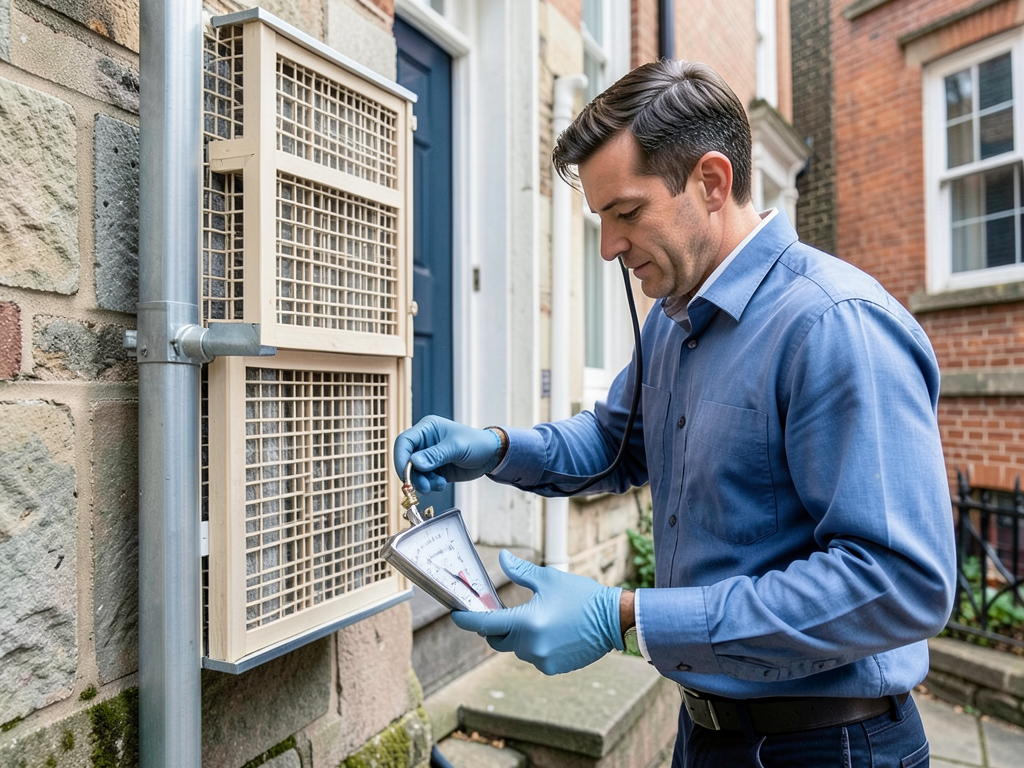
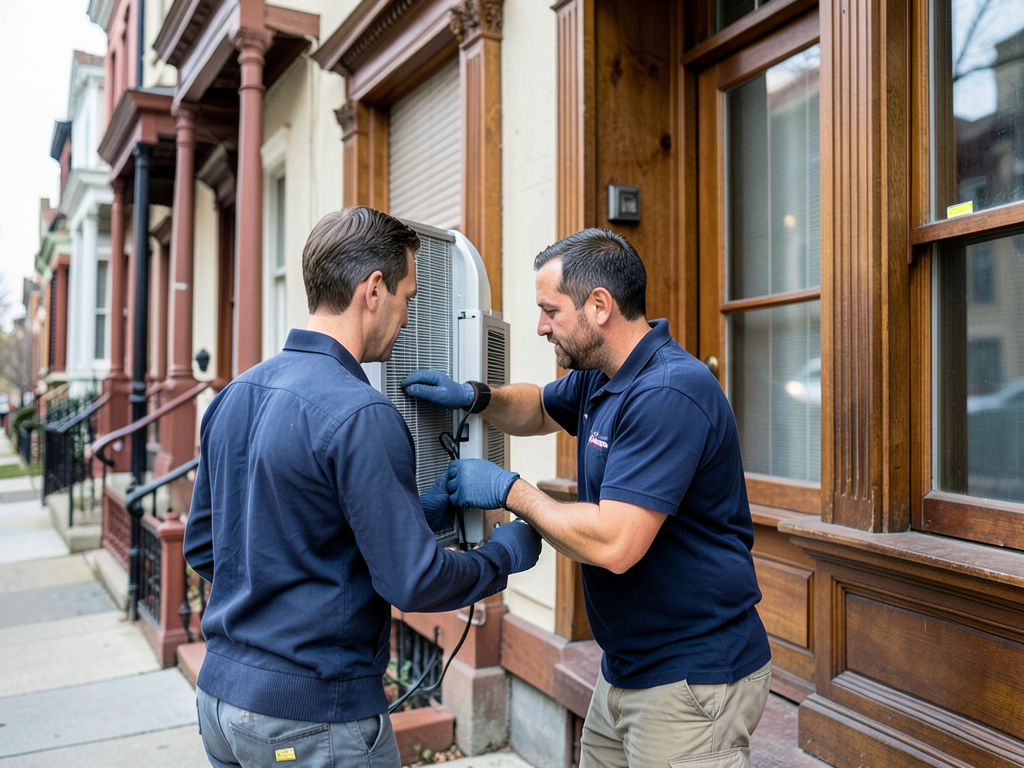
Washington, D.C.'s urban core runs 5 to 7 degrees hotter than surrounding suburban areas during summer nights. Concrete, asphalt, and dark roofs absorb solar radiation during the day and release it after sunset. Your outdoor condenser unit never gets a break from high ambient temperatures. When the condenser cannot reject heat efficiently, refrigerant pressures climb, compressor run time increases, and electrical components overheat. Neighborhoods with dense building coverage, like downtown and Shaw, experience the most severe heat island effects. Central air troubleshooting in these areas often reveals overworked compressors, failed capacitors, and burnt contactor points caused by excessive operating temperatures. The equipment works harder and fails faster than the same unit would in a suburban setting with more vegetation and airflow.
The District's Department of Energy and Environment requires all HVAC work to meet strict efficiency standards and refrigerant handling protocols. When diagnosing air conditioner problems in D.C., contractors must understand local permitting requirements for system replacements and major repairs. Patriot HVAC Washington DC stays current with these regulations because we work exclusively in this jurisdiction. We know which repairs trigger permit requirements and which installations need DOEE approval. This local expertise protects you from compliance problems and ensures your system meets current efficiency mandates. Choosing a contractor who understands D.C.'s specific codes and climate challenges means you get accurate diagnostics and repairs that last.