
Why the DCSEU rebate makes 2026 the best time to upgrade in Marshall Heights
Washington DC homeowners in Marshall Heights can save thousands of dollars on heat pump installations in 2026 through a combination of DCSEU rebates and federal tax credits. The District’s Sustainable Energy Utility offers point-of-sale rebates up to $8,000 for income-qualified residents, plus standard rebates of $300-$2,000 for most homeowners. When combined with the federal 25C tax credit of up to $2,000, the total savings can cover 30-50% of a new system’s cost. DCSEU Official Rebate Programs.
The 2026 program includes expanded eligibility for cold-climate heat pumps that perform efficiently even during DC’s occasional polar vortex events. Marshall Heights homes built before 1980 often need electrical panel upgrades to support modern heat pumps, and the DCSEU now offers additional rebates for those electrical improvements. With inflation cooling and supply chains stabilizing, equipment costs have dropped 8-12% from 2023 peaks, making this the most cost-effective window for HVAC upgrades in years. The Best Heating and Cooling Solutions for Adams Morgan Condos.
DCSEU Participating Service Providers like Patriot HVAC handle all the paperwork and ensure installations meet Title 24 energy efficiency standards. The process starts with a free energy audit to determine your home’s specific needs and rebate eligibility. Most Marshall Heights installations complete within 2-3 days, with minimal disruption to your home. Call (771) 218-6322 today to schedule your inspection and lock in 2026 rebate rates before funding allocations change.. Read more about What the New SEER2 Energy Ratings Mean for Your Benning Heights Utility Bills.
Projected Rebate Amounts for 2026
DCSEU rebate tiers for 2026 depend on household income and the type of heat pump installed. Income-qualified rebates range from $4,000 to $8,000 for air-source heat pumps, while standard rebates offer $300-$2,000 based on system efficiency ratings. Ground-source heat pumps qualify for higher rebates due to their superior energy performance.. Read more about Comparing Dual Fuel Heat Pumps and Traditional Furnaces for Michigan Park Homeowners.
The income qualification thresholds use Area Median Income (AMI) calculations specific to Washington DC. A family of four earning less than 80% of AMI ($96,500 in 2026) qualifies for the maximum $8,000 rebate. Those earning 81-150% of AMI receive graduated rebates starting at $4,000. Above 150% AMI, homeowners receive the standard efficiency-based rebates.
Additional rebates cover related electrical work needed for heat pump conversions. Electrical panel upgrades cost $1,500-$3,000 but qualify for $500-$1,000 rebates through the DCSEU. Smart thermostats and advanced controls add another $100-$300 in potential savings. These combined incentives make whole-home electrification financially viable for most Marshall Heights homeowners.. Read more about Switching from oil to electric heat in Benning Ridge (What to expect).
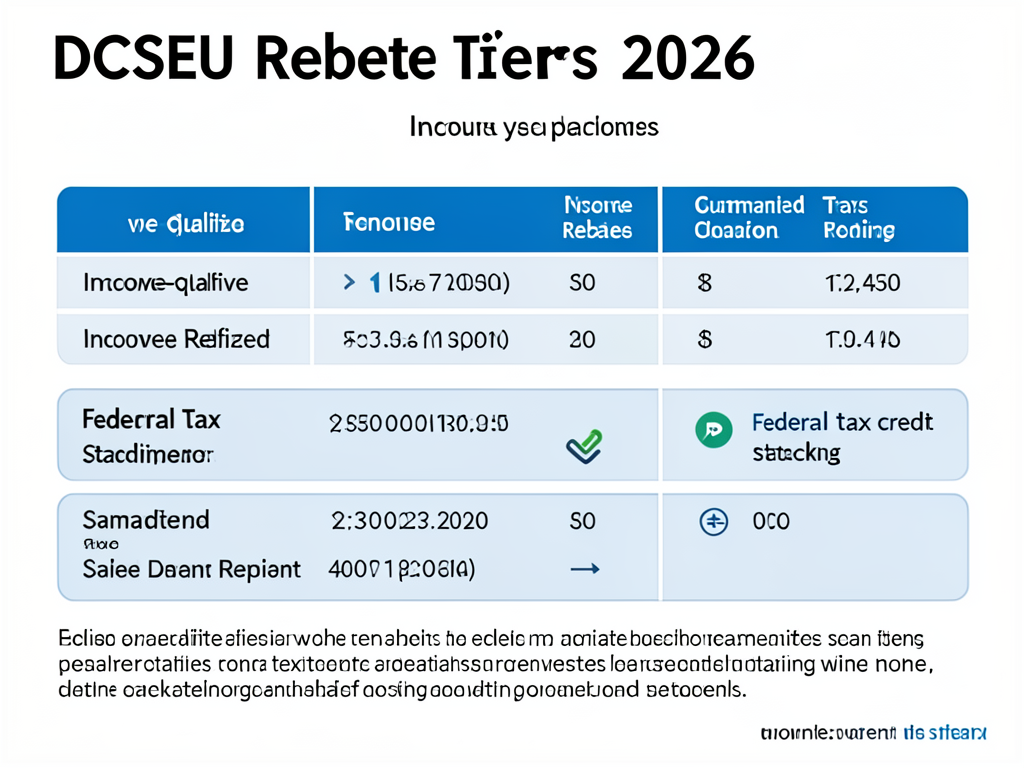
Technical diagram showing DCSEU rebate tiers for 2026 including income-qualified vs standard rebates and federal tax credit stacking Federal 25C Tax Credit Information.
DCSEU vs. Federal IRA Tax Credits (25C)
The federal 25C tax credit provides up to $2,000 for qualified heat pump installations, but it works differently than DCSEU rebates. While DCSEU offers point-of-sale discounts that reduce your upfront cost immediately, the 25C credit comes as a tax refund the following year. This creates a powerful combination when used together.
For a $12,000 heat pump installation, a standard rebate tier might provide $1,500 off at purchase. Add the $2,000 federal credit, and your net cost drops to $8,500. Income-qualified households could see total savings of $10,000 or more, bringing the same system down to $2,000 out of pocket.
The 25C credit covers 30% of installation costs up to the $2,000 maximum. It applies to both air-source and ground-source heat pumps meeting SEER2 and HSPF2 efficiency standards. Ground-source systems often qualify for the full credit amount due to their higher installation costs, while air-source systems typically hit the cap.. Read more about Can Your Woodridge HVAC Upgrade Qualify for Historic Preservation Tax Credits?.
Timing matters for maximizing these benefits. The 25C credit extends through 2032, but DCSEU funding operates on annual cycles. Locking in both programs in 2026 ensures you capture the current rebate levels before any potential reductions in future years.
Eligibility Requirements for Washington DC Homeowners
DCSEU rebates require homeowners to use Participating Service Providers for all installations. These contractors must complete DCSEU training and maintain current licensing with the District’s Department of Buildings. Patriot HVAC meets all PSP requirements and handles permit applications through DCRA’s eRecords system.
Property eligibility depends on your building type and ownership status. Single-family homes, rowhouses, and condominiums qualify if you own the unit. Rental properties need landlord approval but can still access rebates if the owner signs the rebate application. Cooperative housing units require approval from the building’s board of directors.
Documentation requirements include proof of DC residency, income verification for rebate qualification, and property ownership or authorization to make improvements. Recent utility bills help establish your current energy usage patterns. The DCSEU requires a pre-installation energy audit to confirm your home meets minimum efficiency standards.
Timing restrictions affect eligibility. Rebates apply to new installations, not repairs of existing systems. Homes must complete the upgrade within 180 days of the initial audit to qualify for the original incentive amounts. Extensions are possible for documented delays beyond the homeowner’s control. Getting Fast AC Repair for Your Navy Yard Apartment or Condo.
Qualified Equipment: SEER2 and HSPF2 Standards
2026 equipment standards require SEER2 ratings of 15 or higher for air-source heat pumps to qualify for DCSEU rebates. HSPF2 ratings must reach 8.5 or above for heating efficiency. These updated standards replace the older SEER/HSPF metrics and provide more accurate real-world performance measurements.
Cold-climate heat pumps meeting these standards operate efficiently in temperatures as low as -15°F, making them suitable for DC’s occasional arctic outbreaks. These systems use variable-speed compressors and advanced defrost cycles to maintain heating capacity when outdoor temperatures drop. Most models maintain 70-80% of their rated heating capacity at 5°F.
Ground-source heat pumps have different qualification requirements. These systems need an Energy Efficiency Ratio (EER) of 15 or higher and a Coefficient of Performance (COP) of 3.5 or above. While installation costs run $20,000-$40,000, they qualify for the highest rebate tiers and deliver 300-400% efficiency compared to 200-300% for air-source units.
Equipment must carry AHRI certification and include manufacturer warranties of at least five years on major components. DCSEU requires that all installations include smart thermostats or advanced controls for optimal system performance. These controls help track energy savings and verify that the system meets promised efficiency levels.
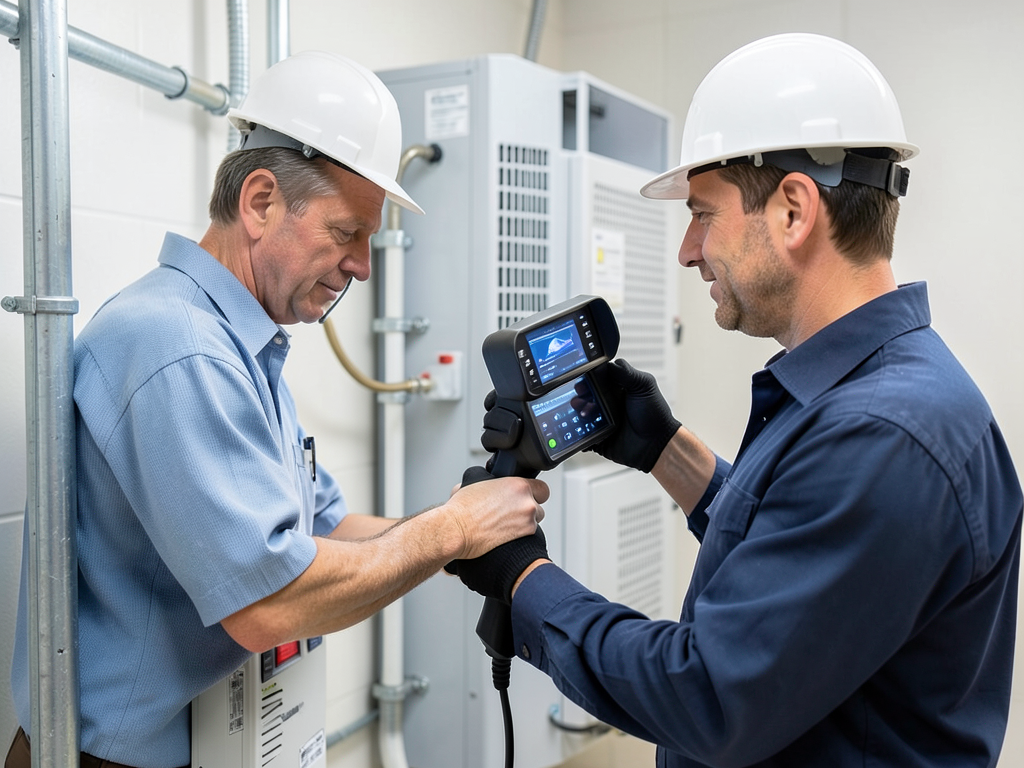
Technician using thermal imaging camera to verify heat pump installation meets DCSEU efficiency standards
How to Apply: The 2026 Step-by-Step Process
- Schedule Energy Audit
Contact a DCSEU Participating Service Provider to schedule a free home energy assessment. The audit identifies your home’s efficiency opportunities and determines which rebates you qualify for based on income and property characteristics.
- Receive Rebate Estimate
After the audit, you’ll get a detailed report showing potential rebates, recommended equipment, and estimated energy savings. This document helps you compare options and understand the financial impact of different system choices.
- Select Equipment and Contractor
Choose your heat pump system based on the audit recommendations. Work with your PSP to select equipment that meets both your comfort needs and rebate qualification requirements. Sign the installation agreement and pay any required deposits. How to Choose the Right Air Conditioning Replacement for Your Foggy Bottom Townhouse.
- Obtain Permits
Your contractor submits permit applications to the DC Department of Buildings. This process typically takes 2-4 weeks for residential HVAC installations. The permit ensures your installation meets all local building codes and safety requirements.
- Complete Installation
Professional installation usually takes 1-3 days depending on system complexity. Your contractor handles equipment delivery, electrical connections, and integration with existing ductwork or radiant systems. They also install required smart controls and perform system commissioning.
- Submit Rebate Application
After installation passes final inspection, your contractor submits all required documentation to the DCSEU. This includes proof of purchase, installation verification, and any income qualification documents. Most rebates process within 4-6 weeks.
- Receive Rebate Payment
DCSEU issues rebates as either direct payments or credits to your contractor, depending on your chosen payment method. You then file for your federal 25C tax credit when filing annual taxes, completing your total savings.
Case Study: Marshall Heights 1940s Rowhouse Conversion
A Marshall Heights homeowner replaced a 1970s oil furnace and window AC units with a cold-climate heat pump system in early 2025. The 1,800-square-foot rowhouse had no ductwork, requiring a ductless mini-split installation. Initial costs totaled $14,500 including electrical panel upgrades. Fast Furnace Repair Services for Families in Chevy Chase DC.
The homeowner qualified for income-based rebates, receiving $7,500 from DCSEU at the point of sale. The federal 25C credit provided an additional $2,000 tax refund. Combined savings of $9,500 reduced the net cost to $5,000. Annual energy bills dropped from $2,200 to $1,100, creating monthly savings of $91.67.
Installation included three indoor heads serving different zones of the home. The outdoor unit fits within the rowhouse’s limited side yard while meeting DC Historic Preservation Office guidelines for exterior equipment placement. The system provides both heating and cooling, eliminating the need for separate AC units.. Read more about Comparing the top three heat pump brands for Washington DC winters.
Electrical upgrades included a 200-amp panel replacement and new circuit breakers for the heat pump. These improvements qualified for an additional $750 rebate through the DCSEU’s electrical upgrade program. The homeowner also received a free smart thermostat that helps optimize system performance and track energy usage.
Before and after comparison showing ductless mini-split installation in a Marshall Heights rowhouse with limited exterior space. Read more about How a Whole-House Dehumidifier Can Make Your Marshall Heights Home Feel 10 Degrees Cooler.
Why 2026 Beats Waiting Until 2027
DCSEU funding operates on annual appropriations that can change based on District budget priorities. The 2026 budget includes $15 million for residential electrification rebates, but future allocations remain uncertain. Locking in your upgrade now guarantees access to current rebate levels before any potential reductions.
Equipment costs continue their seasonal decline from 2023 pandemic-era highs. Manufacturers have stabilized supply chains and reduced shipping costs, passing savings to consumers. Waiting another year might mean missing the current price bottom as global demand for heat pumps increases.
The 2026 timeline aligns with optimal installation seasons in DC. Spring installations complete before summer cooling demands peak, while fall installations finish before winter heating needs begin. This timing ensures your system gets fully tested and optimized before facing extreme weather conditions.
DC’s Building Energy Performance Standards (BEPS) will tighten in 2027, potentially affecting future upgrade requirements. Homes exceeding size thresholds may face mandatory efficiency improvements. Installing a high-efficiency heat pump now helps you stay ahead of these regulations while maximizing current incentives.
Call (771) 218-6322 today to schedule your energy audit and lock in 2026 rebate rates. Our team handles everything from permits to paperwork, making the upgrade process simple and stress-free. Don’t wait until funding changes or equipment costs rise again.
Frequently Asked Questions
How long do heat pump installations take in Marshall Heights?
Most installations complete within 2-3 days for standard replacements. Complex installations requiring electrical upgrades or ductwork modifications may take 4-5 days. Your contractor will provide a detailed timeline after the initial assessment.
Can I keep my existing radiators with a new heat pump?
Yes, air-to-water heat pumps can work with existing radiator systems. These hybrid systems provide both space heating through radiators and domestic hot water heating. They typically cost more than standard air-source units but preserve your home’s historic character.
What if I don’t qualify for income-based rebates?
Even without income qualification, you can still receive standard rebates of $300-$2,000 plus the federal 25C tax credit. Many homeowners save 25-35% of installation costs through these combined incentives. The energy savings often pay for the remaining investment within 5-7 years.
Do I need a new electrical panel for a heat pump?
Most homes built before 2000 need electrical upgrades to support heat pumps. The DCSEU offers additional rebates for these improvements. Your energy audit will determine if your current panel can handle the new system or if an upgrade is necessary.
How do I find a qualified DCSEU Participating Service Provider?
Visit the official DCSEU website for a list of certified contractors. Look for companies with experience in your neighborhood and specific home type. Patriot HVAC maintains active PSP status and specializes in Marshall Heights installations, handling all permitting and paperwork requirements.
What maintenance do heat pumps require?
Heat pumps need annual professional maintenance including coil cleaning, refrigerant level checks, and electrical connection inspections. Most systems include 5-10 year warranties on major components. Regular filter changes every 1-3 months help maintain efficiency and indoor air quality.
{
“@context”: “https://schema.org”,
“@type”: “BlogPosting”,
“headline”: “Why the DCSEU rebate makes 2026 the best time to upgrade in Marshall Heights”,
“description”: “Learn how DCSEU rebates and federal tax credits can save Marshall Heights homeowners thousands on heat pump upgrades in 2026. Get the full roadmap now.”,
“wordCount”: 2024,
“datePublished”: “2026-04-10T14:47:00.000Z”,
“dateModified”: “2026-04-10T14:47:00.000Z”,
“inLanguage”: “en-US”,
“mainEntityOfPage”: {
“@type”: “WebPage”,
“@id”: “https://patriothvacwashingtondc.com”
},
“publisher”: {
“@type”: “LocalBusiness”,
“name”: “Patriot HVAC Washington DC”,
“url”: “https://patriothvacwashingtondc.com”
},
“author”: {
“@type”: “Organization”,
“name”: “Patriot HVAC Washington DC”,
“url”: “https://patriothvacwashingtondc.com”
},
“image”: {
“@type”: “ImageObject”,
“url”: “https://patriothvacwashingtondc.com/wp-content/uploads/2026/03/why-the-dcseu-rebate-makes-2026-the-best-time-to-u-1.png”
}
}
{
“@context”: “https://schema.org”,
“@type”: “HVACBusiness”,
“name”: “Patriot HVAC Washington DC”,
“url”: “https://patriothvacwashingtondc.com”,
“address”: {
“@type”: “PostalAddress”,
“addressLocality”: “Washington DC”
},
“areaServed”: {
“@type”: “City”,
“name”: “Washington DC”
}
}
{
“@context”: “https://schema.org”,
“@type”: “FAQPage”,
“mainEntity”: [
{
“@type”: “Question”,
“name”: “How long do heat pump installations take in Marshall Heights?”,
“acceptedAnswer”: {
“@type”: “Answer”,
“text”: “Most installations complete within 2-3 days for standard replacements. Complex installations requiring electrical upgrades or ductwork modifications may take 4-5 days. Your contractor will provide a detailed timeline after the initial assessment.”
}
},
{
“@type”: “Question”,
“name”: “Can I keep my existing radiators with a new heat pump?”,
“acceptedAnswer”: {
“@type”: “Answer”,
“text”: “Yes, air-to-water heat pumps can work with existing radiator systems. These hybrid systems provide both space heating through radiators and domestic hot water heating. They typically cost more than standard air-source units but preserve your home’s historic character.”
}
},
{
“@type”: “Question”,
“name”: “What if I don’t qualify for income-based rebates?”,
“acceptedAnswer”: {
“@type”: “Answer”,
“text”: “Even without income qualification, you can still receive standard rebates of $300-$2,000 plus the federal 25C tax credit. Many homeowners save 25-35% of installation costs through these combined incentives. The energy savings often pay for the remaining investment within 5-7 years.”
}
},
{
“@type”: “Question”,
“name”: “Do I need a new electrical panel for a heat pump?”,
“acceptedAnswer”: {
“@type”: “Answer”,
“text”: “Most homes built before 2000 need electrical upgrades to support heat pumps. The DCSEU offers additional rebates for these improvements. Your energy audit will determine if your current panel can handle the new system or if an upgrade is necessary.”
}
},
{
“@type”: “Question”,
“name”: “How do I find a qualified DCSEU Participating Service Provider?”,
“acceptedAnswer”: {
“@type”: “Answer”,
“text”: “Visit the official DCSEU website for a list of certified contractors. Look for companies with experience in your neighborhood and specific home type. Patriot HVAC maintains active PSP status and specializes in Marshall Heights installations, handling all permitting and paperwork requirements.”
}
},
{
“@type”: “Question”,
“name”: “What maintenance do heat pumps require?”,
“acceptedAnswer”: {
“@type”: “Answer”,
“text”: “Heat pumps need annual professional maintenance including coil cleaning, refrigerant level checks, and electrical connection inspections. Most systems include 5-10 year warranties on major components. Regular filter changes every 1-3 months help maintain efficiency and indoor air quality.”
}
}
]
}
{
“@context”: “https://schema.org”,
“@type”: “HowTo”,
“name”: “How to Apply for DCSEU Heat Pump Rebates”,
“step”: [
{
“@type”: “HowToStep”,
“position”: 1,
“name”: “Schedule Energy Audit”,
“text”: “Contact a DCSEU Participating Service Provider to schedule a free home energy assessment. The audit identifies your home’s efficiency opportunities and determines which rebates you qualify for based on income and property characteristics.”
},
{
“@type”: “HowToStep”,
“position”: 2,
“name”: “Receive Rebate Estimate”,
“text”: “After the audit, you’ll get a detailed report showing potential rebates, recommended equipment, and estimated energy savings. This document helps you compare options and understand the financial impact of different system choices.”
},
{
“@type”: “HowToStep”,
“position”: 3,
“name”: “Select Equipment and Contractor”,
“text”: “Choose your heat pump system based on the audit recommendations. Work with your PSP to select equipment that meets both your comfort needs and rebate qualification requirements. Sign the installation agreement and pay any required deposits. How to Choose the Right Air Conditioning Replacement for Your Foggy Bottom Townhouse.”
},
{
“@type”: “HowToStep”,
“position”: 4,
“name”: “Obtain Permits”,
“text”: “Your contractor submits permit applications to the DC Department of Buildings. This process typically takes 2-4 weeks for residential HVAC installations. The permit ensures your installation meets all local building codes and safety requirements.”
},
{
“@type”: “HowToStep”,
“position”: 5,
“name”: “Complete Installation”,
“text”: “Professional installation usually takes 1-3 days depending on system complexity. Your contractor handles equipment delivery, electrical connections, and integration with existing ductwork or radiant systems. They also install required smart controls and perform system commissioning.”
},
{
“@type”: “HowToStep”,
“position”: 6,
“name”: “Submit Rebate Application”,
“text”: “After installation passes final inspection, your contractor submits all required documentation to the DCSEU. This includes proof of purchase, installation verification, and any income qualification documents. Most rebates process within 4-6 weeks.”
},
{
“@type”: “HowToStep”,
“position”: 7,
“name”: “Receive Rebate Payment”,
“text”: “DCSEU issues rebates as either direct payments or credits to your contractor, depending on your chosen payment method. You then file for your federal 25C tax credit when filing annual taxes, completing your total savings.”
}
],
“image”: “https://patriothvacwashingtondc.com/wp-content/uploads/2026/03/why-the-dcseu-rebate-makes-2026-the-best-time-to-u-1.png”
}
{
“@context”: “https://schema.org”,
“@type”: “BreadcrumbList”,
“itemListElement”: [
{
“@type”: “ListItem”,
“position”: 1,
“name”: “Home”,
“item”: “https://patriothvacwashingtondc.com”
},
{
“@type”: “ListItem”,
“position”: 2,
“name”: “Blog”,
“item”: “https://patriothvacwashingtondc.com/blog”
},
{
“@type”: “ListItem”,
“position”: 3,
“name”: “Why the DCSEU rebate makes 2026 the best time to upgrade in Marshall Heights”
}
]
}
{
“@context”: “https://schema.org”,
“@type”: “Service”,
“serviceType”: “HVAC”,
“provider”: {
“@type”: “LocalBusiness”,
“name”: “Patriot HVAC Washington DC”,
“url”: “https://patriothvacwashingtondc.com”
},
“areaServed”: {
“@type”: “City”,
“name”: “Washington DC”
},
“description”: “Learn how DCSEU rebates and federal tax credits can save Marshall Heights homeowners thousands on heat pump upgrades in 2026. Get the full roadmap now.”
}