Menu

Repair vs. Replace AC Guide in Washington, D.C. – Make the Right Call Based on Age, Efficiency, and Local Climate Demands

This comprehensive guide helps District homeowners evaluate repair costs against replacement benefits, factoring in equipment age, refrigerant regulations, and the unique stress Washington's humid summers place on aging air conditioners.

Slider Image 1
Slider Image 2
Slider Image 3
Slider Image 4
Slider Image 5
Slider Image 7
Slider Image 8
Slider Image 9
Slider Image 10
Slider Image 11

Why This Decision Matters More in Washington's Climate

Washington's climate punishes air conditioners. High humidity from May through September forces your system to work overtime, removing moisture while dropping temperatures. Units manufactured before 2010 were not built for this sustained load. They cycle more frequently, strain compressors harder, and fail faster than the same equipment would in drier climates.

The AC replacement rule of thumb changes when you factor in local conditions. A 12-year-old system in Arizona might have years left. That same unit in Capitol Hill has endured 25 percent more runtime due to humidity. When technicians evaluate whether to repair or replace your air conditioner, they must account for accumulated stress, not just calendar age.

You face this HVAC system repair vs replace decision when a major component fails. Compressor replacement can run thousands. Refrigerant leaks require expensive R-410A or conversion to newer refrigerants. Coil corrosion from humidity becomes irreversible. The air conditioner fix vs replace calculation shifts quickly when repair costs approach 50 percent of replacement value.

District homeowners need accurate information. Generic national guides ignore how Georgetown's brick rowhouses trap heat differently than suburban Bethesda homes. They skip the impact of Potomac River humidity on condenser coils. They overlook how older systems struggle to dehumidify properly, creating mold risks in finished basements common throughout Northwest D.C.

Making the wrong AC repair or replacement decision costs you money twice. Patriot HVAC Washington DC provides the framework to evaluate your specific situation using local data, equipment age, and actual repair costs versus long-term savings.

Why This Decision Matters More in Washington's Climate
The Five-Factor Framework for Your Decision

The Five-Factor Framework for Your Decision

The when to replace AC unit decision requires analyzing five variables simultaneously. Age matters, but runtime hours matter more. A system installed in 2012 has operated roughly 18,000 hours in Washington's climate. That approaches design life for residential compressors rated for 20,000 to 25,000 hours.

Efficiency degradation accelerates after year 10. Your SEER rating drops as coils corrode, refrigerant charge drifts, and ductwork seals deteriorate. A unit that delivered 14 SEER when new might perform at 10 SEER by year 12. Replacing it with an 18 SEER system cuts cooling costs by 40 percent.

Refrigerant type creates a hard deadline. R-22 phase-out makes repairs expensive. Leak repairs requiring five pounds of R-22 can exceed $1,000 just for refrigerant. Converting to R-410A requires replacing the condensing unit. When refrigerant dictates replacement anyway, evaluate your options before emergency failure forces a rushed decision.

Repair frequency signals system decline. One repair every few years is normal. Three service calls in 18 months indicates cascading failures. Compressor replacement, followed by blower motor failure, followed by coil leaks means you are chasing problems. The next failure is already developing.

The 5,000-rule provides numerical clarity. Multiply repair cost by equipment age. If the result exceeds 5,000, replacement makes financial sense. A $600 repair on a 7-year-old system equals 4,200. Repair it. An $800 repair on a 14-year-old unit equals 11,200. Replace it. This formula accounts for diminishing return on aging equipment.

Patriot HVAC Washington DC applies this framework to your specific equipment, paired with humidity factors unique to District properties.

How We Help You Decide

Repair vs. Replace AC Guide in Washington, D.C. – Make the Right Call Based on Age, Efficiency, and Local Climate Demands
01

Complete System Assessment

We test actual performance, not just symptoms. This includes measuring refrigerant superheat and subcooling, checking capacitor microfarad ratings, testing compressor amp draw against nameplate data, and calculating airflow across the evaporator coil. We inspect ductwork for leakage, check condensate drain function, and evaluate thermostat calibration. You receive measured data, not guesses about whether your system can be salvaged.
02

Cost-Benefit Analysis

We calculate total repair costs against replacement options. This includes parts, labor, refrigerant costs, and probability of subsequent failures within 24 months. We factor in efficiency gains from newer equipment, refrigerant regulations, and utility rebates available through Pepco and Washington Gas. You see actual numbers comparing keeping your existing system against upgrading to higher-efficiency equipment matched correctly to your home's load calculation.
03

Written Recommendation Report

You receive documentation explaining our recommendation with supporting data. If repair makes sense, we detail what needs fixing and expected service life remaining. If replacement is smarter, we explain why and provide equipment options sized correctly for your square footage, insulation levels, and ductwork capacity. No pressure, no upselling. Just transparent information so you can make the right AC repair or replacement decision for your budget and timeline.

Why District Homeowners Trust Our Guidance

Washington properties present unique challenges that generic HVAC companies miss. Historic rowhouses in Dupont Circle and Logan Circle have limited space for equipment upgrades. Ductwork often runs through unconditioned attics where summer temperatures hit 140 degrees, destroying insulation and creating massive inefficiency. Replacing an air handler without addressing duct losses wastes money.

Basement installations common in District homes create drainage complications. Condensate pumps fail frequently. We evaluate drain lines, pump capacity, and backup systems before recommending repairs or replacements that might flood your finished basement during the next failure.

Zoning matters in multi-story townhomes. A single system struggles to cool three floors when August humidity sits at 70 percent. We assess whether your current system can be salvaged with better ductwork balancing or if you need multi-zone capability that your existing equipment cannot provide.

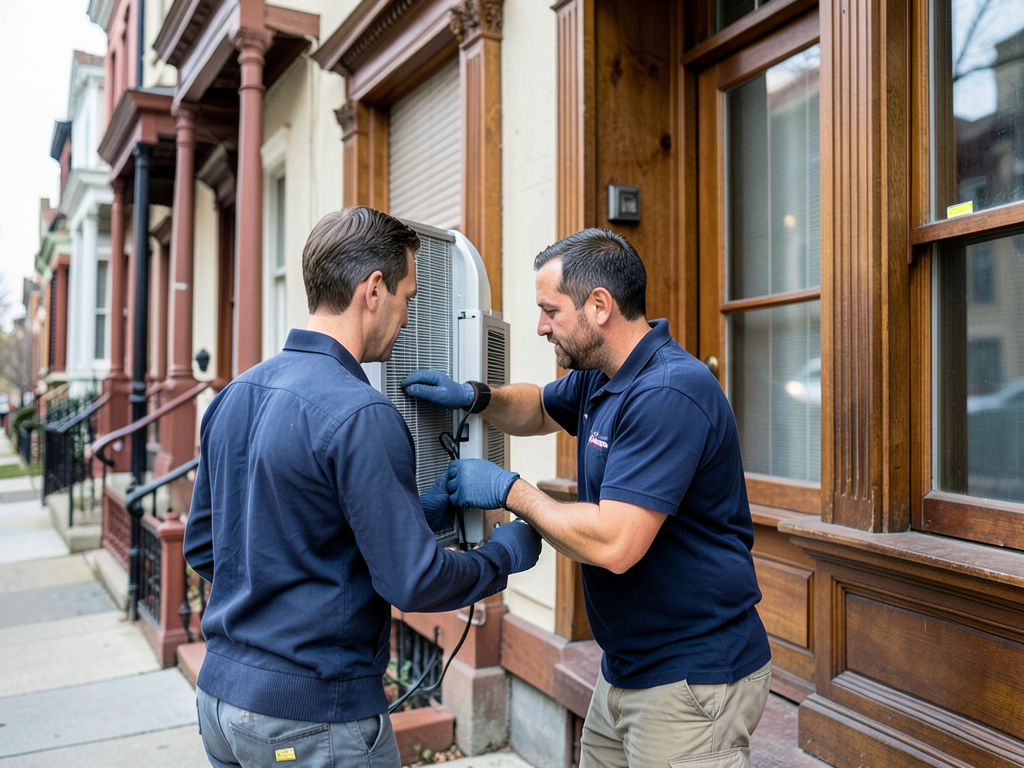
Patriot HVAC Washington DC knows District building stock. We work on Federal-style homes in Georgetown with plaster walls and limited chases for linesets. We handle split-level homes in Chevy Chase with complex ductwork routing. We understand permitting requirements in Capitol Hill historic districts where exterior condenser placement requires HPRB approval.

We also know District mechanical code requirements. Systems installed before 2012 may not have required secondary drain pans or float switches. Newer code requires these safety features. When you replace equipment, we bring everything up to current standards, protecting you from water damage and insurance complications.

Our recommendations account for real-world Washington factors, not textbook theory. That local expertise changes the air conditioner fix vs replace analysis significantly.

What Our Assessment Process Delivers

Same-Day Evaluation Availability

We understand AC decisions become urgent when your system fails during a heat wave. We offer same-day assessment appointments seven days a week during cooling season. Our technicians arrive with diagnostic equipment, not sales scripts. Most evaluations take 60 to 90 minutes, including complete system testing, ductwork inspection, and load calculation verification. You receive preliminary recommendations before we leave, followed by written documentation within 24 hours. Emergency failures get priority scheduling because we know how quickly Washington humidity makes homes unlivable.

Transparent Diagnostic Process

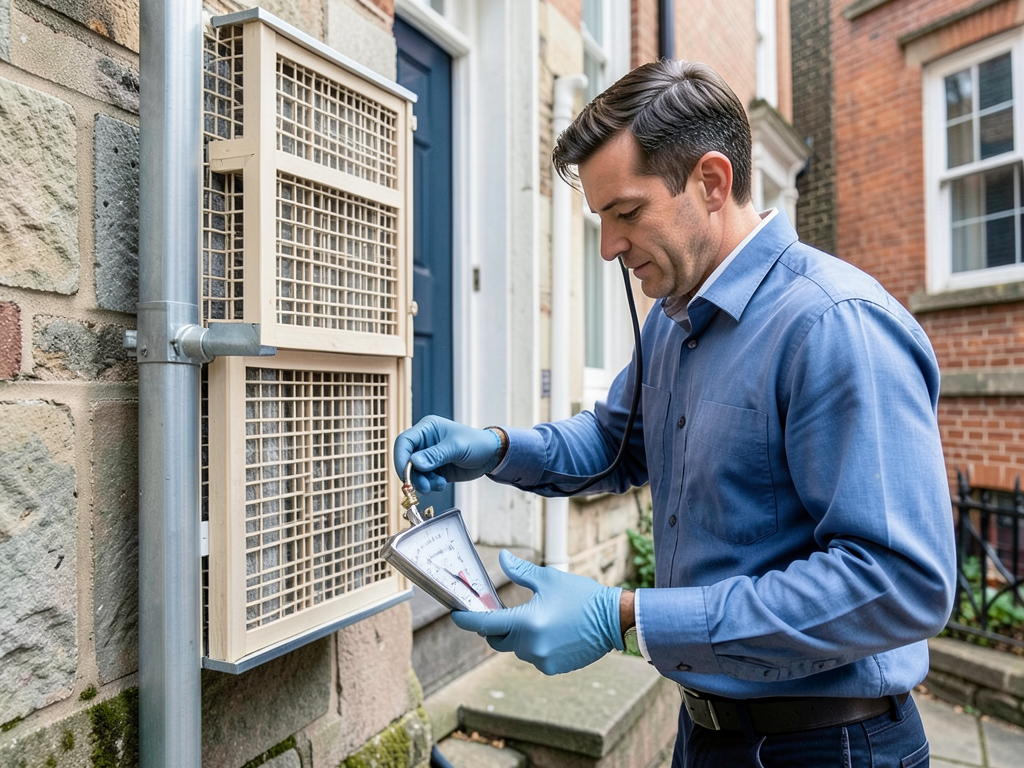
We show you what we find. Compressor amp draw gets measured with you watching. Refrigerant pressures are explained, not just recorded. We photograph corroded coils, damaged ductwork, and failed components. You see images of your evaporator coil condition, not stock photos. We explain what each problem means for system longevity and efficiency. If your system needs replacement, you will understand why before we discuss options. If repair makes sense, we detail exactly what gets fixed and what service life you should expect.

Multiple Equipment Options

When replacement makes sense, we provide three options. Good systems meet code and restore cooling capacity. Better systems add efficiency upgrades and improved humidity control. Best systems include variable-speed technology, zoning capability, and advanced filtration. Each option includes exact model numbers, SEER ratings, warranty terms, and calculated payback periods based on your current energy bills. We never push the most expensive option. We match equipment to your home's actual requirements, your budget reality, and how long you plan to own the property.

Post-Decision Support

Our relationship does not end when you decide. If you choose repair, we provide written documentation of work completed and parts replaced, with guidance on maintenance that extends equipment life. If you replace your system, we handle all permitting, coordinate inspections, and provide manufacturer warranty registration. We return 30 days after installation to verify system performance, adjust airflow if needed, and answer questions about your new equipment's operation. Maintenance plans include annual tune-ups with priority scheduling and discounted service rates.

Frequently Asked Questions

You Have Questions,
We Have Answers

How Washington's Humidity and Historic Housing Stock Complicate the Repair vs. Replace Decision

District humidity creates failure modes you will not read about in national guides. Condensate drain lines clog faster because Washington's humid air produces gallons of water daily. Evaporator coils corrode from the inside out as moisture combines with airborne contaminants. Blower motors fail prematurely from continuous operation fighting humidity. These problems compound with age. A 10-year-old system in Phoenix might be mid-life. That same system in Washington has endured 30 percent more runtime removing moisture. The when to replace AC unit calculation must account for accelerated wear from local climate stress.

Washington's building stock adds complications. Rowhouses built before 1940 have ductwork retrofitted into spaces never designed for HVAC. Victorian homes in Takoma Park have radiator heating but added central air later with undersized ducts. These compromises affect whether repair or replacement makes sense. Patriot HVAC Washington DC evaluates your existing installation before recommending equipment changes. We identify duct sizing problems, airflow restrictions, and installation defects that undermine even new equipment. Our local experience with District housing types ensures your HVAC system repair vs replace decision addresses the whole system, not just the outdoor unit.
HVAC Services in The Washington DC Area

Easily locate Patriot HVAC and explore our service area on the map below. We are strategically positioned to provide prompt and efficient heating, ventilation, and air conditioning services across Washington D.C. and its neighboring communities. Whether you're seeking a quick repair or a new installation, our team is ready to serve your comfort needs.

Address:
Patriot HVAC Washington DC, 20 F St NW, Washington, DC, 20001

Additional Services We Offer

Our news updates

Latest Articles & News from The Blogs

Meeting Friendship Heights Noise Rules with the Quietest New AC Units on the Market Friendship Heights homeowners know the struggle.…

Meeting Friendship Heights Noise Rules with the Quietest New AC Units on the Market

Meeting Friendship Heights Noise Rules with the Quietest New AC Units on the Market Friendship Heights homeowners know the struggle.…

Finding the right HVAC contractor for your LeDroit Park historic renovation

Finding the right HVAC contractor for your LeDroit Park historic renovation \n\n LeDroit Park’s Victorian rowhouses built in the 1870s…

How a Whole-House Dehumidifier Can Make Your Marshall Heights Home Feel 10 Degrees Cooler

How a Whole-House Dehumidifier Can Make Your Marshall Heights Home Feel 10 Degrees Cooler Washington DC's swampy summers make your…

Contact Us

Stop guessing about repair versus replacement. We provide the data you need to make a smart decision. Call Patriot HVAC Washington DC at (771) 218-6322 to schedule your comprehensive system evaluation. Same-day appointments available.