Menu

Commercial AC Repair in Washington, D.C. – Minimize Downtime and Keep Operations Running

When your commercial cooling system fails, every minute costs money. Patriot HVAC Washington DC delivers fast commercial air conditioning repair that prioritizes business continuity, code compliance, and industrial-grade solutions for Washington's demanding commercial environments.

Slider Image 1
Slider Image 2
Slider Image 3
Slider Image 4
Slider Image 5
Slider Image 7
Slider Image 8
Slider Image 9
Slider Image 10
Slider Image 11

Why Commercial AC Failures Hit Washington Businesses Harder

Washington, D.C.'s combination of extreme summer humidity and dense urban heat island effect creates brutal conditions for commercial cooling systems. When temperatures push past 95 degrees with 80 percent humidity, your rooftop units and chillers work overtime just to maintain baseline comfort.

The District's commercial buildings face unique pressures. Federal office buildings, hotels serving international visitors, and retail spaces along Connecticut Avenue cannot afford extended downtime. A failed compressor does not just mean discomfort. It means lost productivity, inventory damage, code violations, and tenant complaints.

Most commercial hvac repair needs stem from predictable causes in this climate. Condenser coils clog with Potomac River valley pollen and urban particulates. Economizers fail from thermal cycling between air-conditioned interiors and oppressive outdoor conditions. Refrigerant leaks develop faster in systems running 12-plus hours daily, six months per year.

The building density near Dupont Circle and downtown creates another challenge. Limited roof access, shared mechanical rooms, and strict noise ordinances complicate repairs. You cannot simply swap components without considering building codes, neighboring tenants, and operational schedules.

Industrial ac repair demands differ from residential work. Your 20-ton rooftop unit requires diagnostic precision, not guesswork. Your building manager needs accurate timelines, not vague estimates. Your tenants need functioning cooling during business hours, not next week.

When your commercial cooling system shows warning signs like reduced airflow, unusual noises, or inconsistent temperatures across zones, the problem compounds quickly. What starts as a minor inefficiency becomes a full system failure during the worst possible time.

Why Commercial AC Failures Hit Washington Businesses Harder
How We Approach Commercial HVAC Repairs Differently

How We Approach Commercial HVAC Repairs Differently

Business ac repair requires a different methodology than residential service calls. We start with load calculations and system mapping, not trial-and-error part swapping. Your commercial system serves multiple zones with varying thermal loads. We diagnose the entire air distribution network, not just the failed component.

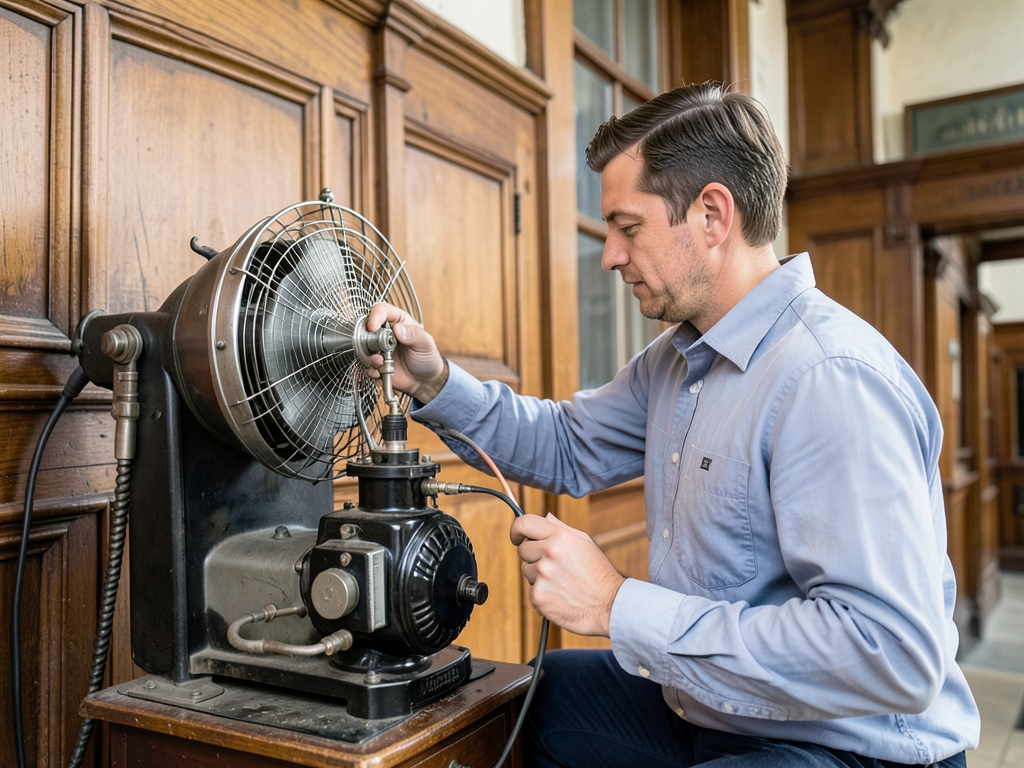
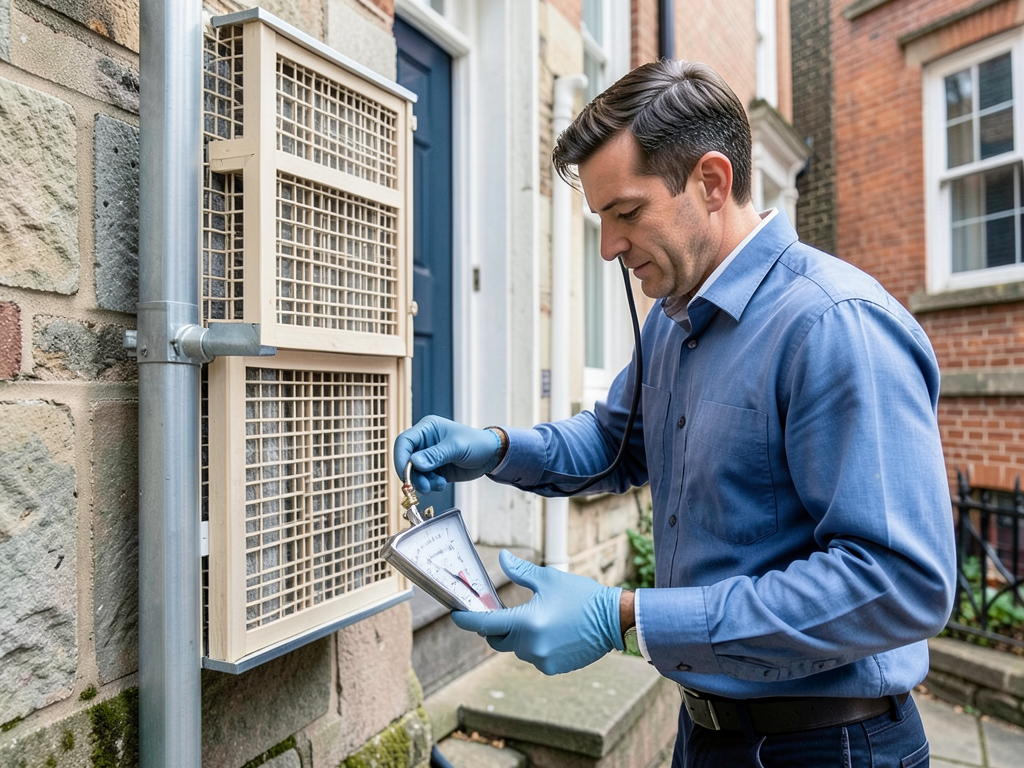
Our technicians arrive with commercial-grade diagnostic equipment. Refrigerant analyzers identify contamination that causes premature compressor failure. Amp meters detect electrical issues before they damage expensive three-phase motors. Airflow hoods measure CFM at each diffuser to identify ductwork restrictions or damper failures.

We prioritize repairs that restore partial functionality first. If your building has multiple zones, we can often bring half the system online while completing repairs on the other half. This phased approach minimizes business disruption and maintains acceptable conditions in critical areas.

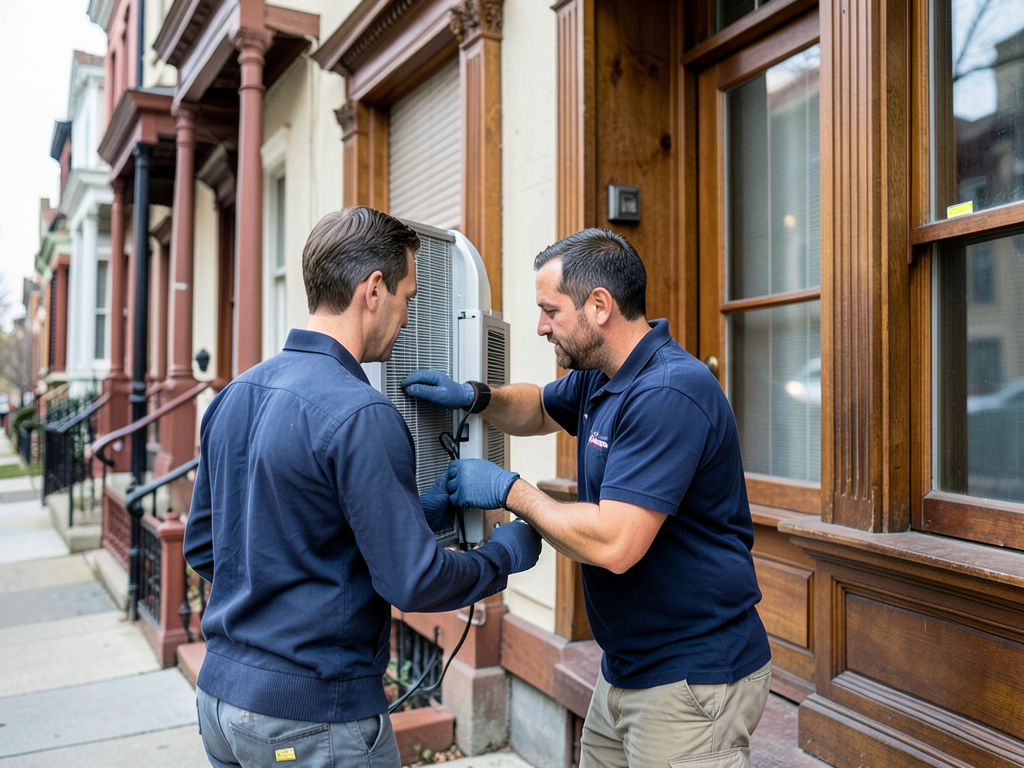
For rooftop units common in Washington commercial buildings, we address the full mechanical system. Failed compressors get replaced with models rated for D.C.'s climate zone. Economizer controls get recalibrated for local humidity patterns. Condensate drainage gets cleared before it damages ceiling systems below.

Washington's commercial buildings must comply with strict ventilation codes. We verify outside air dampers function correctly and meet ASHRAE 62.1 requirements. Poor ventilation does not just create comfort complaints. It violates occupancy permits and creates liability.

Our commercial air conditioning repair work accounts for building operations. We coordinate with property managers on access times, tenant notifications, and temporary cooling solutions if needed. We document all work for facility maintenance logs and warranty compliance.

The difference shows in system longevity. Quick fixes create recurring failures and mounting costs. Proper commercial hvac repair addresses root causes, extends equipment life, and reduces emergency calls.

What Happens During Your Commercial AC Repair Service

Commercial AC Repair in Washington, D.C. – Minimize Downtime and Keep Operations Running
01

System Assessment and Diagnostics

We begin with comprehensive testing of your commercial cooling system, including refrigerant pressures, electrical loads, airflow measurements, and control sequence verification. Our technicians map your system architecture to identify which components affect your critical business areas. This diagnostic phase typically takes 45 to 90 minutes depending on system complexity and determines whether you need immediate repairs or can schedule controlled downtime.
02

Repair Execution and Testing

After approval, we execute repairs with minimal operational disruption. For rooftop units, we coordinate crane access if needed for compressor replacement. For chiller repairs, we isolate affected circuits to maintain partial cooling. All refrigerant work follows EPA Section 608 protocols. We pressure test repairs, verify electrical connections meet NEC standards, and confirm proper oil return in refrigeration circuits before bringing systems back online.
03

Performance Verification and Documentation

We run full-load testing to confirm your system delivers design capacity across all zones. Temperature differentials get measured at supply and return registers. We verify economizer operation and confirm control sequences function as programmed. You receive detailed documentation of all repairs, parts replaced, refrigerant quantities added, and performance measurements. This documentation supports warranty claims, facility management records, and future maintenance planning for your commercial property.

Why Washington Businesses Choose Patriot HVAC Washington DC

Commercial building cooling in Washington requires understanding local infrastructure and regulations. We know the difference between pre-1990s built-up systems common in older downtown buildings and modern rooftop units on newer construction. This knowledge matters when sourcing replacement parts and planning repairs around building constraints.

Our technicians understand D.C. mechanical code requirements. Commercial installations must meet specific ventilation rates, refrigerant containment standards, and electrical safety protocols. We document all work to support inspection compliance and building permit requirements. Property managers need this documentation when tenants have questions or during property transactions.

The geography matters too. Buildings near the National Mall face different challenges than properties in Georgetown or Capitol Hill. Coastal influence from the Chesapeake Bay creates corrosion issues for outdoor equipment. Tree-lined neighborhoods like Cleveland Park generate more organic debris that clogs condensers. We adjust maintenance recommendations based on your building's microclimate.

Response time matters for commercial clients. When your cooling fails during a heatwave, you need technicians who stock commercial-grade parts and can source emergency replacements from local suppliers. We maintain relationships with commercial equipment distributors throughout the greater Washington metro, reducing wait times for critical components.

Business continuity drives our approach. We provide realistic timelines based on parts availability and repair complexity. If a repair requires extended downtime, we discuss temporary cooling options or phased repairs that keep portions of your building operational. You get honest assessments, not optimistic guesses.

Our commercial work history includes office buildings, retail spaces, medical facilities, and multi-tenant properties throughout Washington. We understand lease obligations, tenant rights, and property management responsibilities. This experience prevents complications and ensures repairs meet everyone's requirements.

What You Can Expect From Our Commercial AC Repair Service

Response Time and Scheduling

We prioritize commercial service calls based on business impact. Complete system failures affecting occupied spaces get same-day response when you call before 2 PM on weekdays. Partial failures or single-zone issues can often be scheduled within 48 hours to minimize disruption. We coordinate arrival times with building access requirements and tenant schedules. For after-hours emergencies, we dispatch technicians equipped with diagnostic tools and common commercial parts to restore functionality quickly. Our goal is minimizing your business interruption, not just fixing equipment.

Diagnostic Process and Approval

Commercial diagnostics involve testing refrigerant circuits, electrical systems, control boards, and airflow distribution. We identify all contributing factors, not just obvious failures. You receive a detailed explanation of what failed, why it failed, and what related components show wear. We provide repair options with timeline estimates and discuss whether temporary solutions can maintain partial operations during extended repairs. All work requires approval before we proceed. You get transparent information to make informed decisions about repairs versus replacement.

Quality of Completed Repairs

Completed repairs restore your system to design specifications. We do not patch problems or install undersized components. Compressor replacements include proper oil charging and system cleanup to prevent repeat failures. Refrigerant work includes leak testing and proper evacuation procedures. Electrical repairs meet NEC requirements for commercial installations. We test all safety controls, verify proper sequencing, and confirm your system maintains temperature across all zones under full load. The repair work performs reliably through Washington's demanding summer conditions.

Post-Repair Support and Maintenance

After repairs, we provide documentation including parts installed, refrigerant quantities, and system performance measurements. This supports your facility maintenance records and helps with future service planning. We discuss preventive maintenance schedules tailored to your equipment type and operating hours. Commercial systems running extended hours need more frequent filter changes, coil cleaning, and refrigerant checks than residential units. We offer maintenance agreements that include priority scheduling, discounted service rates, and regular inspections to catch problems before they cause failures. Proper maintenance extends equipment life and reduces emergency repair costs.

Frequently Asked Questions

You Have Questions,
We Have Answers

What is the $5000 AC rule? +

The $5000 rule applies when deciding whether to repair or replace a commercial AC unit. Multiply the repair cost by the age of the system. If the result exceeds $5000, replacement makes better financial sense than repair. For example, a $2000 repair on a three-year-old unit equals $6000, suggesting replacement. This rule helps facility managers in Washington, D.C. weigh repair costs against remaining equipment lifespan and avoid throwing money at failing systems. Factor in D.C.'s high humidity loads and older building stock when evaluating. Consult a commercial HVAC professional to assess energy efficiency gains from newer models before committing.

What are common commercial HVAC problems? +

Commercial HVAC systems in Washington, D.C. face refrigerant leaks, compressor failures, and thermostat malfunctions. High humidity accelerates coil corrosion and drain line clogs. Electrical issues like faulty contactors or capacitors disrupt operations. Poor airflow from dirty filters or blocked vents reduces efficiency. Aging belts and bearings create noise and reduce performance. Rooftop units common in D.C. commercial buildings suffer from weathering and debris buildup. Improperly calibrated economizers waste energy. Ignoring routine maintenance compounds these problems. Downtime costs you tenant complaints, productivity losses, and emergency repair premiums. Schedule diagnostic evaluations to catch issues before they cascade into expensive failures.

What are the costs of commercial HVAC repair? +

Commercial HVAC repair costs vary by system size, problem complexity, and equipment access. Minor fixes like thermostat replacement or filter changes run $200 to $500. Compressor replacement ranges $1500 to $4000. Refrigerant leak repairs and recharge cost $500 to $1500. Rooftop unit repairs in Washington, D.C. often require crane access, adding labor costs. Multi-zone systems increase diagnostic time. Parts availability affects timelines and costs. Emergency after-hours service commands premium rates. Deferred maintenance inflates repair bills. Request detailed estimates before authorizing work. Factor in energy losses from inefficient operation when evaluating repair versus replacement. Preventive maintenance contracts reduce long-term repair expenditures.

What is the 3 minute rule for AC? +

The 3-minute rule prevents compressor damage during rapid cycling. After shutdown, refrigerant pressure equalizes across the system. Restarting before pressure balances forces the compressor to work against high head pressure, risking mechanical failure or electrical overload. Wait three to five minutes between shutdown and restart. Commercial systems with anti-short-cycle timers enforce this delay automatically. If your Washington, D.C. facility experiences frequent short cycling, you have underlying problems like refrigerant leaks, oversized equipment, or faulty controls. Address the root cause to protect your investment. Repeated short cycling increases wear, spikes energy costs, and voids warranties. Call a technician if tripping breakers or performance issues occur.

Can I write off my new AC unit on my taxes? +

You can write off commercial AC units through Section 179 deductions or bonus depreciation if the equipment serves your business operations. Section 179 allows immediate expensing up to annual limits for qualifying property. Bonus depreciation lets you deduct a percentage of costs in the first year. HVAC improvements to commercial buildings in Washington, D.C. may qualify as depreciable assets. Consult your CPA to determine eligibility based on equipment classification and tax year rules. Energy-efficient units may qualify for additional credits under federal or local programs. Document installation dates and costs. Strategic timing of capital expenditures optimizes tax benefits while maintaining climate control for tenants and operations.

What is the average lifespan of an HVAC? +

Commercial HVAC systems last 15 to 20 years with proper maintenance. Rooftop units common in Washington, D.C. commercial properties face harsher conditions than indoor systems and may fail earlier. Heat pumps endure shorter lifespans due to year-round operation in D.C.'s humid subtropical climate. Neglected maintenance cuts longevity by 30 to 50 percent. Coastal proximity and urban pollution accelerate coil deterioration. Oversized or undersized equipment wears faster from inefficient cycling. Budget for replacement when systems exceed 12 years and require frequent repairs. Upgrading to modern equipment improves energy efficiency and reduces operating costs. Track repair frequency and rising utility bills as replacement indicators.

What is the most common part to fail on an AC unit? +

Capacitors fail most frequently in commercial AC units. These components store electrical charge to start compressor and fan motors. Washington, D.C.'s hot summers and voltage fluctuations stress capacitors, causing bulging, leaking, or complete failure. Symptoms include humming sounds without startup, fan failure, or warm air output. Capacitor replacement costs $150 to $400 and takes under an hour. Other common failures include contactors, thermostats, and refrigerant leaks. Regular inspections catch capacitor degradation before failure causes downtime. Failed capacitors left unaddressed damage compressors and motors, multiplying repair costs. Schedule seasonal maintenance before cooling season to replace aging capacitors proactively and avoid business interruption.

What is the 2 foot rule for HVAC? +

The 2-foot rule requires maintaining two feet of clearance around HVAC equipment for airflow, service access, and fire code compliance. Washington, D.C. building inspectors enforce this during occupancy reviews. Obstructed rooftop units suffer reduced efficiency and overheating. Blocked airflow increases energy consumption and shortens equipment life. Service technicians need access for maintenance and emergency repairs. Storage, landscaping, or construction materials violating clearance slow response times during failures. Condenser coils require unobstructed air intake for heat rejection. Interior equipment rooms need space for technicians to maneuver tools and replacement parts. Facility managers should audit equipment areas quarterly to maintain compliance and protect system performance.

How often should a commercial HVAC system be serviced? +

Commercial HVAC systems need professional servicing twice annually, before cooling and heating seasons. Washington, D.C.'s humidity and temperature swings demand spring and fall maintenance to prepare for extreme loads. High-use facilities like restaurants or data centers require quarterly service. Maintenance includes filter replacement, coil cleaning, refrigerant checks, electrical inspection, and thermostat calibration. Rooftop units need additional weatherproofing and drain line clearing. Preventive service reduces emergency breakdowns by 70 percent and extends equipment life. Skipping maintenance voids warranties and increases energy costs by 15 to 30 percent. Document service records for insurance claims and building inspections. Maintenance contracts provide priority scheduling and cost predictability.

Will insurance cover HVAC repair? +

Commercial property insurance may cover HVAC repair if damage results from covered perils like fire, vandalism, or storm damage. Wear and tear, neglect, and deferred maintenance are excluded. Washington, D.C. policies vary by carrier and coverage terms. Review your policy's equipment breakdown endorsement, which covers mechanical failure without external damage. Some policies require maintenance records to validate claims. Document damage with photos before repairs. Obtain written repair estimates. High deductibles may exceed repair costs for minor failures. Business interruption coverage may compensate for revenue losses during extended outages. Consult your insurance agent before authorizing emergency repairs to understand claim requirements and coverage limits.

How Washington's Federal District Architecture Affects Commercial AC Repair

Washington's concentration of historic commercial buildings creates unique challenges for business ac repair. Properties in neighborhoods like Foggy Bottom and Shaw often house modern businesses in structures built before central air conditioning existed. Retrofitted systems must work within architectural constraints like limited ceiling heights, historic facade requirements, and mechanical rooms designed for steam heat. The District's Historic Preservation Review Board restricts exterior equipment placement in designated zones. These limitations affect repair options and replacement strategies. When equipment fails in these buildings, repairs must account for spatial restrictions and preservation requirements while still meeting modern commercial cooling demands.

Patriot HVAC Washington DC understands how local building codes and federal district regulations impact commercial cooling systems. We navigate D.C. Department of Energy and Environment refrigerant reporting requirements and understand mechanical permit processes for substantial repairs. Our familiarity with Washington's commercial real estate landscape helps property managers maintain compliant, efficient cooling systems. When you work with technicians who understand local commercial building challenges, from Gallery Place retail spaces to K Street office buildings, you get repairs that satisfy both operational needs and regulatory requirements. This local expertise prevents costly mistakes and ensures repairs support your long-term facility management goals.
HVAC Services in The Washington DC Area

Easily locate Patriot HVAC and explore our service area on the map below. We are strategically positioned to provide prompt and efficient heating, ventilation, and air conditioning services across Washington D.C. and its neighboring communities. Whether you're seeking a quick repair or a new installation, our team is ready to serve your comfort needs.

Address:
Patriot HVAC Washington DC, 20 F St NW, Washington, DC, 20001

Additional Services We Offer

Our news updates

Latest Articles & News from The Blogs

A seasonal guide to the best day to switch from cooling to heating in Washington DC Washington DC homeowners face…

A seasonal guide to the best day to switch from cooling to heating in Washington DC

A seasonal guide to the best day to switch from cooling to heating in Washington DC Washington DC homeowners face…

The Ultimate Spring HVAC Checklist for Large Family Homes in Crestwood

The Ultimate Spring HVAC Checklist for Large Family Homes in Crestwood Spring in Washington DC means the humid summer heat…

Keeping construction dust out of your Buzzard Point apartment during nearby building projects

Keeping construction dust out of your Buzzard Point apartment during nearby building projects Construction dust from new developments along the…

Contact Us

Your business cannot wait for cooling repairs. Call Patriot HVAC Washington DC at (771) 218-6322 now for fast commercial ac repair that prioritizes your operations. We provide same-day diagnostics and honest timelines that keep your business running.