Menu

Short Cycling in Washington, D.C. – Expert Diagnosis and Permanent Fixes for AC Systems That Won't Stay Running

When your air conditioner or furnace kicks on and off every few minutes, you're facing compressor damage, skyrocketing energy bills, and total system failure. Patriot HVAC Washington DC identifies the root cause of HVAC rapid cycling and repairs it right the first time.

Slider Image 1
Slider Image 2
Slider Image 3
Slider Image 4
Slider Image 5
Slider Image 7
Slider Image 8
Slider Image 9
Slider Image 10
Slider Image 11

Why Your AC or Furnace Won't Stop Turning On and Off in Washington, D.C.

You hear the click. The system fires up. Then silence. Thirty seconds later, it happens again. Your air conditioner or furnace is short cycling, and it's not normal.

Short cycling happens when your HVAC system kicks on and off repeatedly without completing a full heating or cooling cycle. The compressor starts, runs for less than a minute, shuts down, then restarts. This pattern destroys components and drains your wallet.

Washington, D.C.'s extreme humidity and temperature swings make short cycling worse. Summer humidity above 70 percent causes oversized AC units to cool too fast, tripping the thermostat before dehumidification happens. You get a cold, clammy house and a system that never rests. Winter freeze-thaw cycles strain furnaces with dirty flame sensors or clogged air filters, forcing the burner to shut down prematurely for safety.

AC turning on and off repeatedly is not a quirk. It signals refrigerant leaks, failed capacitors, or a thermostat reading phantom temperature spikes. Furnace short cycling points to flame rollout, a cracked heat exchanger, or a blower motor that cannot move enough air. Every cycle costs you. The compressor draws maximum amperage at startup. When your air conditioner short cycles 40 times an hour instead of cycling 3 times, your electric bill doubles.

You also lose years of equipment life. Compressors fail under thermal stress. Ignitors crack from repeated heating. Contactors weld shut. If your system kicks on and off like a strobe light, you are weeks from a breakdown that will cost thousands to replace.

Why Your AC or Furnace Won't Stop Turning On and Off in Washington, D.C.
How We Stop HVAC Rapid Cycling at the Source

How We Stop HVAC Rapid Cycling at the Source

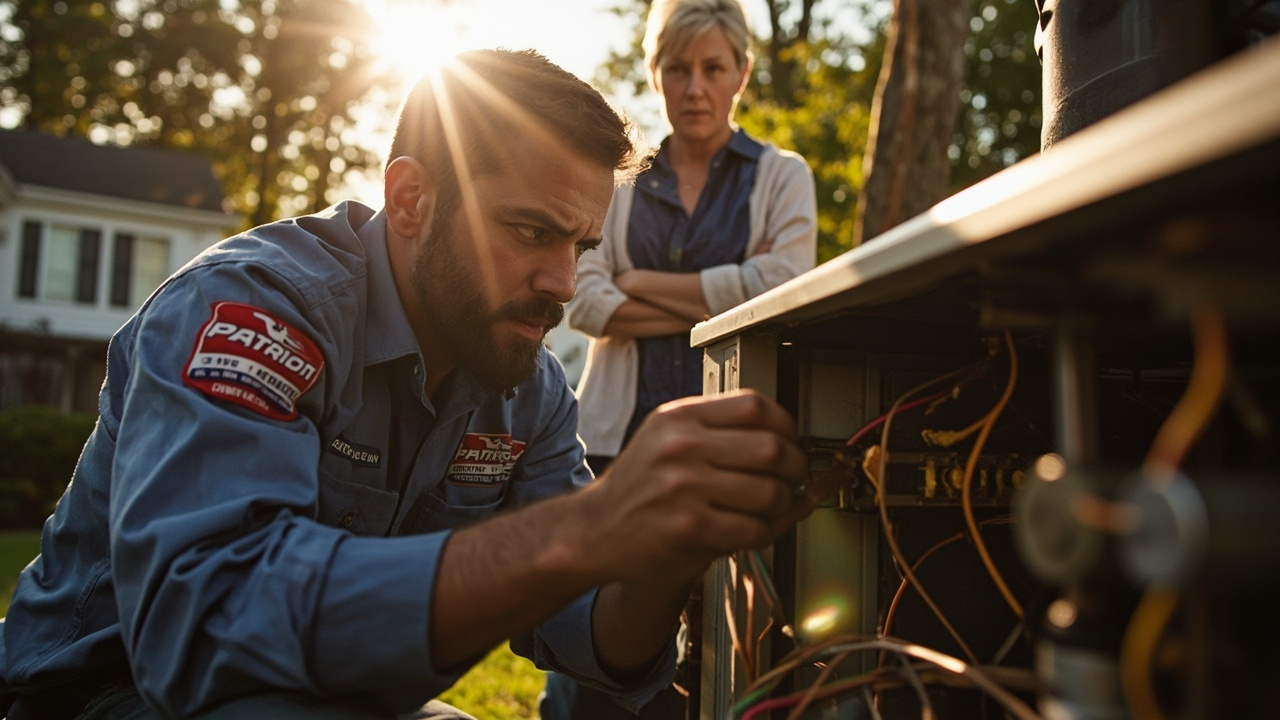
Generic troubleshooting does not work. A technician who swaps a capacitor and leaves has missed the real problem. Patriot HVAC Washington DC uses airflow measurement, superheat and subcooling calculations, and electrical load testing to diagnose why your system rapid cycles.

We start with airflow. Short cycling often stems from restricted airflow that causes the evaporator coil to freeze or the heat exchanger to overheat. We measure static pressure across the blower and check for undersized ductwork, crushed flex ducts in crawlspaces, or return air grilles blocked by furniture. Washington, D.C. rowhomes with original 1920s ductwork often have 6-inch round ducts feeding 3-ton systems. The system suffocates, the high-limit switch trips, and the furnace shuts down every 90 seconds.

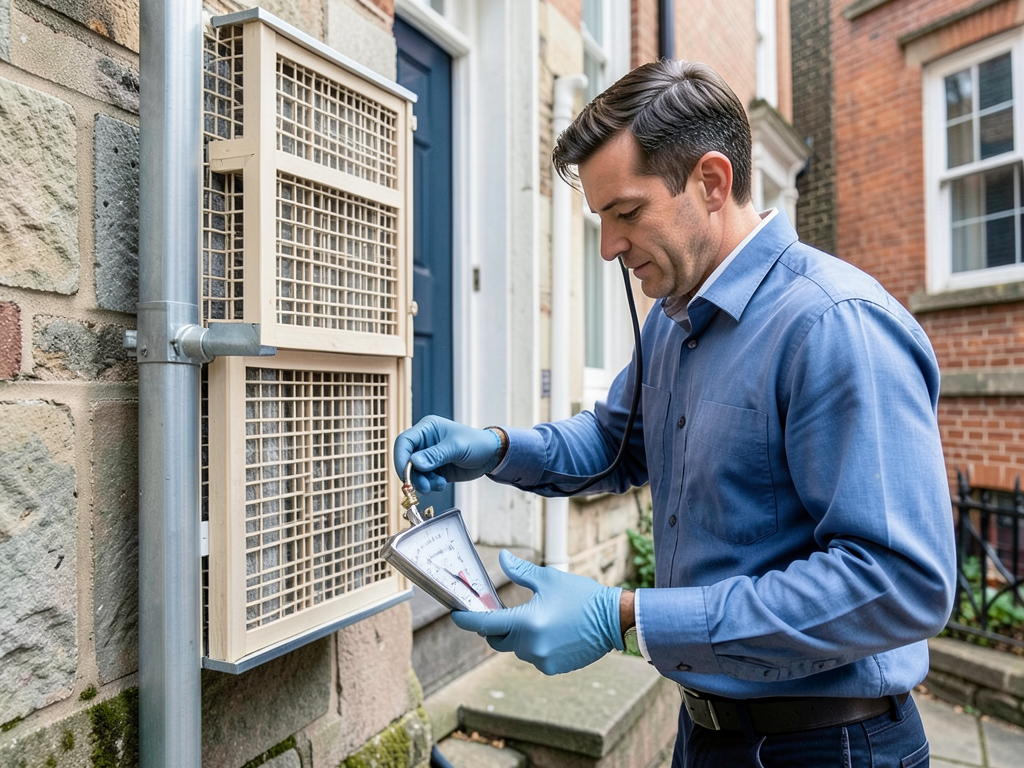
Next, we verify refrigerant charge using manifold gauges and digital thermometers. Low refrigerant from a leak causes the evaporator to ice over, blocking airflow and forcing the system to short cycle on the low-pressure switch. High refrigerant from an overcharge causes head pressure to spike, tripping the high-pressure cutout. We do not guess. We calculate target superheat based on wet-bulb temperature and compare it to actual coil readings.

We also test the thermostat location and calibration. A thermostat mounted near a cold air return, a sunny window, or a heat-producing appliance reads false temperatures and cycles the system prematurely. We use infrared thermometers to map temperature stratification and relocate sensors when needed.

Finally, we inspect the compressor contactor, run capacitor, and transformer. A weak capacitor drops voltage to the compressor, causing it to stall and retry. A chattering contactor creates arc damage that prevents full electrical contact. We replace worn components with OEM-grade parts rated for the electrical load.

What Happens During a Short Cycling Service Call

Short Cycling in Washington, D.C. – Expert Diagnosis and Permanent Fixes for AC Systems That Won't Stay Running
01

System Performance Baseline

We arrive and let the system run through multiple cycles while recording runtime, temperature delta, and electrical draw. We time how long the compressor runs before shutdown and note whether the blower continues or stops. This tells us if the issue is safety-related, capacity-related, or control-related. We check the filter, drain pan, and condensate line for blockages that trigger float switches or pressure sensors.
02

Component-Level Diagnostics

We measure voltage and amperage at the compressor, blower motor, and control board under load. We test capacitance with a digital meter and compare it to the rated microfarads. We pull the flame sensor on furnaces and inspect for carbon buildup that causes false flame failures. We verify thermostat wiring for loose connections or miswiring that sends conflicting signals. We check refrigerant pressures and temperatures to confirm proper charge and rule out a failing thermal expansion valve.
03

Repair and Verification

Once we identify the root cause, we make the repair and monitor the system through three full cycles to confirm normal operation. We verify the compressor runs for at least 10 minutes per cycle and the temperature delta meets manufacturer specs. We document the repair, provide photos of failed components, and explain what caused the failure so you understand what happened. You get a system that cycles normally and a clear explanation of why it failed.

Why Washington, D.C. Homeowners Trust Us With Short Cycling Repairs

Washington, D.C. has 180,000 housing units built before 1940. These homes have knob-and-tube wiring, undersized electrical panels, and ductwork designed for coal furnaces. When you retrofit a modern HVAC system into a century-old rowhouse, short cycling is almost guaranteed unless the installer understands load calculations and duct sizing.

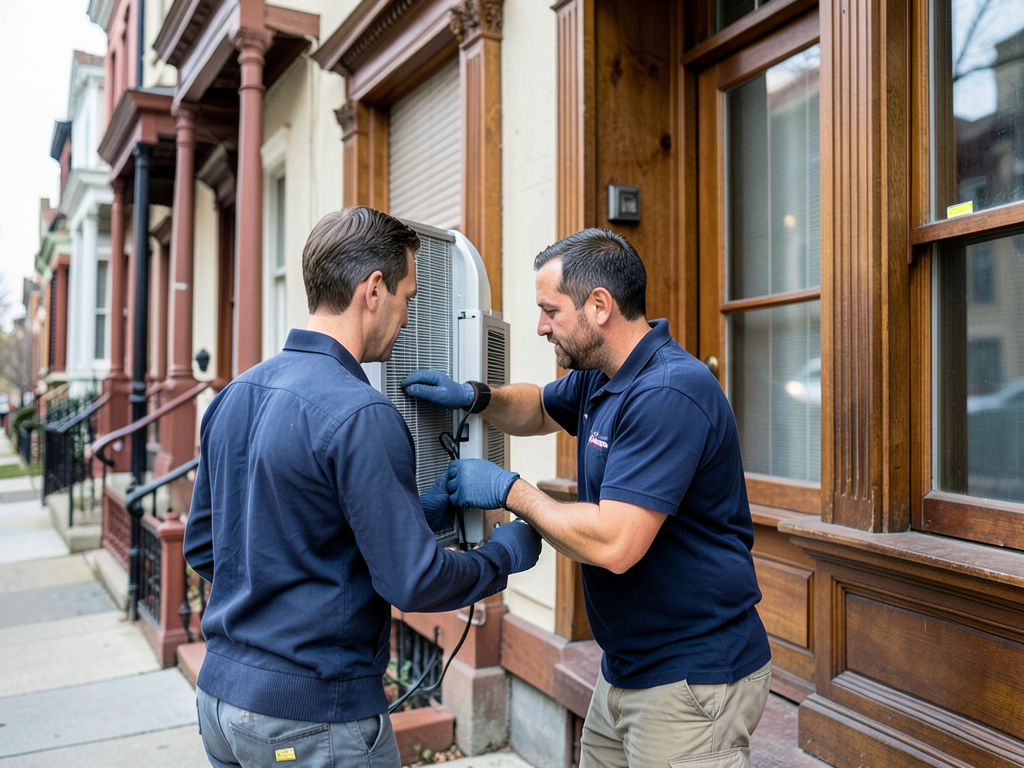
We do. Patriot HVAC Washington DC has repaired short cycling in Capitol Hill rowhouses with 4-inch floor joists that cannot fit standard ductwork, Georgetown Federals with radiant ceilings that create temperature swings, and Columbia Heights bungalows with window units replaced by central air without upgrading the electrical service. We know that a 3-ton condenser on a 60-amp panel will trip breakers under load. We know that spray foam insulation in Petworth attics creates negative pressure that starves the return air. We design solutions that work within the constraints of older construction.

We also understand Washington, D.C.'s permitting and code requirements. HVAC system replacements require permits through the Department of Consumer and Regulatory Affairs. Refrigerant handling requires EPA Section 608 certification. Electrical work requires a licensed electrician. We coordinate inspections, pull permits, and ensure compliance so you do not get fined or forced to redo work.

You also get technicians who live here. We know that August humidity hits 85 percent and January lows drop to 15 degrees. We know that Potomac River proximity increases corrosion on outdoor coils. We stock parts for Carrier, Trane, Lennox, and Rheem systems common in the metro area so repairs happen the same day.

We do not upsell. If your system short cycles because of a dirty filter, we tell you. If it needs a compressor, we tell you that too. You get honest diagnostics and pricing that reflects the actual scope of work.

What to Expect When You Call Us for Short Cycling

Same-Day Dispatch

We understand that short cycling is not just annoying. It's expensive. Every unnecessary cycle adds wear and drives up your electric bill. We dispatch a diagnostic technician the same day you call, and we arrive within the scheduled window. You do not wait three days for an appointment. We stock diagnostic tools and common repair parts on every truck so most repairs finish in one visit. If we need a specialty component, we order it and return the next business day to complete the work.

Transparent Diagnostics

You get a full explanation of what we find and why your system short cycles. We show you the failed component, explain how it caused the problem, and walk you through the repair options. If your system needs multiple repairs, we prioritize them by urgency and cost so you decide what gets fixed first. We provide written estimates before starting work. No surprise charges. No hidden fees. You approve the repair, we complete it, and you pay the agreed price.

Verified Performance

We do not leave until your system runs correctly. After the repair, we monitor the system through multiple cycles to confirm normal runtime, temperature delta, and electrical draw. We verify the compressor stays engaged for the full cooling or heating cycle. We check that the blower moves the correct CFM for your tonnage. We test the thermostat response to ensure it calls for the right mode. You watch the system run normally before we leave, so you know the problem is solved.

Preventive Maintenance Plans

Short cycling often starts as a minor issue that snowballs. A dirty filter reduces airflow. The evaporator ices. The compressor cycles on the low-pressure switch. The contactor chatters and burns the points. The compressor pulls high amps and fails. Our maintenance plans catch these issues before they cascade. We inspect your system twice a year, clean coils, test electrical components, and measure refrigerant charge. You get priority scheduling and discounted repairs. Most maintenance plan customers never experience short cycling because we prevent the conditions that cause it.

Frequently Asked Questions

You Have Questions,
We Have Answers

What is the most common cause of short cycling? +

The most common cause of short cycling is an oversized air conditioner. When your unit is too powerful for your home, it cools the space too quickly, shuts off, then restarts moments later. In Washington, D.C., where older row homes often have newer AC units installed without proper load calculations, this mismatch is frequent. Other common culprits include refrigerant leaks, dirty evaporator coils, or a malfunctioning compressor. The high humidity in the District compounds the problem because oversized systems do not run long enough to remove moisture effectively, leaving your home cold but clammy.

How do you fix short cycling? +

Fixing short cycling starts with diagnosis. Check your air filter first. If it is clogged, replace it. Next, inspect your thermostat placement. If it is near heat sources or in direct sunlight, it may be sending false signals. For Washington, D.C. homes, dirty evaporator coils from seasonal pollen are common, requiring professional cleaning. If refrigerant is low, you need a licensed technician to find the leak and recharge the system. Oversized units may need replacement or zone control installation. Do not ignore short cycling. It destroys compressors and spikes energy bills fast.

What is the definition of short cycling? +

Short cycling is when your air conditioner turns on and off in rapid bursts, typically running for less than 10 minutes per cycle instead of the normal 15 to 20 minutes. A healthy cooling cycle allows the system to reach optimal efficiency, remove humidity, and maintain even temperatures. When the unit short cycles, it never completes a full cooling cycle. This puts excessive wear on the compressor, the most expensive component. In Washington, D.C., where summer humidity lingers, short cycling also prevents proper dehumidification, leaving your home uncomfortable despite the AC running constantly.

How to tell if HVAC is short cycling? +

You can tell if your HVAC is short cycling by timing the run cycles. Stand near your outdoor condenser unit and use a stopwatch. If the compressor runs for less than 10 minutes before shutting off, then restarts within a few minutes, you have short cycling. You may also notice rooms that never reach the thermostat setting, higher electric bills, or constant clicking sounds from the thermostat. In Washington, D.C. row homes, uneven cooling between floors is another sign. The system works harder but accomplishes less. Address this immediately to avoid compressor failure.

What is the $5000 AC rule? +

The $5000 AC rule is a guideline that helps homeowners decide between repair and replacement. If your air conditioner repair cost multiplied by the age of your unit exceeds $5000, replacement is usually smarter. For example, if your 12-year-old system needs a $500 repair, that is $6000 under the formula, suggesting replacement. In Washington, D.C., where units battle high humidity and urban heat island effects, older systems lose efficiency faster. This rule is not absolute, but it prevents throwing money at a dying system. Always get a second opinion before committing to expensive repairs on older equipment.

Can a bad thermostat cause short cycling? +

Yes, a bad thermostat can cause short cycling. If the thermostat is malfunctioning, it may send incorrect temperature readings to your AC, causing the system to shut off prematurely. In Washington, D.C. homes, thermostats placed near windows, exterior doors, or heat-generating appliances often misread indoor temperatures because they are sensing localized heat instead of whole-home conditions. Older mechanical thermostats with worn contacts can also trigger short cycling. Test your thermostat by replacing the batteries and ensuring it is level on the wall. If short cycling continues, a technician can test the wiring and calibration.

Can a dirty air filter cause short cycling? +

Yes, a dirty air filter is a frequent cause of short cycling. When the filter clogs with dust, pollen, and pet dander, airflow over the evaporator coil drops. The coil freezes, triggering the safety switch to shut down the system. After the ice melts, the unit restarts, only to freeze again minutes later. In Washington, D.C., where spring pollen counts spike and summer humidity is heavy, filters clog faster than in drier climates. Check your filter monthly during cooling season. Replace disposable filters or clean reusable ones. This simple step prevents expensive repairs and keeps your system running efficiently.

What does short cycling look like? +

Short cycling looks like your air conditioner turning on, running for a few minutes, shutting off, then restarting soon after. You will hear the outdoor condenser fan start, the compressor hum briefly, then everything stops. The cycle repeats every five to ten minutes instead of the normal 15 to 20 minute run time. Inside, you may notice the thermostat fan setting cycling on and off frequently. In Washington, D.C. homes, short cycling often leaves upstairs rooms warm while the thermostat reads the correct temperature downstairs. Your energy bill climbs even though comfort drops. This pattern destroys equipment fast.

What is the 3 minute rule for AC? +

The 3 minute rule for AC is a built-in compressor protection feature. After your air conditioner shuts off, the system waits at least three minutes before allowing the compressor to restart. This delay prevents liquid refrigerant from damaging the compressor during startup. The pressures inside the system need time to equalize. If your thermostat calls for cooling immediately after shutdown, the compressor delay protects the equipment. In Washington, D.C., where afternoon thunderstorms cause brief power flickers, this timer prevents restart damage. If your system tries to restart faster, the control board may be faulty, requiring professional diagnosis.

Why is my AC set to 72 but reads 78? +

If your AC is set to 72 but reads 78, your system cannot keep up with the cooling load. Common causes include undersized ductwork, low refrigerant, dirty coils, or an aging compressor losing capacity. In Washington, D.C., where July and August bring high heat and humidity, even a properly sized system can struggle during peak afternoon hours, especially in poorly insulated row homes or top-floor units with roof heat gain. Check your air filter first, then inspect for closed supply vents. If the problem persists, you need a technician to check refrigerant levels and system capacity.

How Washington, D.C.'s Humidity and Temperature Swings Trigger Short Cycling

Washington, D.C. sits at the convergence of the Potomac and Anacostia Rivers, creating a humid microclimate that averages 66 percent relative humidity year-round. Summer dew points regularly hit 75 degrees, which means your air conditioner must remove moisture and cool air simultaneously. Oversized AC units common in older homes cool the space too fast, satisfying the thermostat before dehumidification completes. The compressor shuts off, humidity rebounds, and the thermostat calls for cooling again within minutes. This pattern defines short cycling. You get a cold, damp house and a compressor that runs 10 times more than it should. Washington, D.C.'s clay soil also shifts with seasonal moisture changes, cracking duct connections in crawlspaces and causing air leaks that reduce system capacity and trigger rapid cycling.

Patriot HVAC Washington DC understands how local building codes and older housing stock create short cycling conditions. Washington, D.C. enforces the 2020 International Mechanical Code, which requires Manual J load calculations for all HVAC replacements. Many older systems were sized by rule of thumb, resulting in oversized equipment that short cycles. We perform proper load calculations and right-size equipment for your home's actual heating and cooling needs. We also navigate the permitting process through DCRA and coordinate electrical upgrades when needed. Our technicians know that Capitol Hill rowhouses need mini-split solutions, that Shaw neighborhood bungalows have asbestos duct wrap requiring abatement, and that Dupont Circle condos need sound-dampened compressors to meet noise ordinances. You get local expertise that prevents short cycling before it starts.
HVAC Services in The Washington DC Area

Easily locate Patriot HVAC and explore our service area on the map below. We are strategically positioned to provide prompt and efficient heating, ventilation, and air conditioning services across Washington D.C. and its neighboring communities. Whether you're seeking a quick repair or a new installation, our team is ready to serve your comfort needs.

Address:
Patriot HVAC Washington DC, 20 F St NW, Washington, DC, 20001

Additional Services We Offer

Our news updates

Latest Articles & News from The Blogs

A seasonal guide to the best day to switch from cooling to heating in Washington DC Washington DC homeowners face…

A seasonal guide to the best day to switch from cooling to heating in Washington DC

A seasonal guide to the best day to switch from cooling to heating in Washington DC Washington DC homeowners face…

The Ultimate Spring HVAC Checklist for Large Family Homes in Crestwood

The Ultimate Spring HVAC Checklist for Large Family Homes in Crestwood Spring in Washington DC means the humid summer heat…

Keeping construction dust out of your Buzzard Point apartment during nearby building projects

Keeping construction dust out of your Buzzard Point apartment during nearby building projects Construction dust from new developments along the…

Contact Us

Every minute your system short cycles, you lose money and damage components. Call Patriot HVAC Washington DC at (771) 218-6322 for same-day diagnostics and permanent repairs that fix the root cause, not just the symptom.