Menu

Holiday Heating Repair in Washington, D.C. – 24/7 Emergency Furnace Service When You Need It Most

Your furnace doesn't wait for business hours to fail. Patriot HVAC Washington DC dispatches certified technicians year-round, including Thanksgiving, Christmas, and New Year's, to restore heat fast during holiday heating emergencies across the District.

Slider Image 1
Slider Image 2
Slider Image 3
Slider Image 4
Slider Image 5
Slider Image 7
Slider Image 8
Slider Image 9
Slider Image 10
Slider Image 11

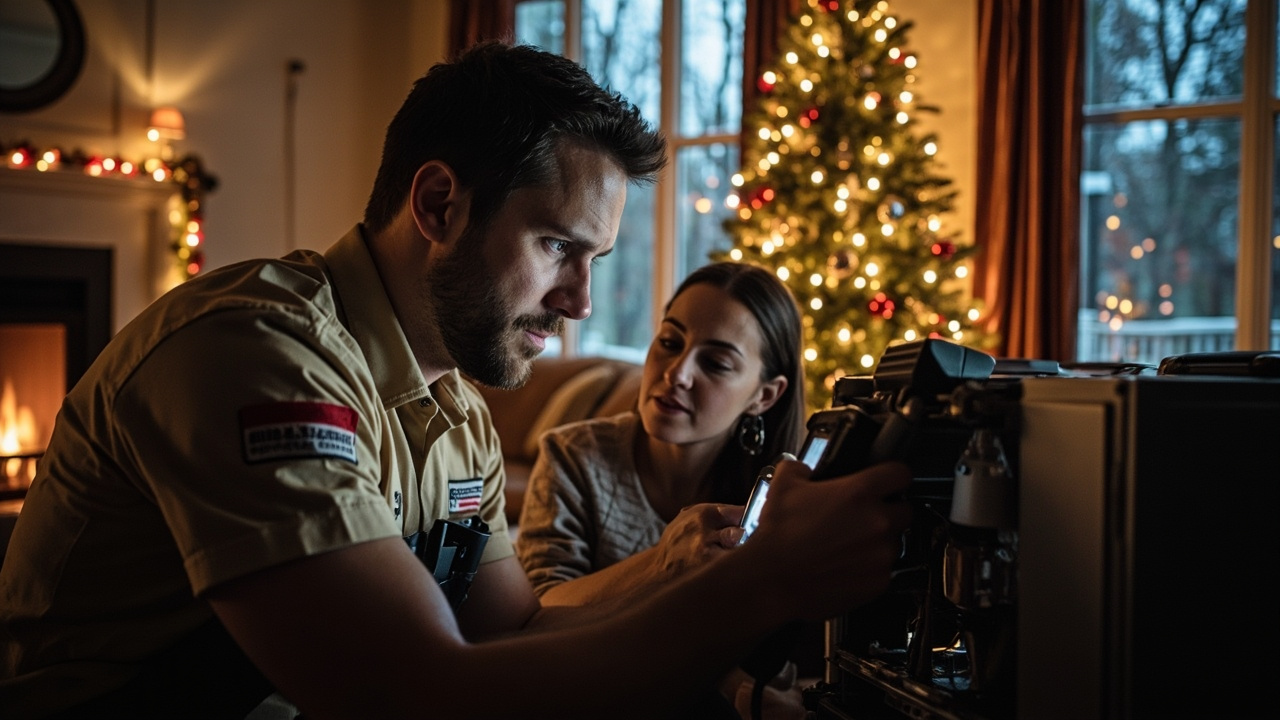
When Your Furnace Fails on Christmas Eve in Washington, D.C.

A furnace breakdown on Thanksgiving morning or Christmas Eve is not just inconvenient. It is dangerous. Washington, D.C. winters hover between 25°F and 45°F, but wind chill near the Potomac River can push the feel to single digits. Inside a rowhouse in Capitol Hill or a colonial in Cleveland Park, indoor temperatures can drop to unsafe levels in under three hours once the heat stops.

Holiday heating failures spike during the coldest stretches of December and January. When family arrives and the thermostat is set higher than usual, aging heat exchangers crack under stress. Blower motors seize. Ignitors fail. Pilot lights extinguish in drafty Georgetown brownstones where the original ductwork was never sealed properly.

Most HVAC companies close for the holidays. You call and reach voicemail. The wait extends to 48 hours or longer. Pipes freeze. Elderly relatives and young children suffer. Emergency holiday furnace repair is not a luxury in the District. It is a necessity. After hours furnace repair means a technician arrives within two hours, diagnoses the failure, and restores heat before your home becomes uninhabitable.

Patriot HVAC Washington DC operates 365 days a year. Our 24 hour heating repair service answers your call on Christmas morning, New Year's Day, and every holiday in between. We stock parts for Carrier, Trane, Lennox, and Rheem systems common in D.C. homes. Emergency heating repair service is not about convenience. It is about survival when the cold wins and your furnace does not.

When Your Furnace Fails on Christmas Eve in Washington, D.C.
How Emergency Holiday Furnace Repair Works in the District

How Emergency Holiday Furnace Repair Works in the District

When you call (771) 218-6322, you reach a live dispatcher. No voicemail. No delay. We confirm your address, the symptoms, and your furnace make and model. A technician is dispatched immediately, often within 15 minutes of your call.

Our service trucks carry diagnostic tools and the most common failure components. We arrive prepared to repair, not just assess. The technician begins with a visual inspection of the heat exchanger for cracks, a common failure in older gas furnaces. Cracked heat exchangers leak carbon monoxide. We test for CO levels using calibrated detectors before any repair begins.

Next, the ignitor is tested. Most modern furnaces use hot surface ignitors made of silicon carbide. These fail after 3 to 5 years of use. If the ignitor does not glow orange within 30 seconds, it is replaced. If the issue is the flame sensor, we clean or replace it. A dirty flame sensor causes the burner to ignite briefly, then shut down. This is the most common cause of short cycling in holiday heating failures.

Blower motor issues require a different approach. We test the capacitor with a multimeter. A failing capacitor produces a humming sound but no airflow. If the motor itself has seized, we replace it on the spot if we have the part. For less common systems, we install a temporary heat source and return with the correct motor the next business day.

Heating repair open on holidays requires this level of preparation. We do not guess. We diagnose using pressure gauges, voltage meters, and combustion analyzers. You get heat restored in one visit.

What Happens When You Call for Holiday Furnace Repair

Holiday Heating Repair in Washington, D.C. – 24/7 Emergency Furnace Service When You Need It Most
01

Immediate Dispatch and Arrival

You call our emergency line and speak to a dispatcher who logs your location and furnace details. A technician is assigned based on proximity to your address in D.C. You receive a text with the technician's name, photo, and estimated arrival time. Most arrivals happen within 90 minutes, even on Christmas Day or New Year's Eve, because we stage trucks in Georgetown, Capitol Hill, and Anacostia during peak holiday periods.
02

On-Site Diagnosis and Repair

The technician performs a full system diagnostic using a combustion analyzer to measure oxygen, carbon monoxide, and draft pressure. We test the thermostat, inspect the flame sensor, measure voltage to the blower motor, and check the heat exchanger for cracks or warping. If a part has failed, we replace it on site. If the repair requires a specialty component, we provide a temporary heating solution and return within 24 hours with the correct part.
03

Heat Restored and Verified

Once the repair is complete, we run the furnace through a full heating cycle. The technician measures supply air temperature at the registers, confirms proper ignition sequence, and listens for abnormal sounds. You receive a written summary of the failure, the repair performed, and recommendations for preventing future breakdowns. We do not leave until your home reaches a comfortable temperature and the system operates safely.

Why Washington, D.C. Residents Trust Patriot HVAC for Holiday Heating Emergencies

Most HVAC companies in the District do not staff technicians on holidays. They outsource emergency calls to third-party dispatch services that charge triple rates and send undertrained contractors. You pay more and wait longer for substandard work.

Patriot HVAC Washington DC employs its own technicians year-round. We do not outsource. We do not subcontract. Every technician on our team is EPA-certified for refrigerant handling and trained on gas furnace combustion safety. We know the building codes in D.C., including the 2020 revisions to the International Mechanical Code that govern furnace venting and clearance requirements in rowhomes and multi-unit buildings common in Shaw, Dupont Circle, and Columbia Heights.

We also understand the District's housing stock. Many D.C. homes were built between 1900 and 1950. Original gravity furnaces were replaced with forced-air systems in the 1970s and 1980s. Ductwork in these homes is often undersized, poorly insulated, or routed through unheated crawl spaces. This causes heat loss and forces the furnace to run longer cycles, accelerating wear on the heat exchanger and blower motor. Our technicians account for these conditions when diagnosing failures and recommending repairs.

Holiday heating failures also coincide with insurance claims. If your furnace breakdown causes a pipe to freeze and burst, you need documentation of the heating failure for your claim. We provide detailed service reports that include the time of the call, the diagnosis, and the repair performed. Insurance adjusters in the District accept our documentation without question because we follow ACCA Manual J load calculation standards and NATE certification protocols.

You are not hiring a company. You are hiring a team that knows D.C. homes, D.C. winters, and D.C. building standards.

What You Can Expect from Our Holiday Heating Repair Service

Response Time and Availability

We answer emergency calls 24 hours a day, 365 days a year. That includes Thanksgiving, Christmas, New Year's Day, and every major holiday. Our average response time is 90 minutes from the time you call to the time a technician arrives at your door. During extreme cold snaps, when call volume spikes, we prioritize homes with elderly residents, young children, or medical equipment that requires climate control. You will never reach voicemail. You will always speak to a live dispatcher who can provide an accurate arrival window.

Diagnostic Process and Transparency

Our technicians explain the diagnosis before performing any repair. You will see the failed component, understand why it failed, and know the cost of the repair before work begins. We do not upsell. We do not recommend unnecessary replacements. If your furnace is beyond economical repair, we explain why and provide options. If a simple fix will restore heat safely, that is what we do. You receive a written estimate on site, and we accept credit cards, checks, and financing through our third-party lender.

Quality of Work and Safety Standards

Every repair meets or exceeds Washington, D.C. building code and National Fuel Gas Code standards. We test for carbon monoxide leaks after every heat exchanger repair. We verify proper combustion air supply in confined mechanical rooms. We check gas line pressure to ensure safe ignition. Blower motors are balanced before reinstallation to prevent vibration and noise. All electrical connections are torqued to manufacturer specifications. You do not just get heat restored. You get a system that operates safely and efficiently.

Follow-Up and Preventive Maintenance

After the emergency repair, we schedule a follow-up inspection within 30 days to confirm the system is operating correctly. This visit is included in the emergency service call. We also offer annual maintenance plans that include pre-season inspections, filter replacements, and priority scheduling during future emergencies. Maintenance plan members receive discounted rates on parts and labor. Regular maintenance extends furnace lifespan by 5 to 10 years and reduces the likelihood of future holiday breakdowns.

Frequently Asked Questions

You Have Questions,
We Have Answers

What are common holiday heating problems? +

During Washington, D.C.'s cold snaps, heating systems face heavy demand. Common holiday problems include pilot light failures, clogged air filters restricting airflow, thermostat malfunctions from battery drain, and cracked heat exchangers from freeze-thaw cycling. Ignition issues spike when systems sit idle before winter. Ductwork leaks worsen in older Capitol Hill and Georgetown row homes. Blower motor failures occur from overuse. If your system struggles during a holiday freeze, you need immediate attention. Cold homes risk pipe bursts and health risks. Do not wait. Call a licensed technician who offers 24/7 emergency response to restore heat fast.

What is the $5000 rule for HVAC? +

The $5000 rule is a decision guideline. Multiply your system's age by the repair cost estimate. If the total exceeds $5000, replacement makes more financial sense than repair. For example, a 12-year-old furnace needing $500 in repairs equals $6000, suggesting replacement. Washington, D.C.'s humid summers and cold winters stress HVAC systems. Frequent repairs on aging equipment drain your budget. This rule helps you avoid throwing money at a dying system. However, factor in emergency timing and energy efficiency rebates available through D.C. government programs. A qualified technician can run this calculation and discuss your best path forward.

How much do heating repairs cost? +

Heating repair costs in Washington, D.C. vary widely based on the issue. Minor fixes like thermostat replacement or filter changes run lower. Blower motor repairs, ignition system fixes, or heat exchanger replacements cost significantly more. Emergency holiday service carries premium rates, but you pay for immediate response when your family needs heat. Older homes in neighborhoods like Dupont Circle or Shaw may need ductwork sealing, adding to costs. Get a transparent diagnostic before authorizing work. Avoid companies that quote over the phone without inspecting your system. Request itemized estimates and ask about financing options for larger repairs.

Who do I call for heat not working? +

Call a licensed HVAC contractor who offers emergency service in Washington, D.C.. Do not call a general handyman for heating failures. You need EPA-certified technicians with diagnostic tools and parts inventory. Look for companies with 24/7 dispatch, not answering services that delay response. When your heat fails during a holiday cold snap, minutes matter. Verify the company services your specific system brand and has experience with Washington, D.C.'s mix of forced air, radiator, and heat pump systems common in older neighborhoods. Check they carry commercial liability insurance. Get a firm arrival window, not vague promises.

Why does my house feel cold at 73? +

Your house feels cold at 73 degrees due to poor insulation, drafty windows common in D.C.'s older housing stock, or humidity imbalance. Washington's winter humidity drops, making air feel colder. Your heating system may short-cycle, never reaching true comfort. Ductwork leaks in crawl spaces waste heated air. Thermostat placement near drafts gives false readings. Radiator systems in Georgetown or Capitol Hill row homes may have air pockets reducing heat transfer. Check your system runs full cycles and inspect for cold spots. A technician can perform a blower door test to identify air leaks and measure actual temperature distribution.

What is the most expensive part to fix on a furnace? +

The heat exchanger is the most expensive furnace component to replace. This metal chamber transfers combustion heat to your home's air. Cracks develop from repeated heating and cooling cycles, especially in Washington, D.C.'s variable winter temperatures. A cracked heat exchanger leaks carbon monoxide, creating immediate danger. Replacement often costs enough that full system replacement makes more sense, especially on units over 15 years old. Compressor failure on heat pumps, common in D.C. homes, rivals this cost. When facing major component failure during the holidays, get multiple opinions on repair versus replacement to make the smartest financial decision.

What is the life expectancy of a heating system? +

Furnaces last 15 to 20 years with proper maintenance. Heat pumps, popular in Washington, D.C.'s moderate climate, last 10 to 15 years due to year-round use. Boiler systems in older D.C. neighborhoods can reach 20 to 30 years. Lifespan depends on installation quality, maintenance frequency, and runtime hours. Systems in homes with poor insulation work harder and fail sooner. If your system approaches these ages and needs major repairs during the holidays, replacement often beats repair. Newer systems offer better efficiency, lowering utility bills. Track your system's age and plan proactive replacement before emergency failure during winter.

What is the 3 minute rule for air conditioners? +

The 3-minute rule prevents compressor damage. After your air conditioner shuts off, wait three full minutes before restarting. This lets refrigerant pressures equalize inside the system. Immediate restart forces the compressor to start against high pressure, causing mechanical stress and potential failure. This applies to heat pumps common in Washington, D.C., which cool in summer and heat in winter. Rapid cycling from thermostat adjustments or power fluctuations during D.C.'s summer storms can damage your system. Modern systems have built-in delay circuits, but older units need manual waiting. Protect your compressor by respecting this cooldown period.

Is a new HVAC system tax deductible in 2025? +

The Inflation Reduction Act offers tax credits for high-efficiency HVAC systems through 2032. You can claim up to 30 percent of installation costs, capped at specific amounts for qualified equipment. Heat pumps, which work well in Washington, D.C.'s climate, qualify for higher credits. Your system must meet efficiency standards. Keep all receipts and manufacturer certification statements. D.C. residents may also qualify for local rebates through DC Sustainable Energy Utility. Consult a tax professional for your specific situation, as rules change. Installing qualifying equipment during a holiday replacement can reduce your tax burden significantly. Verify equipment qualifications before purchase.

Is it cheaper to fix a furnace or replace it? +

When repair costs exceed 50 percent of replacement cost, or your system is over 15 years old, replacement wins financially. A furnace needing multiple repairs will fail again soon. Washington, D.C.'s energy costs make efficiency upgrades valuable. New systems cut utility bills by 20 to 40 percent. Factor in tax credits and potential rebates. Emergency holiday repairs feel urgent, but bandaging a dying system wastes money. A qualified technician should provide honest assessment, not push unnecessary replacement. If your system is under 10 years old with a single issue, repair makes sense. Over 15 years with major component failure means replace.

Why Washington, D.C.'s Winter Climate Makes Holiday Heating Repair Critical

Washington, D.C. sits at the intersection of humid subtropical and humid continental climate zones. Winter temperatures fluctuate wildly. A 55°F afternoon can plunge to 18°F by midnight. This thermal stress causes expansion and contraction in furnace heat exchangers, accelerating crack formation in systems older than 15 years. The District's proximity to the Chesapeake Bay also brings high humidity, which corrodes furnace components faster than in drier climates. Emergency holiday furnace repair is not just about comfort. It is about preventing catastrophic failures in homes where heating systems are already operating at the edge of their lifespan.

D.C. building codes require annual inspections for rental properties, but single-family homeowners often skip maintenance. This creates a surge in heating failures during the coldest weeks of the year, which coincide with major holidays. Patriot HVAC Washington DC has served the District since our founding, and we understand the unique challenges of heating Capitol Hill rowhomes, Georgetown townhouses, and mid-century split-levels in Chevy Chase. We stock parts specific to the Carrier, Trane, and Lennox systems installed in D.C. homes during the 1980s and 1990s. After hours furnace repair requires local expertise, not a generic call center response.
HVAC Services in The Washington DC Area

Easily locate Patriot HVAC and explore our service area on the map below. We are strategically positioned to provide prompt and efficient heating, ventilation, and air conditioning services across Washington D.C. and its neighboring communities. Whether you're seeking a quick repair or a new installation, our team is ready to serve your comfort needs.

Address:
Patriot HVAC Washington DC, 20 F St NW, Washington, DC, 20001

Additional Services We Offer

Our news updates

Latest Articles & News from The Blogs

The Best Air Filter Upgrades for Georgetown Homes with Sensitive Historic Woodwork Georgetown's Federal-style rowhouses and Victorian homes need special…

The Best Air Filter Upgrades for Georgetown Homes with Sensitive Historic Woodwork

The Best Air Filter Upgrades for Georgetown Homes with Sensitive Historic Woodwork Georgetown's Federal-style rowhouses and Victorian homes need special…

The Best Air Filter Upgrades for Georgetown Homes with Sensitive Historic Woodwork

The Best Air Filter Upgrades for Georgetown Homes with Sensitive Historic Woodwork Georgetown's historic rowhouses and Federal-style homes face a…

The Best Air Filter Upgrades for Georgetown Homes with Sensitive Historic Woodwork

The Best Air Filter Upgrades for Georgetown Homes with Sensitive Historic Woodwork Georgetown's historic rowhouses and Federal-style homes feature exquisite…

Contact Us

If your furnace is making strange noises, short cycling, or struggling to reach the set temperature, call (771) 218-6322 now. Holiday heating failures escalate fast. We answer 24/7, including every major holiday. Get heat restored before your family suffers.