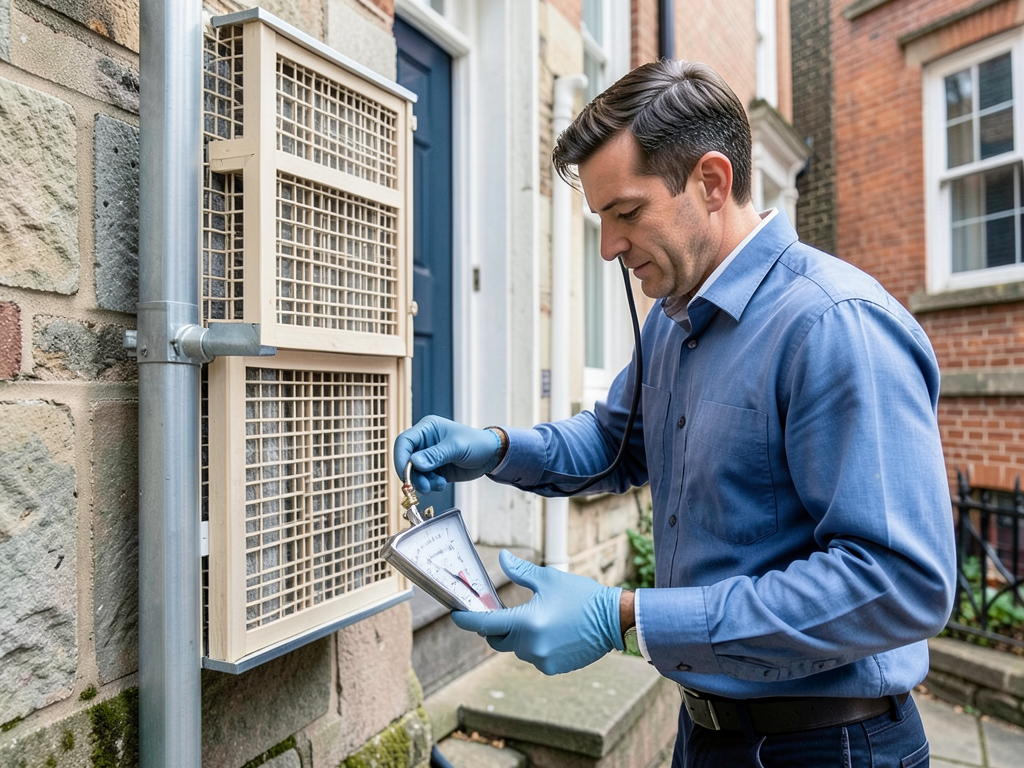
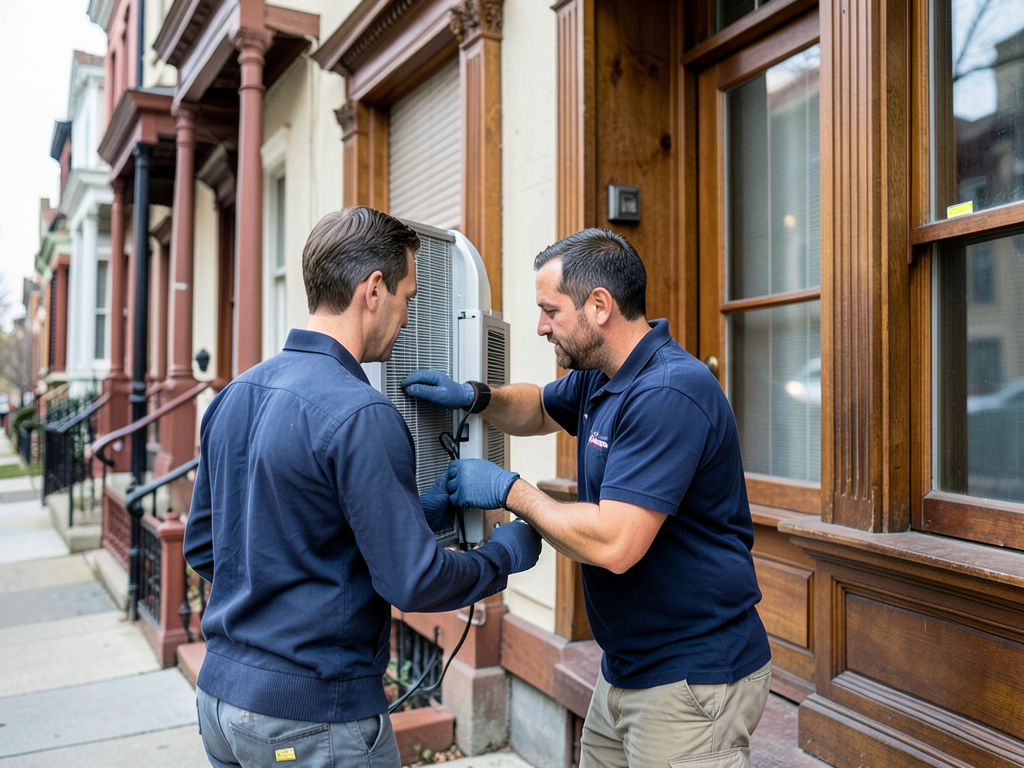
Washington, D.C.'s building stock presents challenges that make ductless mini-split systems the practical choice for climate control upgrades. Row houses built between 1880 and 1920 dominate neighborhoods east of Rock Creek Park. These structures lack attic space for ductwork and have solid masonry walls that make interior duct runs prohibitively expensive. Historic preservation rules in Capitol Hill, Georgetown, and other designated districts restrict exterior modifications, limiting condenser placement options and requiring careful coordination with review boards. Summer dew points regularly exceed 70 degrees, creating humidity loads that overtax window units. Winter heating relies on aging boilers and radiators that leave upper floors overheated while basements stay cold. Ductless heat pumps solve these problems without disturbing original plasterwork, crown moldings, or historic facades.
The District of Columbia requires HVAC permits for mini-split installations when refrigerant charge exceeds two pounds or electrical work involves circuits over 50 amps. Contractors must hold D.C. Master HVAC licenses and EPA refrigerant handling certifications. Patriot HVAC Washington DC maintains these credentials and understands local inspection requirements that differ from surrounding Maryland and Virginia jurisdictions. We work with Historic Preservation Review Boards when properties fall under protection, proposing equipment placement and screening that satisfies both cooling needs and aesthetic standards. Local expertise matters when navigating DCRA permitting, coordinating electrical upgrades with aging 100-amp panels, and sizing equipment for the urban heat island effect that raises cooling loads 15 to 20 percent above suburban equivalents.