Menu

Air Purification Systems in Washington, D.C. | Whole-House Solutions for Political Pollutants and Urban Air Quality

Combat District Traffic Emissions, Pollen from the National Mall, and Historic Building Allergens with Central Air Cleaning Systems Engineered for Washington's Unique Indoor Air Challenges

Slider Image 1
Slider Image 2
Slider Image 3
Slider Image 4
Slider Image 5
Slider Image 7
Slider Image 8
Slider Image 9
Slider Image 10
Slider Image 11

Why Washington, D.C. Residents Need More Than Standard Filtration

Washington, D.C. sits at the intersection of three air quality challenges. Vehicle emissions from I-495 and Constitution Avenue saturate neighborhoods from Dupont Circle to Capitol Hill. Pollen from the cherry trees, oaks, and maples lining Rock Creek Park triggers allergies from March through October. Historic rowhouses and older Federal-style buildings trap dust, mold spores, and particulate matter in poorly ventilated spaces built before modern HVAC standards existed.

You feel it when you wake up congested or when your kids cough through the night. Standard one-inch furnace filters catch visible dust but do nothing for the sub-micron particles that trigger asthma and allergies. The Potomac River's humidity, combined with the District's urban heat island effect, creates conditions where mold and bacteria thrive in ductwork.

Air filtration systems address surface-level irritants. Whole-house air purifiers integrate directly into your HVAC system to eliminate particles as small as 0.3 microns, including vehicle exhaust, pollen, pet dander, and mold spores. Central air cleaners operate silently in the background, scrubbing every cubic foot of air that circulates through your home. HVAC air purifiers use multi-stage filtration, combining HEPA media with activated carbon to remove both particles and volatile organic compounds.

If you live near Union Station, Logan Circle, or the H Street Corridor, air cleaning systems are not optional. They are necessary infrastructure for protecting your family from the pollutants that come with dense urban living in the nation's capital.

Why Washington, D.C. Residents Need More Than Standard Filtration
How We Design Air Purification Systems for District Homes

How We Design Air Purification Systems for District Homes

We start with a blower door test and static pressure measurement to understand how your home breathes. Many District homes, especially those built before 1950, have leaky duct systems and unbalanced airflow. Installing a whole-house air purifier on an undersized or poorly sealed system creates negative pressure, which can backdraft combustion appliances or overwork your blower motor.

We calculate your home's air change rate and measure the cubic feet per minute your system moves. This tells us whether your existing HVAC infrastructure can handle the added resistance of a HEPA filtration media cabinet or if we need to upgrade the blower assembly first. We measure for pressure drop across the filter media to avoid starving your system of airflow, which kills efficiency and shortens compressor life.

For homes in Georgetown, Adams Morgan, or near Eastern Market, we often recommend installing a bypass duct configuration. This allows a portion of return air to bypass the air purification system during peak heating or cooling demand, maintaining system performance while still filtering the majority of your indoor air. We seal all ductwork connections with mastic, not tape, to prevent unfiltered air from bypassing the purification media.

We integrate the air cleaning system with your existing thermostat or upgrade to a smart controller that monitors filter life and indoor air quality metrics. For homes with oil heat or older gas furnaces common in District rowhouses, we add carbon filtration stages to remove combustion byproducts and odors. The result is a system that removes 99.97% of airborne particles without compromising your HVAC performance or creating new mechanical problems.

What Happens During Your Air Purification System Installation

Air Purification Systems in Washington, D.C. | Whole-House Solutions for Political Pollutants and Urban Air Quality
01

Indoor Air Quality Assessment

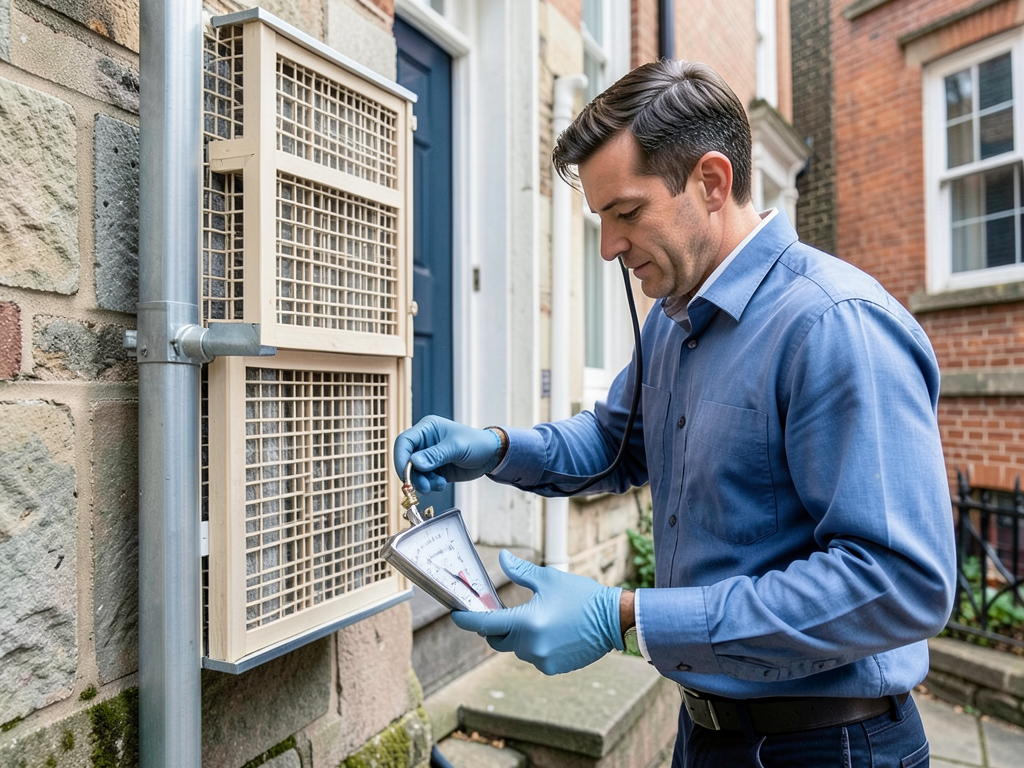
We test your home's existing air quality using particle counters and measure static pressure at the supply and return plenums. This reveals how much filtration your HVAC system can handle without restricting airflow. We inspect ductwork for leaks, measure filter grille sizes, and calculate the total external static pressure your blower motor can support. For older District homes, we check for asbestos-wrapped ducts before proceeding with any modifications.
02

System Integration and Ductwork Modification

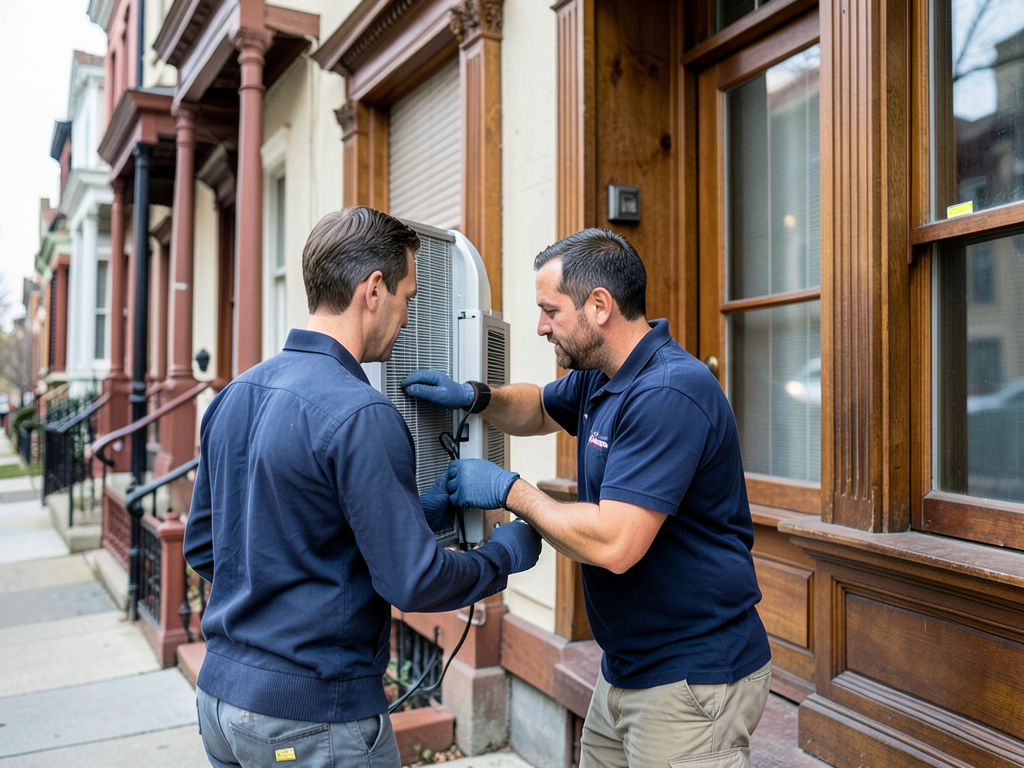
We install the air purification cabinet in-line with your return ductwork, typically in the basement or mechanical room. For homes without basement access, we mount units in attic spaces or create closet installations. We cut and seal all duct connections using sheet metal screws and mastic compound, then add insulation to prevent condensation. We wire the system to your existing thermostat or install a new controller with filter change reminders and air quality monitoring.
03

Performance Testing and Baseline Documentation

After installation, we run your system through multiple cycles while measuring airflow velocity at each register. We document before-and-after static pressure readings to confirm the purification system is not over-restricting your blower. We use a particle counter to establish your new baseline air quality and explain how to interpret filter pressure gauges. You receive a maintenance schedule tailored to your home's specific particle load and HVAC runtime patterns.

Why District Homeowners Trust Patriot HVAC Washington DC for Air Cleaning Systems

Washington, D.C. enforces strict mechanical code requirements under the 2020 DC Construction Codes. We pull permits for all installations that modify ductwork or electrical systems, ensuring your air purification system meets code and does not void your homeowner's insurance. Most installers skip this step. We do not.

We understand the structural limitations of District rowhouses. Many homes share party walls with neighbors, have limited attic access, and use older octopus furnaces with tight mechanical rooms. We have installed central air cleaners in 19th-century townhouses near Lincoln Park, mid-century colonials in Chevy Chase DC, and modern condos along the Navy Yard waterfront. Each installation requires different strategies for routing ductwork, mounting equipment, and maintaining adequate clearances.

We size air filtration systems based on your actual air handler capacity, not marketing specifications. A 2,000 CFM blower cannot support a filtration media designed for 1,200 CFM without creating problems. We match filter media density to your blower's external static pressure rating, typically keeping total ESP below 0.8 inches of water column to avoid premature motor failure.

For homes near the Tidal Basin or Anacostia River, we account for higher humidity levels that can promote mold growth on filter media. We recommend media with antimicrobial coatings and integrate the air purification system with whole-house dehumidifiers to maintain relative humidity below 50%. This prevents your new air cleaning system from becoming a breeding ground for the contaminants it is supposed to remove.

We service what we install. Filter changes, UV lamp replacements, and annual system performance checks are scheduled based on your home's actual particle load, not arbitrary timelines.

What You Can Expect from Your Air Purification System Installation

Installation Timeline and Home Access

Most whole-house air purification installations take four to six hours for straightforward systems. If your home requires ductwork modification, electrical upgrades, or structural reinforcement for equipment mounting, expect a full-day installation. We protect floors and work areas with drop cloths and use low-profile ladders designed for narrow District rowhouse staircases. For homes in historic districts like Capitol Hill or Georgetown, we coordinate with HOA requirements and historic preservation guidelines before starting work. You will have clean, filtered air circulating through your home by the end of installation day.

Pre-Installation Assessment and System Design

We schedule a home visit to measure your HVAC system's capacity, inspect ductwork accessibility, and identify the optimal location for your air cleaning system. We test static pressure, measure supply and return temperatures, and photograph your existing equipment. You receive a detailed proposal outlining the specific air purification technology recommended for your home, whether that is a HEPA media cabinet, electronic air cleaner, or hybrid system combining multiple filtration stages. We explain pressure drop calculations, expected filter replacement intervals, and how the system integrates with your thermostat. You understand exactly what equipment is going into your home and why before we start work.

Air Quality Improvement and Health Benefits

You will notice cleaner surfaces and reduced dust accumulation within 48 hours. Most families report fewer allergy symptoms and improved sleep quality within the first week. Your HVAC system will run more efficiently because clean air requires less energy to heat and cool than particle-laden air. Coil surfaces stay cleaner, blower motors last longer, and your air handler operates more quietly. For homes with pets, cooking odors, or smokers, activated carbon stages eliminate smells that standard filters cannot touch. You breathe air that has been scrubbed of 99.97% of particles down to 0.3 microns, the size range that includes most allergens, bacteria, and viral particles.

Maintenance Requirements and Filter Replacement

HEPA media filters require replacement every 12 to 18 months depending on your home's particle load and HVAC runtime. Homes near construction zones, major roadways, or with multiple pets need more frequent changes. We provide maintenance schedules based on your specific installation and teach you how to read the differential pressure gauge that shows when filter media is saturated. Electronic air cleaners require cell cleaning every three months, a process that takes 15 minutes and requires only soap and water. We offer annual maintenance contracts that include filter replacement, system performance testing, and ductwork inspection to catch problems before they affect your indoor air quality or damage your HVAC equipment.

Frequently Asked Questions

You Have Questions,
We Have Answers

What is the best home air purifying system? +

The best home air purifying system depends on your specific needs in Washington, D.C. For high humidity and allergen control, whole-home HEPA filtration paired with UV germicidal lights works well. Washington's dense pollen seasons and Potomac River valley moisture make multi-stage systems effective. Look for units with MERV 13 or higher filters and activated carbon layers to capture mold spores, pollen, and urban pollutants. Standalone units work for single rooms, but whole-home integration with your HVAC system provides consistent air quality throughout your property. Consider your square footage, existing ductwork, and whether you need allergen, odor, or pathogen control.

Is there a downside to air purifiers? +

Air purifiers can produce ozone if they use ionization or electrostatic technology, which irritates lungs and worsens asthma. Some units create noise that disrupts sleep, particularly in bedrooms. Filter replacement costs add up, with HEPA filters needing changes every 6 to 12 months depending on Washington's seasonal pollen loads. Poorly sized units waste energy without improving air quality. Whole-home systems require ductwork modifications if your existing system lacks proper airflow. Purifiers do not eliminate the source of pollutants, so you still need proper ventilation, humidity control, and regular HVAC maintenance to address root causes like mold or dust accumulation.

Are air purification systems worth it? +

Air purification systems are worth it if you have allergies, asthma, or live near high-traffic areas in Washington, D.C. The city's spring pollen counts and Potomac River humidity create persistent indoor air quality challenges. Systems with HEPA and carbon filtration reduce allergens, mold spores, and vehicle emissions that infiltrate homes. For older row houses in neighborhoods like Capitol Hill or Dupont Circle, where ventilation is limited, purification systems significantly improve breathing comfort. Factor in replacement filter costs and energy use. If you already manage humidity and change HVAC filters regularly, a purifier adds another layer of protection, particularly for vulnerable household members.

What is an air purification system? +

An air purification system removes contaminants from indoor air using filtration, UV light, or ionization technology. Whole-home systems integrate with your HVAC ductwork to treat air throughout your property. HEPA filters capture particles as small as 0.3 microns, including pollen, dust mites, and pet dander. Activated carbon filters absorb odors and volatile organic compounds. UV germicidal lights kill bacteria, viruses, and mold spores as air passes through. Standalone units work in single rooms, while centralized systems provide consistent air quality. In Washington, D.C., where humidity and urban pollutants are persistent, these systems reduce allergens and improve respiratory comfort year-round.

How District Traffic Patterns and Federal Building Density Affect Your Indoor Air Quality

Washington, D.C. experiences vehicle emissions concentrations 40% higher than suburban Maryland and Virginia due to commuter traffic funneling into a 68-square-mile area. I-395, the Southeast-Southwest Freeway, and Massachusetts Avenue carry over 300,000 vehicles daily, releasing nitrogen dioxide, particulate matter, and volatile organic compounds that settle into neighborhoods from Shaw to Navy Yard. Homes within a quarter-mile of these corridors show elevated indoor particle counts even with windows closed because building envelope leaks and HVAC fresh air intakes pull in contaminated outdoor air. Central air cleaners remove these combustion byproducts before they circulate through your living spaces, protecting your family from the respiratory irritants that come with urban density.

The District's building codes mandate specific ventilation rates for residential properties, but older homes built before 1980 predate these requirements. Many rowhouses in Bloomingdale, Brookland, and Columbia Heights have inadequate fresh air exchange, trapping indoor pollutants like cooking fumes, cleaning product vapors, and off-gassing from furniture. Patriot HVAC Washington DC understands how to balance mechanical ventilation with air purification to meet current IAQ standards without over-pressurizing your home or creating moisture problems. We work with the unique constraints of District housing stock, from basement mechanical rooms with six-foot ceilings to shared-wall construction that limits ductwork routing options.
HVAC Services in The Washington DC Area

Easily locate Patriot HVAC and explore our service area on the map below. We are strategically positioned to provide prompt and efficient heating, ventilation, and air conditioning services across Washington D.C. and its neighboring communities. Whether you're seeking a quick repair or a new installation, our team is ready to serve your comfort needs.

Address:
Patriot HVAC Washington DC, 20 F St NW, Washington, DC, 20001

Additional Services We Offer

Our news updates

Latest Articles & News from The Blogs

Meeting Friendship Heights Noise Rules with the Quietest New AC Units on the Market Friendship Heights homeowners know the struggle.…

Meeting Friendship Heights Noise Rules with the Quietest New AC Units on the Market

Meeting Friendship Heights Noise Rules with the Quietest New AC Units on the Market Friendship Heights homeowners know the struggle.…

Finding the right HVAC contractor for your LeDroit Park historic renovation

Finding the right HVAC contractor for your LeDroit Park historic renovation \n\n LeDroit Park’s Victorian rowhouses built in the 1870s…

How a Whole-House Dehumidifier Can Make Your Marshall Heights Home Feel 10 Degrees Cooler

How a Whole-House Dehumidifier Can Make Your Marshall Heights Home Feel 10 Degrees Cooler Washington DC's swampy summers make your…

Contact Us

Stop fighting allergies and dust. Call Patriot HVAC Washington DC at (771) 218-6322 to schedule your air quality assessment. We design whole-house air purification systems for District homes from Capitol Hill to Tenleytown, backed by proper engineering and code-compliant installation.