Menu

Uneven Heating or Cooling in Washington, D.C. – Expert Diagnosis and Permanent Airflow Solutions

Stop paying for comfort you're not getting. Patriot HVAC Washington DC uses diagnostic airflow testing and zoning analysis to eliminate hot and cold spots in your home, restoring consistent temperatures in every room without guesswork or repeat visits.

Slider Image 1
Slider Image 2
Slider Image 3
Slider Image 4
Slider Image 5
Slider Image 7
Slider Image 8
Slider Image 9
Slider Image 10
Slider Image 11

Why Your Washington, D.C. Home Feels Like Two Different Buildings

You set the thermostat to 72 degrees, but your bedroom feels like a sauna while your living room is freezing. You're not imagining it. Uneven heating or cooling plagues homes across Washington, D.C., especially older rowhouses in Capitol Hill and Dupont Circle where original ductwork was retrofitted decades after construction.

The problem gets worse during D.C.'s humid summer months when your AC runs constantly but never delivers consistent relief. You feel hot and cold spots the moment you walk from one room to another. One bathroom stays ice cold while the kitchen swelters. Your energy bills climb because the system works overtime trying to satisfy a thermostat placed in the one room that actually gets decent airflow.

This home temperature imbalance has root causes. Undersized or kinked ductwork restricts airflow to certain rooms. Leaky ducts in unconditioned attics dump treated air into spaces you don't use. Poorly designed return air pathways create pressure imbalances that starve distant rooms of conditioned air. Rooms over garages or above crawlspaces lose temperature control because of inadequate insulation barriers.

Different temperatures in each room signal a system that's fighting itself. The furnace or air handler cycles on and off based on one sensor location, leaving other zones uncomfortable. You close vents trying to redirect air, which actually worsens pressure problems and strains the blower motor. Meanwhile, inconsistent room temperatures make sleep difficult, create arguments over the thermostat, and waste money on energy you're not benefiting from.

Uneven airflow distribution isn't a minor annoyance. It's a diagnostic red flag pointing to ductwork failures, equipment sizing errors, or airflow restrictions that require professional assessment and targeted correction.

Why Your Washington, D.C. Home Feels Like Two Different Buildings
How We Diagnose and Correct Temperature Imbalance Permanently

How We Diagnose and Correct Temperature Imbalance Permanently

Patriot HVAC Washington DC doesn't guess at airflow problems. We measure them. Our diagnostic process starts with a room-by-room temperature mapping using calibrated digital thermometers and infrared cameras. We document the temperature variance between your hottest and coolest rooms, which typically ranges from 5 to 12 degrees in problem homes.

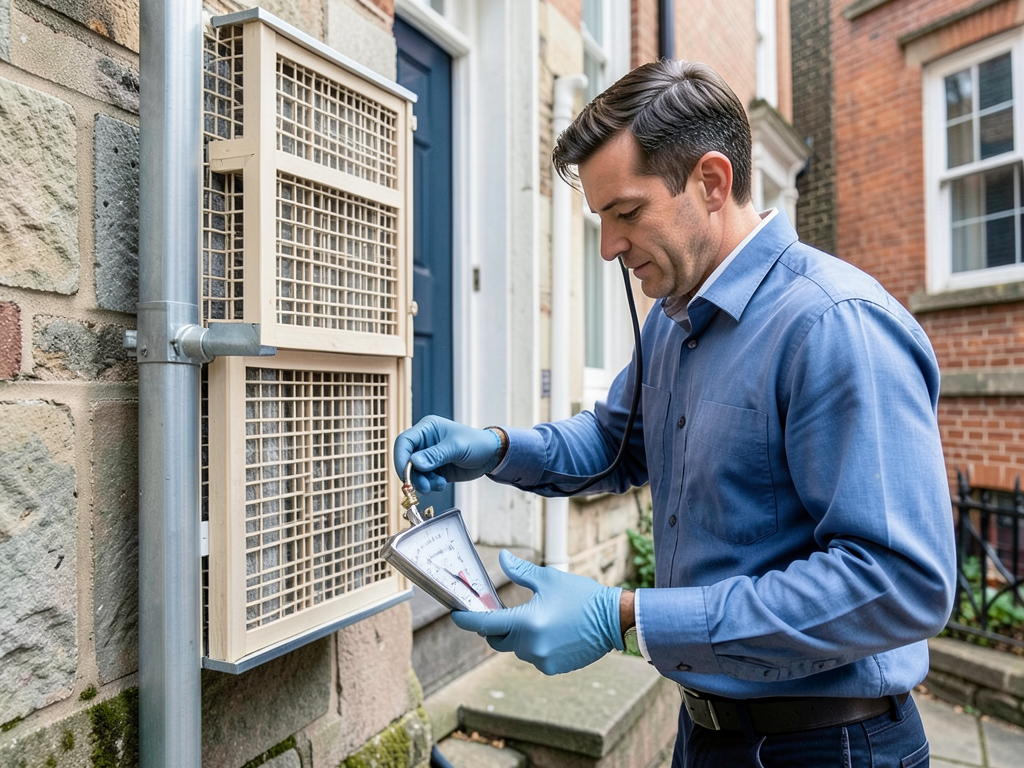
Next, we perform static pressure testing on your duct system. We measure pressure drops across the supply and return plenums to identify restrictions, undersized ducts, or closed dampers choking airflow. A well-designed residential system should operate below 0.5 inches of water column. Most problem systems we encounter in D.C. rowhouses run between 0.8 and 1.2 inches, indicating serious airflow restriction.

We inspect every accessible duct run for disconnections, compression, or deterioration. In older homes, we commonly find flex duct that's been crushed under insulation or kinked during installation. We check damper positions in branch lines and verify that return air pathways allow adequate air movement back to the air handler.

Then we calculate the actual airflow to each room using a flow hood at the registers. We compare measured flow against the Manual J load calculation for each space. If a bedroom needs 120 CFM but only receives 60 CFM, we know exactly where the bottleneck exists.

Based on diagnostic data, we implement targeted corrections. This might include duct sealing with mastic compound, register resizing, damper adjustments, or zoning system installation. For severe cases, we redesign duct layouts or install supplemental mini-split systems in problem areas. Every solution addresses the measured deficiency, not symptoms. We retest after corrections to verify consistent airflow and temperature distribution across your entire home.

What Happens During Your Temperature Balance Assessment

Uneven Heating or Cooling in Washington, D.C. – Expert Diagnosis and Permanent Airflow Solutions
01

Initial Temperature Mapping

We document current temperatures in every room while your system runs through a complete heating or cooling cycle. You'll see exactly how many degrees of variation exist between spaces. We note which rooms lag behind, which overheat, and where airflow feels weak or nonexistent. This creates a baseline that proves the problem and later confirms the fix worked.
02

Ductwork and Airflow Testing

We measure static pressure at the air handler and test airflow volume at each register using calibrated instruments. You'll learn whether your ducts leak, where restrictions exist, and if your system moves enough air to satisfy each room's cooling or heating load. We inspect accessible duct runs in attics, crawlspaces, and basements for damage, disconnections, or poor installation practices limiting performance.
03

Targeted Correction and Verification

We implement the specific repairs your home needs based on test data, whether that's duct sealing, damper adjustment, register resizing, or zone control installation. After corrections, we retest temperatures and airflow to verify consistent distribution. You receive documentation showing before and after measurements, proving the temperature imbalance is resolved and your system now delivers comfort to every room as designed.

Why D.C. Homeowners Trust Our Airflow Expertise

Washington, D.C.'s housing stock presents unique HVAC challenges that demand local experience. We've diagnosed temperature imbalance in hundreds of Capitol Hill rowhouses where original gravity furnace chases were converted to forced air decades ago with minimal regard for proper duct sizing. We understand the airflow limitations of narrow Victorian floor plans where adding return ducts requires creative routing to avoid cutting structural members.

We know that many D.C. homes have ductwork running through unconditioned attics that reach 140 degrees in summer. Even insulated ducts leak enough heat that supply air warms 8 to 12 degrees before reaching the registers. We account for this in our load calculations and recommend solutions appropriate to your home's architecture and mechanical constraints.

Patriot HVAC Washington DC holds technicians to diagnostic standards, not guesswork. We invested in the testing equipment needed to measure airflow, pressure, and temperature accurately because feelings and assumptions don't fix comfort problems. When we tell you a bedroom receives insufficient airflow, we show you the measured CFM versus the calculated requirement.

We've worked extensively in D.C.'s historic districts where exterior modifications require approval and interior work must respect original plaster and woodwork. We route new ducts carefully, patch access holes properly, and coordinate with preservation requirements when homes fall under historic guidelines.

You're hiring technicians who understand both the building science and the practical realities of improving older homes. We don't sell you equipment upgrades when ductwork corrections will solve the problem. We don't recommend whole-system replacements when targeted repairs restore balance. Our diagnostic approach identifies the real cause and implements the most effective correction, saving you money while delivering results that last.

What to Expect When We Fix Your Temperature Problems

Diagnostic Visit Scheduling

We schedule comprehensive temperature assessments within 48 hours of your call. The diagnostic visit takes 90 minutes to two hours depending on your home's size and system complexity. We work around your schedule and explain findings in real time as we test. You receive a written report with temperature measurements, airflow data, and recommended corrections prioritized by impact and cost. Most homeowners choose to proceed with corrections immediately after seeing the diagnostic evidence.

Thorough System and Duct Evaluation

Our assessment covers the complete air distribution system, not just the equipment. We inspect every accessible duct section, measure pressure at key points, test airflow at all registers, and verify proper equipment operation. We check for closed or blocked dampers, disconnected ducts, inadequate return air pathways, and register sizing errors. You'll understand exactly why certain rooms don't receive adequate heating or cooling and what physical changes will correct the imbalance.

Measured, Verifiable Improvement

We don't consider the job complete until follow-up testing confirms consistent temperatures throughout your home. You'll see documentation proving room-to-room temperature variance dropped from 8 or 10 degrees down to 2 or 3 degrees, which is normal variation. Airflow measurements confirm each room now receives adequate CFM for its cooling or heating load. The result is a home where you can set one temperature and trust that every room will reach and maintain that comfort level.

Ongoing Performance Support

After we correct your airflow problems, we provide guidance on maintaining balanced performance. This includes proper filter change intervals, damper settings for seasonal adjustment if you have a zoned system, and register management to avoid restricting airflow. We offer maintenance agreements that include annual airflow verification to catch problems before they create new comfort issues. If temperature imbalance returns, we diagnose the cause under our service commitment and make necessary adjustments.

Frequently Asked Questions

You Have Questions,
We Have Answers

How do you fix uneven heating in a house? +

Start by checking your air filter and replacing it if dirty. Next, inspect all vents and registers to confirm they are open and unobstructed. Balance airflow by adjusting dampers in your ductwork, directing more air to cold rooms. Seal any visible duct leaks with mastic or metal tape. If the problem persists, you may have undersized ductwork, a failing blower motor, or refrigerant issues. Washington, D.C.'s older row homes often have ductwork retrofitted into tight spaces, which compounds airflow problems. A professional HVAC technician can perform a room-by-room load calculation and identify hidden issues.

What is the $5000 rule for HVAC? +

The $5000 rule is a guideline contractors use to decide between repair or replacement. Multiply the age of your HVAC system by the cost of the repair. If the total exceeds $5000, replacement is usually the smarter investment. For example, a 12-year-old system needing a $500 compressor repair equals $6000, which suggests replacing the unit. This rule accounts for the likelihood of additional breakdowns and declining efficiency in aging systems. In Washington, D.C., where humidity and seasonal extremes stress HVAC equipment year-round, older systems often fail in clusters rather than gracefully.

Is uneven heating normal? +

Minor temperature differences between rooms are normal, but consistent cold or hot spots signal a problem. Factors like sun exposure, insulation gaps, and room size create some variation. However, if one bedroom stays 5 to 10 degrees colder than the rest of your home, you have an airflow or distribution issue. Washington, D.C.'s mix of historic row homes and modern construction creates unique challenges. Older homes often lack proper insulation and have undersized return air pathways. If you notice persistent uneven heating, address it quickly to prevent comfort loss and wasted energy.

How do you fix an unbalanced heating system? +

Start by balancing your ductwork dampers, which control airflow to different zones. Close dampers partially in rooms that get too much air and open them fully in colder areas. Check that your thermostat is positioned away from drafts, direct sunlight, or heat sources that skew readings. Inspect ductwork for leaks, especially in unconditioned spaces like attics or crawlspaces. Washington, D.C.'s high humidity can cause duct insulation to compress and lose effectiveness. If balancing dampers does not solve the issue, you may need a zoning system or duct redesign to match your home's layout and load requirements.

How to redistribute heat in a house? +

Improve airflow by keeping all vents and registers clear of furniture or drapes. Use ceiling fans in winter, running them clockwise on low speed to push warm air downward. Install door undercuts or transfer grilles to allow air to move between closed rooms. If your home has multiple levels, close upstairs vents slightly to force more heat downward. Washington, D.C.'s row homes often lack adequate return air paths, trapping warm air upstairs. For persistent issues, consider a ductless mini-split for problem rooms or add a second return vent to improve circulation throughout your home.

What are the signs of a poorly insulated house? +

Watch for drafts near windows, doors, and electrical outlets. Cold walls or ceilings in winter indicate inadequate insulation. Ice dams forming on your roof edge suggest heat escaping through the attic. High energy bills despite moderate thermostat settings are a red flag. In Washington, D.C., older brick row homes often have minimal insulation in exterior walls, and uninsulated party walls between units allow heat transfer to neighbors. Check for condensation on windows, which signals air leakage and humidity imbalance. An infrared thermal scan reveals hidden gaps that visual inspection misses.

What is the average life of a heating system? +

Gas furnaces last 15 to 20 years with regular maintenance. Heat pumps and air conditioners average 10 to 15 years. Factors like installation quality, maintenance frequency, and runtime hours affect lifespan. Washington, D.C.'s climate demands year-round HVAC use, which accelerates wear compared to milder regions. High humidity stresses compressors and coils, while freeze-thaw cycles strain heat exchangers. If your system approaches 15 years old and requires frequent repairs, replacement makes financial sense. Newer models offer significantly better efficiency, which offsets the upfront cost through lower monthly utility bills.

What HVAC qualifies for tax credit 2025? +

The Energy Star HVAC tax credit for 2025 covers heat pumps, central air conditioners, and gas furnaces meeting efficiency thresholds. Heat pumps must achieve 16 SEER2 and 9 HSPF2 ratings. Central AC units need 16 SEER2. Gas furnaces require 97 percent AFUE or higher. The credit covers 30 percent of equipment and installation costs, capped at $2000 annually for qualifying systems. Washington, D.C. residents should verify local rebates through Pepco or Washington Gas, which often stack with federal credits. Consult a tax professional to confirm eligibility and required documentation before purchasing.

How much does a new HVAC system cost for 1500 square feet? +

A complete HVAC replacement for a 1500-square-foot home in Washington, D.C. ranges widely based on system type, efficiency rating, and installation complexity. Entry-level systems start lower, while high-efficiency heat pumps or two-stage units cost more. Ductwork modifications, electrical upgrades, and permit fees add to the total. Washington, D.C.'s row homes often require custom duct fabrication due to limited space, which increases labor costs. Get multiple written quotes that include equipment specs, warranty terms, and labor breakdowns. Financing options and utility rebates can reduce out-of-pocket expenses.

What does uneven heating cause? +

Uneven heating forces your system to run longer cycles, which increases energy bills and accelerates wear on components. Cold rooms encourage occupants to crank up the thermostat, which overheats other areas and wastes energy. Persistent cold spots promote mold growth in Washington, D.C.'s humid climate, especially in basements and lower levels. Temperature imbalances stress your HVAC equipment, leading to premature failure of the blower motor, compressor, or heat exchanger. Ignoring uneven heating reduces comfort, shortens system lifespan, and compounds repair costs over time. Address airflow issues early to prevent cascading problems.

How D.C.'s Brick Rowhouse Construction Amplifies Temperature Imbalance

Washington, D.C.'s signature brick rowhouses create unique airflow challenges that worsen uneven heating and cooling. Shared party walls eliminate heat loss on two sides but concentrate all thermal transfer through the front and rear walls. Homes with southern exposure absorb significant solar heat through front facades, making front rooms 6 to 8 degrees warmer than rear rooms during summer afternoons. Original ductwork was often sized without accounting for this solar load variation. Three-story designs with mechanicals in the basement fight stack effect, where warm air naturally rises to upper floors regardless of where you need cooling. Narrow floor plans limit return air pathways, creating pressure imbalances that starve upper bedrooms of conditioned air while over-serving the main level.

Patriot HVAC Washington DC has become the trusted name for solving comfort problems in D.C.'s historic neighborhoods precisely because we understand how these homes were built and modified over time. We've diagnosed airflow issues in hundreds of Capitol Hill, Bloomingdale, and Shaw rowhouses where mechanical systems were retrofitted into buildings designed for coal heat. We know which construction details affect air distribution and which corrections work within the constraints of narrow lots and shared walls. When you call us, you're hiring technicians who've seen your exact problem in dozens of similar homes and know the proven solutions that restore comfort without compromising historic character or requiring major renovations.
HVAC Services in The Washington DC Area

Easily locate Patriot HVAC and explore our service area on the map below. We are strategically positioned to provide prompt and efficient heating, ventilation, and air conditioning services across Washington D.C. and its neighboring communities. Whether you're seeking a quick repair or a new installation, our team is ready to serve your comfort needs.

Address:
Patriot HVAC Washington DC, 20 F St NW, Washington, DC, 20001

Additional Services We Offer

Our news updates

Latest Articles & News from The Blogs

Meeting Friendship Heights Noise Rules with the Quietest New AC Units on the Market Friendship Heights homeowners know the struggle.…

Meeting Friendship Heights Noise Rules with the Quietest New AC Units on the Market

Meeting Friendship Heights Noise Rules with the Quietest New AC Units on the Market Friendship Heights homeowners know the struggle.…

Finding the right HVAC contractor for your LeDroit Park historic renovation

Finding the right HVAC contractor for your LeDroit Park historic renovation \n\n LeDroit Park’s Victorian rowhouses built in the 1870s…

How a Whole-House Dehumidifier Can Make Your Marshall Heights Home Feel 10 Degrees Cooler

How a Whole-House Dehumidifier Can Make Your Marshall Heights Home Feel 10 Degrees Cooler Washington DC's swampy summers make your…

Contact Us

Call Patriot HVAC Washington DC at (771) 218-6322 right now to schedule your comprehensive temperature balance assessment. We'll diagnose exactly why your home has inconsistent room temperatures and implement the targeted corrections that deliver permanent comfort in every space.