
Why Heat Pumps Dominate Washington DC Homes Today
Washington DC winters demand heating systems that can handle sudden temperature drops while keeping energy bills in check. Heat pumps have become the go-to solution for DC homeowners because they deliver both heating and cooling from a single unit. Modern inverter-driven heat pumps now operate efficiently in temperatures well below freezing making them ideal for the DMV climate where January lows can dip into the teens. Energy Star heat pump efficiency ratings.
The shift toward electrification in DC has accelerated thanks to the DC Building Energy Performance Standards and generous local rebates. A properly sized cold-climate heat pump can cut heating costs by up to 30% compared to older gas furnaces while providing superior humidity control during muggy summers. DC Sustainable Energy Utility rebates.
Before diving into brand comparisons understand this: not all heat pumps perform equally in cold weather. The difference between a standard unit and a cold-climate model can mean the difference between comfort and constant backup heating during polar vortex events. The Best Heating and Cooling Solutions for Adams Morgan Condos.
The Three Heat Pump Brands That Excel in DC Winters
Mitsubishi Electric Hyper-Heat Systems
Mitsubishi leads the cold-climate heat pump market with its Hyper-Heat technology. These units use enhanced vapor injection to maintain heating capacity when outdoor temperatures plummet to -13°F. The H2i series includes models like the FH series which delivers 100% heating capacity at 5°F and continues operating down to -13°F.
Key advantages for DC homes include whisper-quiet operation at 45-57 decibels perfect for rowhouse neighborhoods where noise ordinances matter. The multi-zone capability allows different temperature settings in various rooms ideal for the mixed-use spaces common in historic DC buildings.
DCSEU rebates currently offer up to $1,500 for qualifying Mitsubishi installations. When paired with federal tax credits these incentives can cover 30-40% of the total system cost.
Daikin Fit Heat Pump Systems
Daikin Fit systems represent a different approach to cold-weather performance. Rather than extreme low-temperature operation these units focus on high efficiency across a broader temperature range. The Daikin Fit achieves HSPF2 ratings up to 9.5 making it one of the most efficient options for the DC climate where temperatures rarely stay below 10°F for extended periods.. Read more about Making the Switch from Gas to Electric Heating in Your Barney Circle Home.
The compact design works exceptionally well for tight urban lots where outdoor space is limited. These systems operate at sound levels as low as 43 decibels and feature advanced filtration that helps combat DC’s high pollen counts during shoulder seasons.
Daikin offers a unique advantage for historic DC properties: their slimline outdoor units can fit in spaces as narrow as 12 inches making them suitable for alley installations behind rowhouses where traditional heat pumps won’t fit.
Bosch Climate 5000 Cold Climate Heat Pumps
Bosch brings European engineering to the DC market with its Climate 5000 series. These units use advanced inverter technology to maintain consistent temperatures without the temperature swings common in single-stage systems. The Climate 5000 achieves heating capacity at 5°F with a low-temperature cutoff around -4°F.
For DC homeowners concerned about power outages Bosch systems integrate seamlessly with backup generators. The low power draw during startup means you won’t trip breakers during voltage fluctuations common during summer thunderstorms.
Bosch’s smart thermostat integration allows remote monitoring and control perfect for vacation properties in areas like Rehoboth Beach or the Outer Banks where owners want to check systems before weekend trips.
Technical Performance Comparison at DC Winter Temperatures
Understanding how these systems perform at specific temperatures helps you make the right choice. Here’s how they compare at temperatures DC actually experiences: How to Choose the Right Air Conditioning Replacement for Your Foggy Bottom Townhouse.
| Model | HSPF2 Rating | SEER2 Rating | Heating Capacity at 5°F | Sound Level (dB) |
|---|---|---|---|---|
| Mitsubishi FH Series | Up to 12.5 | Up to 30 | 95-100% of rated capacity | 45-57 |
| Daikin Fit | Up to 9.5 | Up to 28 | 85-90% of rated capacity | 43-55 |
| Bosch Climate 5000 | Up to 10.0 | Up to 27 | 90-95% of rated capacity | 44-58 |
The HSPF2 rating reflects the new 2023 testing standards which provide more accurate real-world efficiency measurements than the older HSPF ratings. Higher numbers mean lower operating costs over the system’s lifetime.
DC-Specific Incentives and Rebate Programs
Washington DC offers some of the most generous heat pump incentives in the country. The DC Sustainable Energy Utility provides rebates up to $1,500 for qualifying high-efficiency heat pump installations. These rebates are available to both homeowners and small businesses throughout the District.
The federal Inflation Reduction Act extends a 30% tax credit up to $2,000 for heat pump installations through 2032. This credit applies to both the equipment and installation costs making it particularly valuable for complex historic home retrofits.
Pepco offers additional rebates for customers who install heat pumps with specific efficiency ratings. These utility rebates can add another $500-$1,000 to your total savings depending on the system’s SEER2 and HSPF2 ratings.
For buildings in DC’s Enterprise Zones additional incentives may be available through the DC Green Bank. These programs specifically target energy efficiency improvements in underserved communities.
Installation Considerations for Historic DC Properties
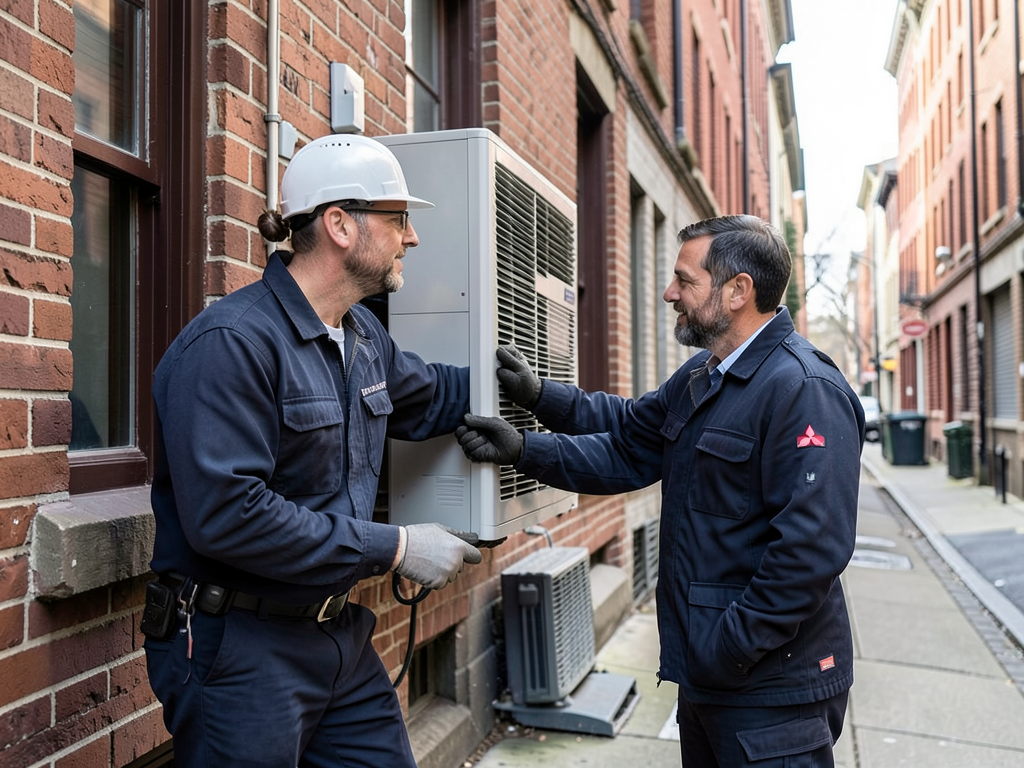
DC’s historic rowhouses present unique challenges for heat pump installations. Many properties in Capitol Hill Georgetown and Dupont Circle have strict guidelines about exterior modifications. Mitsubishi’s slimline outdoor units can often be installed without requiring historic preservation approval because they don’t alter the building’s exterior appearance.
Older homes built before 1950 often lack proper ductwork for central air systems. Ductless mini-split heat pumps offer an excellent solution since they require only small refrigerant lines rather than extensive ductwork. These systems can be installed with minimal wall penetration preserving historic plaster and trim.
Many DC homes built in the early 1900s have balloon framing which creates unique air leakage patterns. Professional load calculations become critical in these homes since oversized systems lead to short cycling and poor humidity control. Short Cycling.
Electrical service upgrades may be necessary for older homes. Many DC rowhouses still have 60-80 amp service which isn’t sufficient for modern heat pump systems. A proper assessment includes checking your electrical panel capacity before recommending equipment.
Dual-Fuel Hybrid Systems for Maximum Reliability
While cold-climate heat pumps handle most DC winter days some homeowners prefer the security of a backup heating system. Dual-fuel hybrid systems combine a heat pump with a high-efficiency gas furnace. The system automatically switches to gas heat when outdoor temperatures drop below the economic balance point typically around 30-35°F. Fast Furnace Repair Services for Families in Chevy Chase DC.
This approach offers several advantages for DC homeowners. You get the efficiency of a heat pump during mild weather and the reliability of gas heat during extreme cold snaps. The system also provides redundancy if one component fails.
Hybrid systems work particularly well in areas like Bethesda and Arlington where natural gas service is available but homeowners want to maximize efficiency. The upfront cost is higher but the long-term savings often justify the investment especially with current utility rebate programs.
Making the Right Choice for Your DC Home
The best heat pump for your home depends on several factors specific to your situation. Consider these key decision points:
- Available outdoor space for equipment installation
- Existing ductwork condition and layout
- Electrical service capacity
- Historic preservation requirements if applicable
- Budget including available rebates and tax credits
- Desired temperature control features
- Noise sensitivity for urban environments
For most DC homeowners the Mitsubishi Hyper-Heat systems offer the best combination of cold-weather performance and reliability. However if your home has limited outdoor space or you’re working with a tighter budget the Daikin Fit or Bosch Climate 5000 might be better options.
Professional load calculations are essential regardless of which brand you choose. An oversized system will short cycle leading to poor humidity control and reduced efficiency. An undersized system will run constantly during cold weather increasing wear and utility costs.
Frequently Asked Questions
Do heat pumps work when it’s below freezing in DC?
Yes modern cold-climate heat pumps work efficiently down to at least 5°F. Premium models like Mitsubishi Hyper-Heat continue operating at full capacity even when temperatures drop to -13°F which is colder than any temperature recorded in Washington DC.
How much do heat pumps cost in DC with rebates?
After federal tax credits and local DCSEU rebates most heat pump installations cost between $5,000 and $12,000 depending on system size and complexity. High-end cold-climate systems with premium features may cost more but the energy savings typically offset the higher initial investment within 5-7 years.. Read more about Understanding the Difference Between HVAC Manufacturer Warranties and Local DC Service Labor Guarantees.
Can I install a heat pump in my historic DC rowhouse?
Yes heat pumps are often easier to install in historic homes than traditional HVAC systems. Ductless mini-split systems require minimal wall penetration and slimline outdoor units can be installed in alleys or courtyards without affecting the building’s historic character.
Ready to Upgrade Your Home’s Heating System
Washington DC’s climate demands heating systems that can handle both humid summers and freezing winters. Modern heat pumps deliver both while cutting energy costs and reducing your carbon footprint. Whether you choose Mitsubishi’s extreme cold-weather performance Daikin’s space-saving design or Bosch’s smart integration technology you’re making a smart investment in your home’s comfort and efficiency.
The current DCSEU rebates and federal tax credits won’t last forever. These incentives can save you thousands on a new heat pump installation but they require professional installation by certified contractors who understand DC’s unique building requirements.
Don’t wait until your old system fails during a January cold snap. Call (771) 218-6322 today to schedule your free heat pump assessment. Our NATE-certified technicians will evaluate your home’s specific needs recommend the right system and handle all the rebate paperwork so you get maximum savings on your new heating system.
You may also find this helpful. Keeping your piano and hardwood floors safe from dry winter air in Foxhall Village.
You may also find this helpful. Simple Steps to Protect Your Outdoor HVAC Unit from Freezing Rain and Ice in Hawthorne.
{
“@context”: “https://schema.org”,
“@type”: “BlogPosting”,
“headline”: “Comparing the top three heat pump brands for Washington DC winters”,
“description”: “Discover which heat pumps handle DC winters best. Compare Mitsubishi, Daikin, and Bosch with local rebates, technical specs, and installation tips for historic DC homes.”,
“wordCount”: 1612,
“datePublished”: “2026-04-21T06:44:00.000Z”,
“dateModified”: “2026-04-21T06:44:00.000Z”,
“inLanguage”: “en-US”,
“mainEntityOfPage”: {
“@type”: “WebPage”,
“@id”: “https://patriothvacwashingtondc.com”
},
“publisher”: {
“@type”: “LocalBusiness”,
“name”: “Patriot HVAC Washington DC”,
“url”: “https://patriothvacwashingtondc.com”
},
“author”: {
“@type”: “Organization”,
“name”: “Patriot HVAC Washington DC”,
“url”: “https://patriothvacwashingtondc.com”
},
“image”: {
“@type”: “ImageObject”,
“url”: “https://patriothvacwashingtondc.com/wp-content/uploads/2026/03/comparing-the-top-three-heat-pump-brands-for-washi-1.png”
}
}
{
“@context”: “https://schema.org”,
“@type”: “HVACBusiness”,
“name”: “Patriot HVAC Washington DC”,
“url”: “https://patriothvacwashingtondc.com”,
“address”: {
“@type”: “PostalAddress”,
“addressLocality”: “Washington DC”
},
“areaServed”: {
“@type”: “City”,
“name”: “Washington DC”
}
}
{
“@context”: “https://schema.org”,
“@type”: “FAQPage”,
“mainEntity”: [
{
“@type”: “Question”,
“name”: “Do heat pumps work when it’s below freezing in DC?”,
“acceptedAnswer”: {
“@type”: “Answer”,
“text”: “Yes modern cold-climate heat pumps work efficiently down to at least 5°F. Premium models like Mitsubishi Hyper-Heat continue operating at full capacity even when temperatures drop to -13°F which is colder than any temperature recorded in Washington DC.”
}
},
{
“@type”: “Question”,
“name”: “How much do heat pumps cost in DC with rebates?”,
“acceptedAnswer”: {
“@type”: “Answer”,
“text”: “After federal tax credits and local DCSEU rebates most heat pump installations cost between $5,000 and $12,000 depending on system size and complexity. High-end cold-climate systems with premium features may cost more but the energy savings typically offset the higher initial investment within 5-7 years.”
}
},
{
“@type”: “Question”,
“name”: “Can I install a heat pump in my historic DC rowhouse?”,
“acceptedAnswer”: {
“@type”: “Answer”,
“text”: “Yes heat pumps are often easier to install in historic homes than traditional HVAC systems. Ductless mini-split systems require minimal wall penetration and slimline outdoor units can be installed in alleys or courtyards without affecting the building’s historic character.”
}
}
]
}
{
“@context”: “https://schema.org”,
“@type”: “BreadcrumbList”,
“itemListElement”: [
{
“@type”: “ListItem”,
“position”: 1,
“name”: “Home”,
“item”: “https://patriothvacwashingtondc.com”
},
{
“@type”: “ListItem”,
“position”: 2,
“name”: “Blog”,
“item”: “https://patriothvacwashingtondc.com/blog”
},
{
“@type”: “ListItem”,
“position”: 3,
“name”: “Comparing the top three heat pump brands for Washington DC winters”
}
]
}
{
“@context”: “https://schema.org”,
“@type”: “Service”,
“serviceType”: “HVAC”,
“provider”: {
“@type”: “LocalBusiness”,
“name”: “Patriot HVAC Washington DC”,
“url”: “https://patriothvacwashingtondc.com”
},
“areaServed”: {
“@type”: “City”,
“name”: “Washington DC”
},
“description”: “Discover which heat pumps handle DC winters best. Compare Mitsubishi, Daikin, and Bosch with local rebates, technical specs, and installation tips for historic DC homes.”
}