
Comparing the Cost of Central Air vs Ductless in Petworth Homes
Petworth rowhouses built in the 1920s through 1940s often lack central air conditioning making summer comfort a challenge. Homeowners weighing central air installation against ductless mini-splits face different costs timelines and architectural constraints. This guide breaks down installation expenses permitting requirements and energy savings specific to Petworth’s historic housing stock so you can choose the system that fits your budget and home. How to Choose the Right Air Conditioning Replacement for Your Foggy Bottom Townhouse.
Why Petworth Rowhomes Need Specialized Cooling Solutions
Petworth’s rowhouses feature narrow floor plans shared walls and limited attic or crawl space access. These factors complicate ductwork installation and often make central air more invasive than in newer homes. Many properties retain original plaster walls and historic radiators which can complicate retrofit work. DC’s Department of Buildings requires permits for any exterior condenser placement and in some cases for high-velocity systems that penetrate historic facades. DC Sustainable Energy Utility.
Cost Breakdown: Central Air vs Ductless in Petworth
| System Type | Average Installed Cost | Key Cost Factors | Best For |
|---|---|---|---|
| Central Air | $8,000–15,000 | Ductwork retrofit plaster repair condenser pad | Whole-house cooling |
| Ductless Mini-Split | $3,500–9,000 | Number of zones indoor unit placement | Room-by-room control |
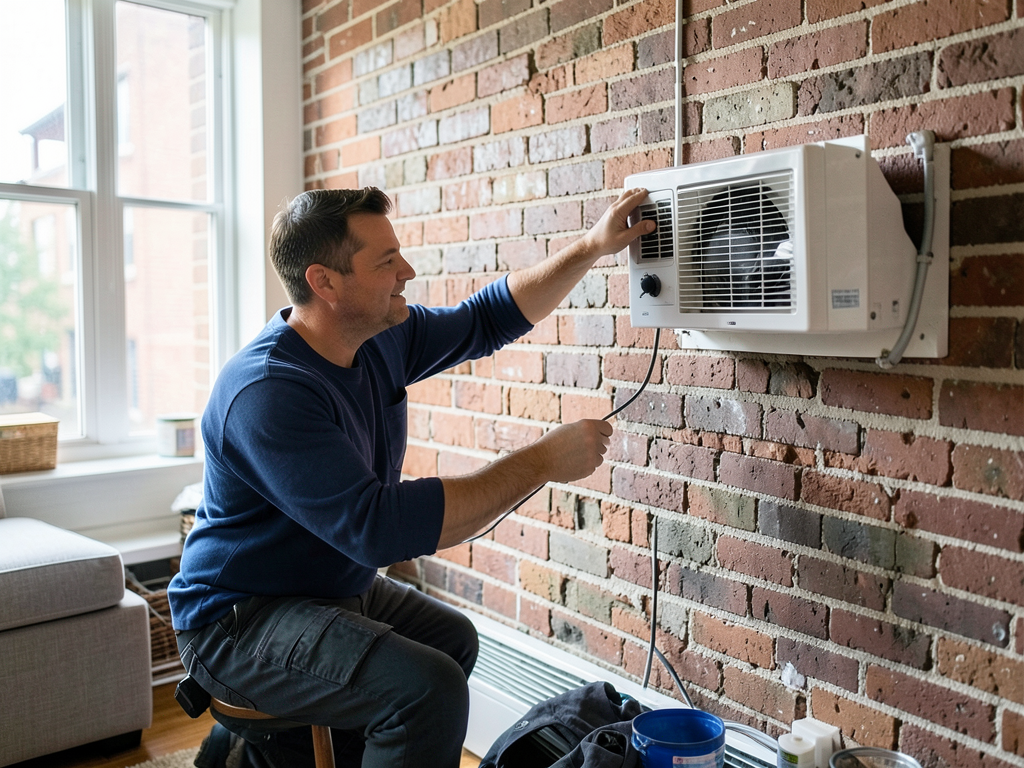
Central air often requires opening walls to run ducts which increases labor and repair costs. Ductless systems avoid this by mounting compact indoor units and running refrigerant lines through small wall penetrations. Both systems qualify for DCSEU rebates but ductless often sees faster payback in smaller homes. DC Department of Buildings permitting.
DCSEU Rebates and Federal Tax Credits for 2026
The DC Sustainable Energy Utility offers rebates up to $500 for central air and up to $1,500 for ductless mini-splits when paired with high-efficiency equipment. Federal tax credits under the Inflation Reduction Act cover 30% of equipment and installation costs up to $2,000 for qualifying heat pumps. These incentives can significantly offset the higher upfront cost of central air systems in Petworth rowhouses.
Permitting Process Through DC Department of Buildings
Installing central air in a Petworth rowhouse requires a mechanical permit from DC DOB. If the condenser mounts on the roof or exterior wall you may also need a building permit. Ductless systems typically require only a mechanical permit but still need proper refrigerant line routing to avoid shared-wall conflicts. Permits generally take 2–5 business days to approve and require a licensed HVAC contractor familiar with DC code.
Energy Efficiency: SEER2 Ratings and Humidity Control
Modern central air units achieve SEER2 ratings of 16–20 while ductless mini-splits often reach 20–30 SEER2. In Petworth’s humid summers higher SEER2 ratings translate to lower cooling costs and better moisture removal. Heat pump mini-splits provide both cooling and heating reducing the need for separate systems. Central air remains more effective for whole-house dehumidification but requires proper ductwork sealing to avoid energy loss. The Best Heating and Cooling Solutions for Adams Morgan Condos.
Installation Timelines and Disruption
Central air installation in a Petworth rowhouse typically takes 3–7 days including ductwork fabrication and plaster repair. Ductless installation often completes in 1–2 days with minimal wall damage. Both systems require electrical upgrades in older homes to support new cooling loads. Homeowners should plan for temporary loss of use in work areas and coordinate with contractors on dust containment. Getting Fast AC Repair for Your Navy Yard Apartment or Condo.
Long-Term Maintenance and Repair Considerations
Central air systems need annual tune-ups filter changes and periodic duct cleaning which can cost $300–$500 per year. Ductless systems require cleaning filters every 1–2 months and professional servicing every 2–3 years. Petworth’s humid climate can cause condensate drain clogs in both systems so regular inspection prevents water damage. Heat pump mini-splits also need winter defrost cycle checks to maintain efficiency.
Comparing Comfort and Control Features
Central air delivers consistent temperatures throughout the home but offers limited zoning without expensive dampers. Ductless systems allow independent temperature control in each room ideal for rowhouses with varied sun exposure. Smart thermostats integrate with both but mini-splits often include advanced sensors for occupancy and air quality. Noise levels are typically lower with ductless indoor units than central air handlers in small spaces.. Read more about Finding the Quietest AC Units for Your Forest Hills Backyard.
Financing Options for Petworth Homeowners
Many HVAC contractors offer 0% APR financing for 12–24 months on qualifying systems. DCSEU rebates and federal tax credits can be applied to reduce financed amounts. Some utilities also provide on-bill financing spreading costs over several years. Homeowners should compare total cost of ownership including energy savings when evaluating financing terms.
Environmental Impact and Sustainability
Heat pump mini-splits use refrigerants with lower global warming potential and achieve higher seasonal efficiency reducing carbon footprint. Central air systems with high SEER2 ratings also lower energy use but require more materials for ductwork. Both systems benefit from proper sizing to avoid short cycling which wastes energy. Choosing ENERGY STAR certified equipment ensures compliance with 2026 DC energy codes. Short Cycling.
Real Petworth Homeowner Scenarios
A Georgia Avenue rowhouse owner chose ductless mini-splits to avoid plaster damage and achieved 40% lower cooling costs in the first summer. Another family on Upshur Street installed central air with high-velocity ductwork to preserve historic details and qualified for maximum DCSEU rebates. Both reported improved indoor air quality and comfort after installation.. Read more about Why Your Historic Georgetown Row Home Needs a Ductless Mini-Split System.
Frequently Asked Questions
Which system adds more value to a Petworth rowhouse?
Central air often increases resale value more due to whole-house appeal but ductless systems can be a strong selling point for energy efficiency and modern comfort.
Can I install either system myself?
No. Both central air and ductless mini-splits require licensed HVAC technicians to handle refrigerants electrical connections and permits in compliance with DC regulations.
How do I know if my home qualifies for DCSEU rebates?
Rebates apply to qualifying equipment installed by participating contractors. Your HVAC provider can verify eligibility and submit rebate applications on your behalf.
Ready to Cool Your Petworth Home?
Call (771) 218-6322 today to schedule your inspection. Our Petworth HVAC experts will assess your home’s layout review rebate options and provide a detailed cost comparison so you can make the best choice for your comfort and budget.
You may also find this helpful. Converting Your Deanwood Home from Window Units to Central Air.
You may also find this helpful. Improving Airflow in Large Victorian Homes Throughout Brookland.
You may also find this helpful. Solving Hot Second Floor Problems in Tenleytown Split-Level Homes.
{
“@context”: “https://schema.org”,
“@type”: “BlogPosting”,
“headline”: “Comparing the Cost of Central Air vs Ductless in Petworth Homes”,
“description”: “Compare central air vs ductless mini-split costs for Petworth rowhouses. See DCSEU rebates, permitting, and energy savings for 2026.”,
“wordCount”: 1019,
“datePublished”: “2026-03-05T08:56:00.000Z”,
“dateModified”: “2026-03-05T08:56:00.000Z”,
“inLanguage”: “en-US”,
“mainEntityOfPage”: {
“@type”: “WebPage”,
“@id”: “https://patriothvacwashingtondc.com”
},
“publisher”: {
“@type”: “LocalBusiness”,
“name”: “Patriot HVAC Washington DC”,
“url”: “https://patriothvacwashingtondc.com”
},
“author”: {
“@type”: “Organization”,
“name”: “Patriot HVAC Washington DC”,
“url”: “https://patriothvacwashingtondc.com”
},
“image”: {
“@type”: “ImageObject”,
“url”: “https://patriothvacwashingtondc.com/wp-content/uploads/2026/03/comparing-the-cost-of-central-air-vs-ductless-in-p-1.png”
}
}
{
“@context”: “https://schema.org”,
“@type”: “HVACBusiness”,
“name”: “Patriot HVAC Washington DC”,
“url”: “https://patriothvacwashingtondc.com”,
“address”: {
“@type”: “PostalAddress”,
“addressLocality”: “Washington DC”
},
“areaServed”: {
“@type”: “City”,
“name”: “Washington DC”
}
}
{
“@context”: “https://schema.org”,
“@type”: “FAQPage”,
“mainEntity”: [
{
“@type”: “Question”,
“name”: “Which system adds more value to a Petworth rowhouse?”,
“acceptedAnswer”: {
“@type”: “Answer”,
“text”: “Central air often increases resale value more due to whole-house appeal but ductless systems can be a strong selling point for energy efficiency and modern comfort.”
}
},
{
“@type”: “Question”,
“name”: “Can I install either system myself?”,
“acceptedAnswer”: {
“@type”: “Answer”,
“text”: “No. Both central air and ductless mini-splits require licensed HVAC technicians to handle refrigerants electrical connections and permits in compliance with DC regulations.”
}
},
{
“@type”: “Question”,
“name”: “How do I know if my home qualifies for DCSEU rebates?”,
“acceptedAnswer”: {
“@type”: “Answer”,
“text”: “Rebates apply to qualifying equipment installed by participating contractors. Your HVAC provider can verify eligibility and submit rebate applications on your behalf.”
}
},
{
“@type”: “Question”,
“name”: “Ready to Cool Your Petworth Home?”,
“acceptedAnswer”: {
“@type”: “Answer”,
“text”: “Call (771) 218-6322 today to schedule your inspection. Our Petworth HVAC experts will assess your home’s layout review rebate options and provide a detailed cost comparison so you can make the best choice for your comfort and budget.”
}
}
]
}
{
“@context”: “https://schema.org”,
“@type”: “BreadcrumbList”,
“itemListElement”: [
{
“@type”: “ListItem”,
“position”: 1,
“name”: “Home”,
“item”: “https://patriothvacwashingtondc.com”
},
{
“@type”: “ListItem”,
“position”: 2,
“name”: “Blog”,
“item”: “https://patriothvacwashingtondc.com/blog”
},
{
“@type”: “ListItem”,
“position”: 3,
“name”: “Comparing the Cost of Central Air vs Ductless in Petworth Homes”
}
]
}
{
“@context”: “https://schema.org”,
“@type”: “Service”,
“serviceType”: “HVAC”,
“provider”: {
“@type”: “LocalBusiness”,
“name”: “Patriot HVAC Washington DC”,
“url”: “https://patriothvacwashingtondc.com”
},
“areaServed”: {
“@type”: “City”,
“name”: “Washington DC”
},
“description”: “Compare central air vs ductless mini-split costs for Petworth rowhouses. See DCSEU rebates, permitting, and energy savings for 2026.”
}