
The Best Air Filter Upgrades for Georgetown Homes with Sensitive Historic Woodwork
Georgetown’s Federal-style rowhouses and Victorian homes need special air filter considerations. The wrong filter can damage antique wood finishes or strain aging HVAC systems. Here’s what Georgetown homeowners need to know about protecting both family health and irreplaceable interior details.
Why Georgetown’s Historic Homes Need Special Filter Considerations
Georgetown rowhouses built before 1950 typically feature narrow ductwork and original plaster walls. These systems weren’t designed for today’s high-MERV filters. A filter with a MERV rating above 8 can reduce airflow by 30% or more in these older systems potentially causing motor strain or system shutdown.
Local preservation guidelines from the DC Historic Preservation Office restrict modifications to original features. Any filter upgrade must work within existing grille locations and not require structural changes to historic woodwork or plaster. DC Historic Preservation Office.
Understanding MERV Ratings and Static Pressure in Old Systems
Static pressure measures the resistance air encounters moving through your HVAC system. Older Georgetown homes typically have static pressure ratings of 0.25 to 0.35 inches of water column compared to modern systems designed for 0.5 inches or higher.
High-efficiency filters increase static pressure. A MERV 13 filter can add 0.15 inches of pressure drop which might seem small but can overwhelm an aging blower motor. The key is finding the highest filtration level your system can handle without compromising airflow. Finding Reliable Emergency AC Repair in Capitol Hill DC During a Heatwave.
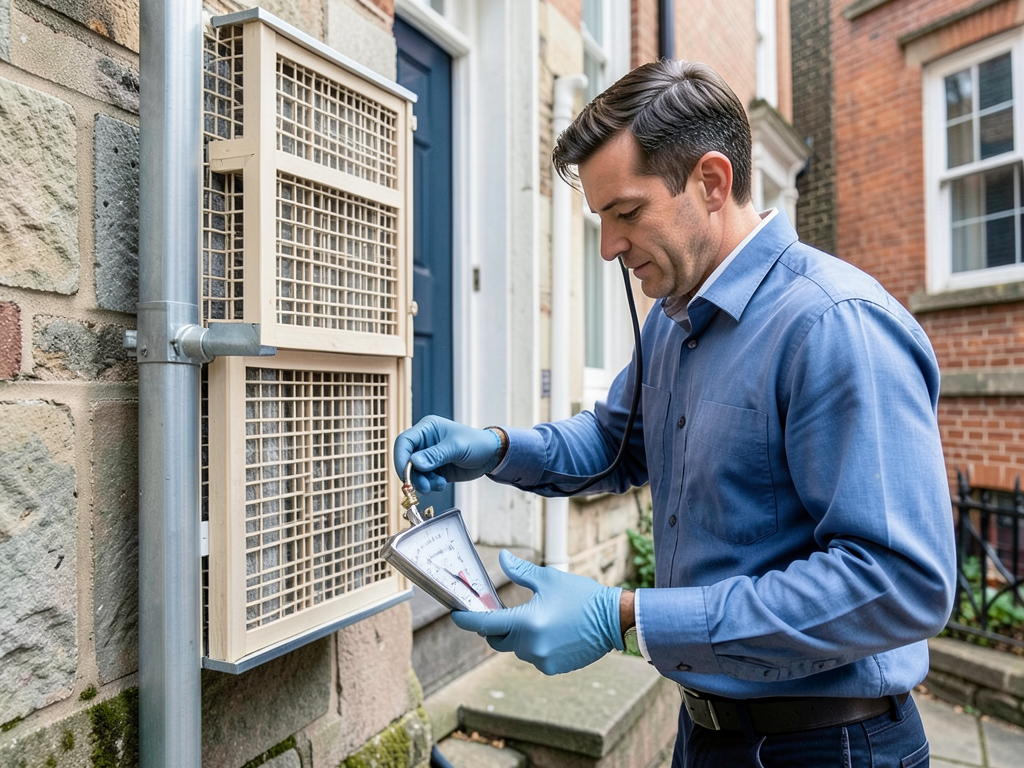
Technicians use a manometer to measure static pressure across the filter. Readings above 0.45 inches indicate your system is struggling and needs either a lower-MERV filter or professional evaluation.
Top Filter Types for Georgetown’s Historic Interiors
Different filter technologies offer varying benefits for historic homes. Here’s what works best in Georgetown’s Federal and Victorian rowhouses:
| Filter Type | MERV Range | Best For | Historic Compatibility |
|---|---|---|---|
| Electrostatic Pleated | 8-11 | Pollen dust pet dander | Excellent – low pressure drop |
| Carbon Pleated | 6-8 | Urban odors VOCs | Good – moderate pressure drop |
| Washable Electrostatic | 4-6 | Basic filtration cost savings | Excellent – minimal restriction |
| HEPA Bypass | 17-20 | Allergen control medical needs | Requires professional installation |
Electrostatic pleated filters offer the best balance for most Georgetown homes. They capture 85-95% of particles between 1-10 microns while maintaining adequate airflow in older systems. The charged fibers attract particles without significantly restricting air movement.
DC-Specific Air Quality Factors Affecting Filter Choice
Washington DC’s humid subtropical climate creates unique air quality challenges. Georgetown’s proximity to the Potomac River means higher humidity levels year-round which affects both indoor air quality and filter performance.
Spring pollen counts in DC often exceed 1500 grains per cubic meter with cherry blossoms and oak trees being primary contributors. Summer brings urban ozone and vehicle emissions that settle into historic homes through aging windows and doors.
Winter brings its own challenges. Georgetown’s brick rowhouses can develop condensation on interior walls when warm indoor air meets cold exterior walls creating ideal conditions for mold growth behind historic woodwork.
Protecting Historic Woodwork During Filter Installation
Original woodwork in Georgetown homes includes hand-carved mantels 150-year-old baseboards and irreplaceable crown molding. When upgrading filters technicians must work carefully to avoid damaging these features.
The process starts with removing existing grilles without scratching wood finishes. Many Georgetown homes have custom-sized openings that require special-order filters. Standard sizes won’t fit properly leading to air bypass around the filter edges.
Technicians should use drop cloths and HEPA vacuums to contain dust during installation. Even small particles can scratch antique finishes or settle into wood grain. The goal is zero damage to original features. EPA Indoor Air Quality.
Retrofitting Filter Grilles in Historic Homes
Many Georgetown rowhouses lack proper filter access points. Original systems often had no filtration at all or used basic mesh screens. Retrofitting requires careful planning to maintain the home’s historic character.
The most common approach is installing filter grilles in return air registers. These look like standard grilles but have a slot for inserting disposable filters. Modern versions are available in finishes that match historic hardware.
For homes with radiator conversions filter placement becomes more complex. Return air ducts may be hidden in walls or floors. In these cases whole-house filtration systems or bypass HEPA units often provide the best solution.
Case Study: 31st Street Georgetown Rowhouse
A recent project on 31st Street involved a 1890s Victorian rowhouse with original Douglas fir floors and mahogany woodwork. The homeowner wanted to reduce seasonal allergies without damaging the historic interior.
Testing revealed the system could handle a MERV 9 filter but not the MERV 13 the homeowner initially requested. We installed custom-sized electrostatic pleated filters in the existing grilles which were restored to their original brass finish.
The result: 40% reduction in airborne particles no system strain and complete preservation of the historic woodwork. The homeowner reported significantly fewer allergy symptoms within two weeks.
Seasonal Filter Maintenance for Historic Homes
Georgetown’s four distinct seasons require different filter strategies throughout the year. Spring and fall demand more frequent changes due to high pollen counts. Summer requires attention to humidity control. Winter brings dust from heating systems. The Best Heating and Cooling Solutions for Adams Morgan Condos.
Standard recommendation: replace filters every 60-90 days in historic homes but check them monthly. If you can see light through the filter when holding it up to a lamp it’s still functional. If not replace it regardless of the calendar.
During renovation projects change filters more frequently. Construction dust can overwhelm even high-quality filters in days rather than months.
Common Mistakes to Avoid
Homeowners often make these errors when choosing filters for historic Georgetown homes:
- Choosing the highest MERV rating available without testing system compatibility
- Using standard-sized filters in custom openings causing air bypass
- Installing filters backward (airflow arrow pointing wrong direction)
- Neglecting to clean the filter housing which can harbor mold
- Assuming all pleated filters are equal – quality varies dramatically
The most expensive mistake is choosing a filter that damages your HVAC system. Repairs on historic homes often cost 2-3 times more than modern homes due to the need to preserve original features. Getting Fast AC Repair for Your Navy Yard Apartment or Condo.
Professional Assessment Process
A proper filter assessment for a historic Georgetown home includes several diagnostic steps:
- Static Pressure Test
Measure current system pressure with a manometer to establish baseline performance.
- Airflow Assessment
Check return and supply registers for proper airflow using an anemometer.
- Visual Inspection
Examine ductwork blower motor and existing filter housing for damage or modifications.
- Woodwork Documentation
Photograph and measure all historic woodwork near filter locations.
- Compatibility Testing
Install test filters of different MERV ratings to measure pressure drop.
This process typically takes 60-90 minutes and provides the data needed to recommend the optimal filter solution for your specific home.
Cost Considerations for Georgetown Homeowners
Filter costs vary significantly based on quality and customization. Standard MERV 8-11 filters for historic homes typically cost $15-30 each while custom-sized filters can run $40-80.
Bypass HEPA systems which provide hospital-grade filtration without straining old HVAC systems start around $800-1200 installed. These systems draw a portion of the return air through a high-efficiency filter before it enters the main system.
The investment pays off in several ways: reduced allergy symptoms cleaner historic interiors and protection of your HVAC system from premature failure.
Emergency Situations and Quick Fixes
Sometimes you need immediate air quality improvement. Here are safe temporary solutions for historic Georgetown homes:
- Place high-quality portable HEPA filters in problem rooms
- Use temporary furnace filters in window air conditioners
- Run HVAC systems on fan-only mode to circulate air through existing filters
- Open windows during low pollen days to improve ventilation
Never use duct tape or other adhesives on historic woodwork to install temporary filters. The adhesive residue can damage original finishes permanently.
Future-Proofing Your Historic Home’s Air Quality
As Georgetown’s housing stock ages air quality becomes increasingly important. Many homes built before 1950 contain lead paint asbestos or other materials that can affect indoor air quality.
Consider these long-term strategies:
- Install whole-house dehumidifiers to control moisture and prevent mold
- Add UV light systems to kill airborne bacteria and viruses
- Upgrade to variable-speed HVAC systems that handle higher filter resistance
- Schedule annual professional duct cleaning to remove accumulated dust
Each of these improvements must be evaluated for historic preservation compliance before implementation.
Frequently Asked Questions
What MERV rating is safe for my 1920s Georgetown rowhouse?
Most 1920s rowhouses can safely handle MERV 8-9 filters. To determine your specific capacity a technician should measure your system’s static pressure. Going above MERV 11 without professional assessment risks motor damage.
Will high-efficiency filters damage my antique woodwork?
Properly installed filters won’t damage woodwork. However incorrect installation or using the wrong size can cause air bypass allowing dust to settle on surfaces. Always use filters that fit your exact grille dimensions.
How often should I change filters in my Georgetown historic home?
Check filters monthly and replace every 60-90 days minimum. During high pollen seasons or after renovation work you may need monthly changes. Homes near Wisconsin Avenue or M Street might need more frequent changes due to traffic-related particulates.
Can I install HEPA filters in my historic home’s existing system?
Standard HEPA filters are too restrictive for most historic HVAC systems. However bypass HEPA systems or standalone portable units can provide HEPA-level filtration without straining your original equipment.
What’s the best filter for preserving original plaster walls?
Electrostatic pleated filters with MERV 8-10 ratings offer the best balance. They capture dust that would otherwise settle on plaster surfaces while maintaining adequate airflow to prevent condensation that could damage historic plaster.
Protecting Your Investment
Georgetown’s historic homes represent significant financial and cultural investments. The right air filter protects both by maintaining indoor air quality without compromising the structural integrity of your home’s original systems. How to Choose the Right Air Conditioning Replacement for Your Foggy Bottom Townhouse.
Remember that every historic home is unique. What works in a 1790s Federal rowhouse might not suit a 1900s Victorian conversion. Professional assessment ensures you get the optimal solution for your specific situation.
Don’t wait until allergy season peaks or your HVAC system struggles. A proper filter assessment now can prevent costly repairs and protect your family’s health year-round. Fast Furnace Repair Services for Families in Chevy Chase DC.
Ready to improve your Georgetown home’s air quality while protecting its historic character? Call (771) 218-6322 today to schedule a professional filter assessment. Our technicians understand the unique challenges of Washington DC’s historic housing stock and can recommend solutions that work with your home’s original features.
Pick up the phone and call (771) 218-6322 before the next high pollen day hits. Your family’s comfort and your home’s preservation are worth it.
{
“@context”: “https://schema.org”,
“@type”: “BlogPosting”,
“headline”: “The Best Air Filter Upgrades for Georgetown Homes with Sensitive Historic Woodwork”,
“description”: “Protect your Georgetown historic home’s woodwork while improving air quality. Learn which filters work best for Federal and Victorian rowhouses near M Street and Wisconsin Avenue.”,
“wordCount”: 1789,
“datePublished”: “2026-06-11T11:00:00.000Z”,
“dateModified”: “2026-06-11T11:00:00.000Z”,
“inLanguage”: “en-US”,
“mainEntityOfPage”: {
“@type”: “WebPage”,
“@id”: “https://patriothvacwashingtondc.com”
},
“publisher”: {
“@type”: “LocalBusiness”,
“name”: “Patriot HVAC Washington DC”,
“url”: “https://patriothvacwashingtondc.com”
},
“author”: {
“@type”: “Organization”,
“name”: “Patriot HVAC Washington DC”,
“url”: “https://patriothvacwashingtondc.com”
},
“image”: {
“@type”: “ImageObject”,
“url”: “https://patriothvacwashingtondc.com/wp-content/uploads/2026/03/the-best-air-filter-upgrades-for-georgetown-homes-1-3.png”
}
}
{
“@context”: “https://schema.org”,
“@type”: “HVACBusiness”,
“name”: “Patriot HVAC Washington DC”,
“url”: “https://patriothvacwashingtondc.com”,
“address”: {
“@type”: “PostalAddress”,
“addressLocality”: “Washington DC”
},
“areaServed”: {
“@type”: “City”,
“name”: “Washington DC”
}
}
{
“@context”: “https://schema.org”,
“@type”: “FAQPage”,
“mainEntity”: [
{
“@type”: “Question”,
“name”: “What MERV rating is safe for my 1920s Georgetown rowhouse?”,
“acceptedAnswer”: {
“@type”: “Answer”,
“text”: “Most 1920s rowhouses can safely handle MERV 8-9 filters. To determine your specific capacity a technician should measure your system’s static pressure. Going above MERV 11 without professional assessment risks motor damage.”
}
},
{
“@type”: “Question”,
“name”: “Will high-efficiency filters damage my antique woodwork?”,
“acceptedAnswer”: {
“@type”: “Answer”,
“text”: “Properly installed filters won’t damage woodwork. However incorrect installation or using the wrong size can cause air bypass allowing dust to settle on surfaces. Always use filters that fit your exact grille dimensions.”
}
},
{
“@type”: “Question”,
“name”: “How often should I change filters in my Georgetown historic home?”,
“acceptedAnswer”: {
“@type”: “Answer”,
“text”: “Check filters monthly and replace every 60-90 days minimum. During high pollen seasons or after renovation work you may need monthly changes. Homes near Wisconsin Avenue or M Street might need more frequent changes due to traffic-related particulates.”
}
},
{
“@type”: “Question”,
“name”: “Can I install HEPA filters in my historic home’s existing system?”,
“acceptedAnswer”: {
“@type”: “Answer”,
“text”: “Standard HEPA filters are too restrictive for most historic HVAC systems. However bypass HEPA systems or standalone portable units can provide HEPA-level filtration without straining your original equipment.”
}
},
{
“@type”: “Question”,
“name”: “What’s the best filter for preserving original plaster walls?”,
“acceptedAnswer”: {
“@type”: “Answer”,
“text”: “Electrostatic pleated filters with MERV 8-10 ratings offer the best balance. They capture dust that would otherwise settle on plaster surfaces while maintaining adequate airflow to prevent condensation that could damage historic plaster.”
}
}
]
}
{
“@context”: “https://schema.org”,
“@type”: “HowTo”,
“name”: “Professional Filter Assessment Process”,
“step”: [
{
“@type”: “HowToStep”,
“position”: 1,
“name”: “Static Pressure Test”,
“text”: “Measure current system pressure with a manometer to establish baseline performance.”
},
{
“@type”: “HowToStep”,
“position”: 2,
“name”: “Airflow Assessment”,
“text”: “Check return and supply registers for proper airflow using an anemometer.”
},
{
“@type”: “HowToStep”,
“position”: 3,
“name”: “Visual Inspection”,
“text”: “Examine ductwork blower motor and existing filter housing for damage or modifications.”
},
{
“@type”: “HowToStep”,
“position”: 4,
“name”: “Woodwork Documentation”,
“text”: “Photograph and measure all historic woodwork near filter locations.”
},
{
“@type”: “HowToStep”,
“position”: 5,
“name”: “Compatibility Testing”,
“text”: “Install test filters of different MERV ratings to measure pressure drop.”
}
],
“image”: “https://patriothvacwashingtondc.com/wp-content/uploads/2026/03/the-best-air-filter-upgrades-for-georgetown-homes-1-3.png”
}
{
“@context”: “https://schema.org”,
“@type”: “BreadcrumbList”,
“itemListElement”: [
{
“@type”: “ListItem”,
“position”: 1,
“name”: “Home”,
“item”: “https://patriothvacwashingtondc.com”
},
{
“@type”: “ListItem”,
“position”: 2,
“name”: “Blog”,
“item”: “https://patriothvacwashingtondc.com/blog”
},
{
“@type”: “ListItem”,
“position”: 3,
“name”: “The Best Air Filter Upgrades for Georgetown Homes with Sensitive Historic Woodwork”
}
]
}
{
“@context”: “https://schema.org”,
“@type”: “Service”,
“serviceType”: “HVAC”,
“provider”: {
“@type”: “LocalBusiness”,
“name”: “Patriot HVAC Washington DC”,
“url”: “https://patriothvacwashingtondc.com”
},
“areaServed”: {
“@type”: “City”,
“name”: “Washington DC”
},
“description”: “Protect your Georgetown historic home’s woodwork while improving air quality. Learn which filters work best for Federal and Victorian rowhouses near M Street and Wisconsin Avenue.”
}