
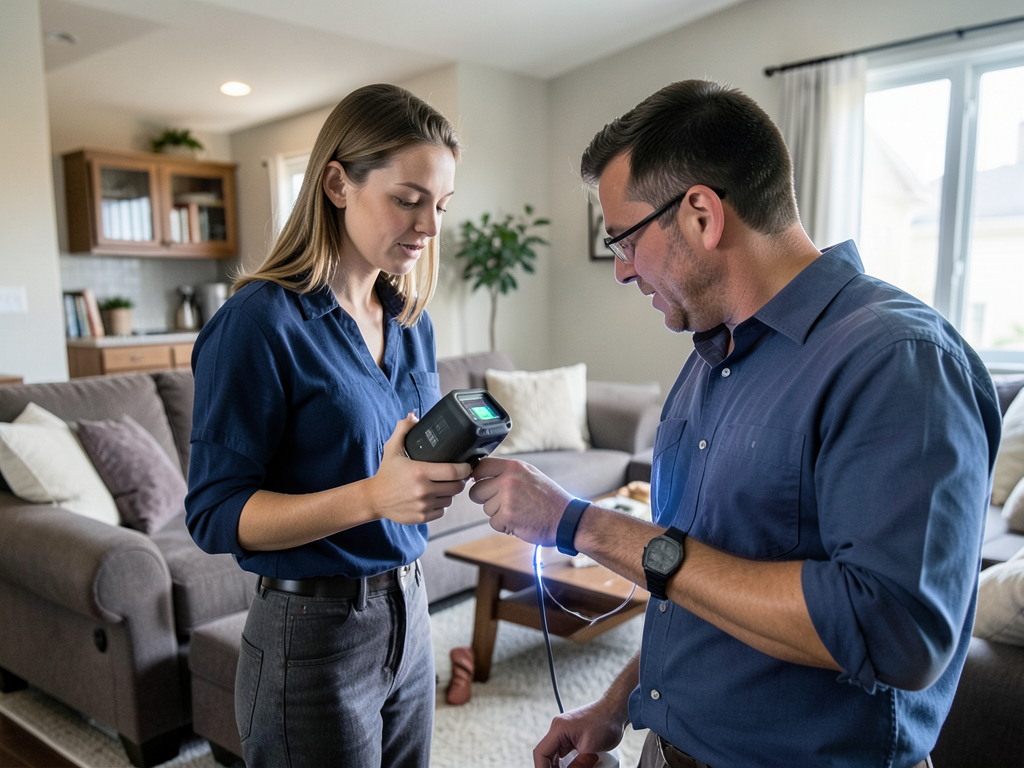
Why your Crestwood thermostat is lying to you about the temperature
Your Crestwood home should feel comfortable when the thermostat says it’s 72 degrees. But if you’re wearing a sweater in July or sweating in December, your thermostat might be giving you false information. Many homes in Crestwood suffer from this problem because of the neighborhood’s unique mix of historic and modern architecture.
The issue starts with where your thermostat is mounted. A thermostat placed in direct sunlight, near a drafty window, or on an exterior wall will sense temperatures that don’t represent your home’s actual comfort level. This creates what HVAC technicians call “ghost readings” – temperatures that exist only at that one spot on your wall.
According to the National Institute of Building Sciences, a poorly placed thermostat can cause your HVAC system to run 10-15% more than necessary. In Crestwood’s humid climate, this means higher energy bills and rooms that never feel quite right. National Institute of Building Sciences.
Let’s look at why your thermostat might be lying and what you can do about it.
Common thermostat placement mistakes in Crestwood homes
Many Crestwood homes have thermostats mounted in exactly the wrong places. Here are the five most common mistakes:
- Above a radiator or heat register – The warm air makes the thermostat think the room is hotter than it really is
- On an exterior wall – These walls are always colder or hotter than interior walls
- Near a kitchen – Cooking creates heat spikes that confuse the sensor
- Above a doorway – Drafts from opening doors create false readings
- In direct sunlight – A south-facing wall can be 10-15 degrees warmer than the room
Historic Crestwood homes built before 1950 often have plaster walls that hold temperature differently than modern drywall. This makes accurate thermostat placement even more critical.
How ghost readings affect your comfort and wallet
When your thermostat senses the wrong temperature, your HVAC system runs inefficiently. This creates a frustrating cycle:
- The thermostat calls for cooling when the living room is actually comfortable
- Your AC runs longer than needed, making some rooms too cold
- The system shuts off, then starts again when the thermostat senses heat
- This short cycling wears out your equipment faster
Short cycling is particularly hard on heat pumps, which are common in Crestwood’s newer homes. The constant starting and stopping can reduce a heat pump’s lifespan by 3-5 years.
The EPA estimates that proper thermostat placement can save homeowners 10% on heating and cooling costs annually. In Crestwood’s climate, that’s about $150-200 per year for the average home. The Best Heating and Cooling Solutions for Adams Morgan Condos.
The optimal thermostat mounting height and location
For the most accurate temperature readings, your thermostat should be mounted at eye level – about 52 to 60 inches from the floor. This height gives the best average reading of the air you actually breathe.
The ideal location is an interior wall in a frequently used room, away from any heat sources or drafts. A hallway works well if it’s central to your home and not near the front door.
Distance matters too. Your thermostat should be at least 18 inches from any supply vent and 3 feet from any heat-producing appliance. It also needs to be at least 12 inches from corners where air can stagnate.
Here’s a quick reference table for proper thermostat placement:
| Location Factor | Minimum Distance | Why It Matters |
|---|---|---|
| Floor to thermostat | 52-60 inches | Represents average breathing height |
| Supply vent | 18 inches | Prevents false warm/cool readings |
| Heat source | 3 feet | Avoids temperature spikes |
| Corner | 12 inches | Allows proper air circulation |
| Exterior wall | Avoid if possible | Exterior walls have wider temperature swings |
Crestwood-specific challenges for thermostat accuracy
Crestwood’s mix of architectural styles creates unique HVAC challenges. Many homes here have high ceilings and large windows that create temperature stratification – warm air rises while cool air sinks.
The neighborhood’s mature tree canopy, while beautiful, can also affect thermostat readings. A thermostat near a west-facing window might read cooler in summer when leaves block the sun, then read much warmer in winter when branches are bare.
Older Crestwood homes often have radiator or boiler systems that take longer to respond to thermostat changes. This means a thermostat placed too far from the main living areas might not reflect when those rooms actually reach the desired temperature. Boiler Services.
When smart sensors solve placement problems
If your thermostat is stuck in a bad location due to wiring constraints or historic preservation rules, smart remote sensors can help. Modern systems from Ecobee, Nest, and Honeywell allow you to place temperature sensors in the rooms that matter most.
These sensors communicate wirelessly with your main thermostat, giving you a more accurate picture of your home’s comfort. You can even set priorities – for example, keeping the bedroom at 68 degrees while letting the basement stay at 72.
Some systems use multiple sensors to calculate an average temperature throughout your home. This approach works especially well in Crestwood’s larger, multi-story homes where one thermostat often can’t represent the whole house.
Testing your thermostat’s accuracy
You can check if your thermostat is giving accurate readings with a simple test. Place a reliable digital thermometer next to your thermostat for 24 hours. If the readings differ by more than 2-3 degrees, your thermostat may be in a bad location. Finding Reliable Emergency AC Repair in Capitol Hill DC During a Heatwave.
Another sign of placement problems is frequent short cycling – your system turning on and off every few minutes rather than running for longer periods. This often indicates the thermostat is sensing temperature changes too quickly.
Professional HVAC technicians use thermal imaging cameras to identify hot and cold spots in your home. This helps them recommend optimal thermostat locations that account for your home’s unique characteristics.
DIY thermostat relocation: when to call a pro
Moving a thermostat might seem simple, but it involves running new low-voltage wiring through your walls. In older Crestwood homes, this can mean dealing with plaster walls, knob-and-tube wiring, or historic preservation restrictions.
If your thermostat is on an exterior wall, you’ll also need to properly seal the new opening to prevent air leaks. Poor sealing can create bigger problems than the original placement.
Professional relocation costs typically range from $150 to $350 in the DC area, depending on wall construction and distance to the new location. This investment often pays for itself within a year through improved efficiency.
Zoned HVAC systems for multi-level Crestwood homes
For homes where thermostat relocation isn’t practical, zoned HVAC systems offer another solution. These systems use multiple thermostats to control different areas of your home independently.
A zoned system is particularly useful in Crestwood’s historic homes where upstairs bedrooms might be 5-8 degrees warmer than downstairs living areas in summer. Each zone has its own thermostat and dampers in the ductwork that direct airflow where it’s needed.
While zoned systems cost more upfront – typically $2,500 to $4,500 for retrofitting an existing home – they provide customized comfort and can reduce energy bills by 20-30% in homes with significant temperature differences between floors.
Thermostat calibration and maintenance
Even a properly placed thermostat needs occasional calibration. Over time, the internal components can drift, causing readings to become less accurate.
Most digital thermostats remain accurate within 1-2 degrees for 5-7 years. After that, they may need professional recalibration or replacement. Mechanical thermostats tend to drift more quickly and should be checked annually.
During your annual HVAC maintenance visit, ask your technician to verify your thermostat’s accuracy. This quick check can identify problems before they affect your comfort or energy bills.
The future of home temperature control
Emerging HVAC technologies are making traditional thermostats less relevant. Smart systems now use occupancy sensors, weather forecasts, and even geofencing to optimize your home’s temperature automatically.
Some systems learn your schedule and preferences over time, adjusting themselves to provide comfort when you’re home and efficiency when you’re away. Others integrate with whole-home air quality monitors to consider humidity and air quality alongside temperature.
For Crestwood homeowners, these advances mean better comfort with lower energy use. But even the smartest system still needs proper sensor placement to work effectively.
Take control of your home’s comfort
If your Crestwood home never feels quite right, your thermostat might be the culprit. The good news is that most placement issues can be fixed with simple adjustments or smart technology. How to Choose the Right Air Conditioning Replacement for Your Foggy Bottom Townhouse.
Start by checking your thermostat’s location against the guidelines above. If it’s in a bad spot, consider whether relocation, remote sensors, or a zoned system makes the most sense for your home.
Remember that proper thermostat placement isn’t just about comfort – it’s about efficiency, equipment longevity, and lower energy bills. In Crestwood’s climate, where heating and cooling needs vary dramatically throughout the year, getting this right matters more than you might think. Getting Fast AC Repair for Your Navy Yard Apartment or Condo.
Call (771) 218-6322 today to schedule your inspection and take the first step toward a more comfortable, efficient home.
Frequently Asked Questions
How do I know if my thermostat is in the wrong place?
Signs include rooms that are too hot or cold compared to the thermostat setting, frequent short cycling of your HVAC system, and energy bills that seem higher than they should be. A simple thermometer test next to your thermostat can reveal accuracy issues.
Can I move my thermostat myself?
While possible, thermostat relocation involves running new wiring through walls and proper sealing of openings. In older Crestwood homes with plaster walls, this is often best left to professionals who understand the unique construction challenges.
How much does it cost to relocate a thermostat?
In the DC area, professional thermostat relocation typically costs $150 to $350. This includes running new wiring, mounting the thermostat in the optimal location, and ensuring proper sealing of any wall openings. For more information, visit Environmental Protection Agency.
{
“@context”: “https://schema.org”,
“@type”: “BlogPosting”,
“headline”: “Why your Crestwood thermostat is lying to you about the temperature”,
“description”: “Is your Crestwood home feeling too hot or too cold? Your thermostat might be giving you false readings. Learn the common placement mistakes and how to fix them.”,
“wordCount”: 1673,
“datePublished”: “2026-05-06T06:57:00.000Z”,
“dateModified”: “2026-05-06T06:57:00.000Z”,
“inLanguage”: “en-US”,
“mainEntityOfPage”: {
“@type”: “WebPage”,
“@id”: “https://patriothvacwashingtondc.com”
},
“publisher”: {
“@type”: “LocalBusiness”,
“name”: “Patriot HVAC Washington DC”,
“url”: “https://patriothvacwashingtondc.com”
},
“author”: {
“@type”: “Organization”,
“name”: “Patriot HVAC Washington DC”,
“url”: “https://patriothvacwashingtondc.com”
},
“image”: {
“@type”: “ImageObject”,
“url”: “https://patriothvacwashingtondc.com/wp-content/uploads/2026/03/why-your-crestwood-thermostat-is-lying-to-you-abou-1.png”
}
}
{
“@context”: “https://schema.org”,
“@type”: “HVACBusiness”,
“name”: “Patriot HVAC Washington DC”,
“url”: “https://patriothvacwashingtondc.com”,
“address”: {
“@type”: “PostalAddress”,
“addressLocality”: “Washington DC”
},
“areaServed”: {
“@type”: “City”,
“name”: “Washington DC”
}
}
{
“@context”: “https://schema.org”,
“@type”: “FAQPage”,
“mainEntity”: [
{
“@type”: “Question”,
“name”: “How do I know if my thermostat is in the wrong place?”,
“acceptedAnswer”: {
“@type”: “Answer”,
“text”: “Signs include rooms that are too hot or cold compared to the thermostat setting, frequent short cycling of your HVAC system, and energy bills that seem higher than they should be. A simple thermometer test next to your thermostat can reveal accuracy issues.”
}
},
{
“@type”: “Question”,
“name”: “Can I move my thermostat myself?”,
“acceptedAnswer”: {
“@type”: “Answer”,
“text”: “While possible, thermostat relocation involves running new wiring through walls and proper sealing of openings. In older Crestwood homes with plaster walls, this is often best left to professionals who understand the unique construction challenges.”
}
},
{
“@type”: “Question”,
“name”: “How much does it cost to relocate a thermostat?”,
“acceptedAnswer”: {
“@type”: “Answer”,
“text”: “In the DC area, professional thermostat relocation typically costs $150 to $350. This includes running new wiring, mounting the thermostat in the optimal location, and ensuring proper sealing of any wall openings. For more information, visit Environmental Protection Agency.”
}
}
]
}
{
“@context”: “https://schema.org”,
“@type”: “BreadcrumbList”,
“itemListElement”: [
{
“@type”: “ListItem”,
“position”: 1,
“name”: “Home”,
“item”: “https://patriothvacwashingtondc.com”
},
{
“@type”: “ListItem”,
“position”: 2,
“name”: “Blog”,
“item”: “https://patriothvacwashingtondc.com/blog”
},
{
“@type”: “ListItem”,
“position”: 3,
“name”: “Why your Crestwood thermostat is lying to you about the temperature”
}
]
}
{
“@context”: “https://schema.org”,
“@type”: “Service”,
“serviceType”: “HVAC”,
“provider”: {
“@type”: “LocalBusiness”,
“name”: “Patriot HVAC Washington DC”,
“url”: “https://patriothvacwashingtondc.com”
},
“areaServed”: {
“@type”: “City”,
“name”: “Washington DC”
},
“description”: “Is your Crestwood home feeling too hot or too cold? Your thermostat might be giving you false readings. Learn the common placement mistakes and how to fix them.”
}