
Why Union Station rowhouse owners struggle with high heating bills (and how to fix it)
If you own a rowhouse near Union Station you already know the struggle. Your heating bills keep climbing but your feet stay cold. The problem isn’t your thermostat or your willpower to wear socks. It’s the physics of your historic home and the way heat behaves in high-ceiling spaces. The Best Heating and Cooling Solutions for Adams Morgan Condos.
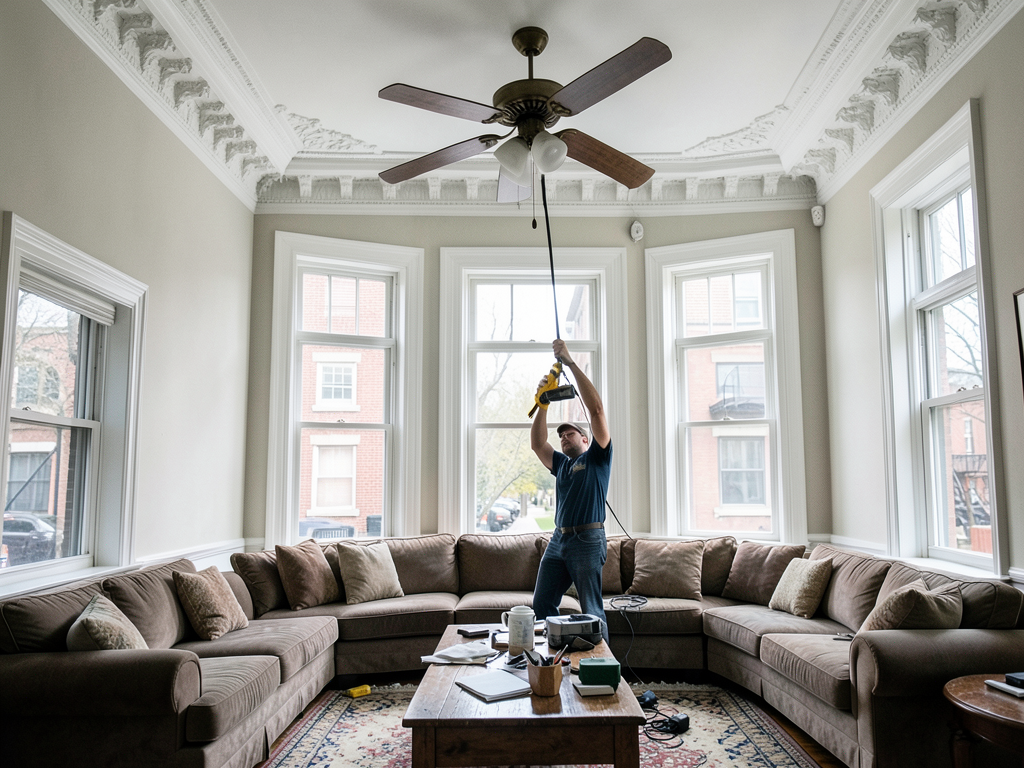
Union Station rowhouses built in the late 1800s and early 1900s feature tall ceilings that create a natural temperature gradient. Heat rises and gets trapped near the ceiling where you can’t feel it. Meanwhile the lower seven feet where you actually live stays cold. This is called thermal stratification and it’s why you’re paying to heat your crown molding instead of your living room.
The good news is you can fix this without replacing your entire HVAC system. Let’s break down exactly what’s happening and what works in DC’s historic rowhouses. DC Sustainable Energy Utility rebates.
Why your Union Station rowhouse costs so much to heat
Historic rowhouses near Union Station have three strikes against them when it comes to heating efficiency. First the original construction used single-pane windows and minimal wall insulation. Second the brick party walls that make rowhouses energy efficient in summer actually work against you in winter by conducting cold. Third the high ceilings common in these homes create massive air volume that your furnace must constantly reheat. Energy Star heat pump efficiency guidelines.
DC’s climate makes everything worse. Our humid winters mean moisture in the air conducts heat away from your body faster than dry cold. When temperatures drop into the teens the heat loss through those old windows and walls accelerates. Your furnace runs constantly but can’t keep up with the demand. Fast Furnace Repair Services for Families in Chevy Chase DC.
Most Union Station rowhouse owners see heating bills 30 to 50 percent higher than similar-sized modern homes. The problem isn’t your HVAC equipment. It’s your home’s architecture fighting against basic thermodynamics.
Five proven solutions for high-ceiling heating problems
Before you call for a complete system replacement try these targeted solutions that work specifically for historic rowhouses with high ceilings.
1. Reverse your ceiling fans for winter operation
Most people only use ceiling fans in summer but they’re even more valuable in winter. Switch your fan to clockwise rotation at low speed. This creates an updraft that pushes the warm air trapped at the ceiling back down along the walls and into your living space.
This simple change can reduce your heating costs by 10 to 15 percent. The key is keeping the fan on low. High speed creates a wind chill effect that actually makes you feel colder.
2. Install a ductless mini-split heat pump
Modern mini-split systems work exceptionally well in rowhouses because they don’t require extensive ductwork. The indoor units can be mounted high on walls where they naturally distribute heat downward through the room.
Heat pumps are particularly effective in DC’s climate. They extract heat from outdoor air even when temperatures drop into the twenties. When properly sized for your room volume they maintain consistent temperatures without the cycling problems of traditional furnaces.
3. Add radiant floor heating in key areas
Radiant floor heating solves the cold feet problem directly by warming the floor surface. Electric radiant mats or hydronic systems installed under tile or engineered hardwood provide consistent bottom-up heating that feels warmer than forced air at the same temperature.
This works especially well in Union Station rowhouses because you can add radiant heating to specific rooms without touching the existing boiler system. Focus on bathrooms kitchens and living rooms where you spend the most time.
4. Upgrade to high-velocity HVAC
High-velocity systems use small flexible ducts that fit within existing wall cavities. This makes them perfect for historic renovations where traditional ductwork would require major demolition.
These systems move air at higher speeds which helps break up thermal stratification. The smaller vents can be placed strategically to direct warm air where you need it most. While the upfront cost is higher than standard systems the energy savings and comfort improvement justify the investment for many rowhouse owners.
5. Install smart zoning controls
Zoning systems let you heat different areas of your home to different temperatures. This is crucial in rowhouses where the front of the house might face north and stay colder than the south-facing rear.
Modern smart thermostats learn your patterns and automatically adjust temperatures based on occupancy and time of day. Some systems even use remote sensors to measure temperature at different heights in the room ensuring the air you actually breathe stays at your target temperature.
DC-specific considerations for Union Station rowhouses
Heating a historic rowhouse in DC requires understanding local factors that affect system performance. The District’s building codes have specific requirements for HVAC installations in historic districts. Any exterior modifications including condenser placement need approval from the Historic Preservation Office.
DC’s humid climate creates unique challenges. Moisture in the air makes forced air heating feel less effective at the same temperature compared to dry climates. This is why many rowhouse owners find their homes feel drafty even when the thermostat reads comfortable.
The age of your home matters too. Rowhouses built before 1950 likely have little to no wall insulation. The brick party walls that help with summer cooling actually conduct cold in winter. Adding blown-in insulation to exterior walls can reduce heating costs by 20 percent or more.
Union Station’s location near the Capitol means many homes fall under historic preservation guidelines. This limits some modernization options but actually creates opportunities for creative solutions that preserve architectural character while improving efficiency.
Understanding Manual J load calculations for high-ceiling spaces
Most HVAC contractors use square footage to size systems. This fails completely for high-ceiling rooms. A 400 square foot room with 12-foot ceilings contains 4800 cubic feet of air. The same 400 square feet with standard 8-foot ceilings only has 3200 cubic feet.
Manual J calculations consider volume not just area. They factor in ceiling height insulation levels window efficiency and even the number of exterior walls. For historic rowhouses this calculation often reveals you need 30 to 50 percent more heating capacity than a standard estimate would suggest.
The calculation also determines proper equipment sizing. An oversized furnace cycles on and off frequently creating temperature swings and wasting energy. An undersized system runs constantly without ever reaching your target temperature.
Professional load calculations cost a few hundred dollars but save thousands in equipment costs and energy bills over the system’s lifetime. They’re especially important for Union Station rowhouses where the unique architecture makes standard sizing rules unreliable. Finding Reliable Emergency AC Repair in Capitol Hill DC During a Heatwave.
Energy efficiency and cost savings strategies
Proper heat distribution can lower DC residential energy bills by 10 to 15 percent without replacing any equipment. The key is understanding where your heat goes and how to keep it where you need it.
Start with the basics. Seal air leaks around windows doors and electrical outlets. A single leaky window can waste as much energy as leaving a 100-watt light bulb on continuously.
Upgrade weatherstripping on exterior doors. Many historic rowhouses have settled over time creating gaps that let cold air pour in. Self-adhesive weatherstripping is inexpensive and can be installed in an afternoon.
Consider thermal curtains for large windows. Heavy insulating curtains can reduce heat loss through windows by up to 25 percent. Open them during sunny days to let solar heat in then close them at night to trap that heat.
Programmable thermostats save money by automatically lowering temperatures when you’re asleep or away. Even a five-degree setback overnight can reduce heating costs by 10 percent.
Regular maintenance keeps your system running efficiently. Dirty filters restrict airflow forcing your furnace to work harder. Annual professional tune-ups can improve efficiency by 5 to 15 percent.
DCSEU rebates and incentives for heating upgrades
The DC Sustainable Energy Utility offers rebates for energy-efficient HVAC upgrades. These programs can cover 20 to 50 percent of the cost of qualifying equipment.
Heat pumps with high Seasonal Energy Efficiency Ratios qualify for the largest rebates. Units with SEER ratings above 18 and Heating Seasonal Performance Factor ratings above 10 typically qualify for maximum incentives.
Smart thermostats also qualify for rebates when installed by participating contractors. These devices learn your schedule and automatically optimize heating cycles for maximum efficiency.
The rebate process requires working with DCSEU-approved contractors who handle the paperwork and ensure your installation meets all program requirements. This takes the hassle out of claiming incentives while ensuring you get credit for all available savings.
Comparing heating solutions for Union Station rowhouses
| Solution | Initial Cost | Energy Savings | Best For | Installation Complexity |
|---|---|---|---|---|
| Ceiling Fan Reversal | Under $100 | 10-15% | All homes | DIY |
| Ductless Mini-Split | $3000-8000 | 20-30% | Room additions | Moderate |
| Radiant Floor | $10-20 per sq ft | 15-25% | Bathrooms kitchens | High |
| High-Velocity HVAC | $10000-20000 | 25-35% | Whole house | High |
| Smart Zoning | $1000-3000 | 10-20% | Multi-level homes | Low |
Smart home integration for high-ceiling heating
Modern smart home technology makes managing high-ceiling heating much easier. Smart thermostats with remote sensors can measure temperature at different heights in your room ensuring the air you actually breathe stays at your target temperature.
Some systems use learning algorithms to understand how heat moves through your specific space. They automatically adjust fan speeds and cycle times to maintain even temperatures without the hot and cold spots common in high-ceiling rooms.
Voice control integration lets you adjust temperatures without getting out of your warm bed on cold mornings. Geofencing features automatically adjust temperatures based on whether anyone is home saving energy without sacrificing comfort. Getting Fast AC Repair for Your Navy Yard Apartment or Condo.
Integration with other smart devices creates additional savings. Smart blinds can open during sunny winter days to let solar heat in then close at night to insulate windows. Smart ceiling fans can automatically switch between summer and winter modes based on outdoor temperature.
Maintenance tips for optimal high-ceiling heating
Even the best heating system loses efficiency without proper maintenance. For high-ceiling spaces specific maintenance tasks become even more important.
Clean or replace air filters monthly during heating season. Restricted airflow forces your system to work harder and creates uneven heating patterns. High-ceiling rooms often have return vents located high on walls where dust accumulates quickly.
Check and clean ceiling fan blades. Dust buildup on fan blades creates imbalance that reduces efficiency and can cause wobbling. Clean blades also move air more effectively breaking up thermal stratification.
Inspect ductwork for leaks. Leaky ducts waste enormous amounts of energy especially in unconditioned spaces like attics or crawl spaces. Seal visible leaks with mastic sealant or metal tape.
Test carbon monoxide detectors monthly. High-efficiency heating systems and any fuel-burning appliances require working CO detectors on every level of your home.
Schedule professional maintenance annually. A technician can identify developing problems before they cause system failure during the coldest days of winter.
Frequently Asked Questions
Why are my heating bills so high even with a new furnace?
Your furnace might be properly sized but your home loses heat faster than it can be replaced. Historic rowhouses have poor insulation single-pane windows and high ceilings that create massive heat loss. The problem is usually the building envelope not the heating equipment.
Can I just add more insulation to fix high heating bills?
Adding insulation helps but won’t solve thermal stratification in high-ceiling rooms. You need a combination of better insulation proper equipment sizing and distribution improvements like ceiling fans or zoning systems to see significant savings.
How much can I save by switching to a heat pump?
Heat pumps typically save 20 to 30 percent on heating costs compared to electric resistance heating and 10 to 15 percent compared to older gas furnaces. In DC’s climate they also provide efficient air conditioning eliminating the need for separate AC equipment.
Do smart thermostats really save money?
Yes. Smart thermostats save an average of 10 to 15 percent on heating and cooling costs. They learn your schedule automatically adjust temperatures when you’re away and provide data to help you understand your energy usage patterns.
How long do heating system upgrades take to pay for themselves?
Most heating upgrades pay for themselves in 3 to 7 years through energy savings. High-efficiency equipment combined with available rebates often reduces this payback period to 2 to 4 years.
Should I replace my radiators with forced air?
Not necessarily. Modern high-efficiency boilers with properly sized radiators can be very effective. The decision depends on your specific home layout and whether you also need air conditioning. A professional assessment can help determine the best approach.
Take control of your heating costs today
Living in a historic Union Station rowhouse doesn’t mean you have to suffer through high heating bills and cold feet. The solutions exist and many of them work with your home’s existing architecture rather than against it.
Start with the simple fixes like ceiling fan direction and smart thermostats. These cost little but can reduce your bills by 10 percent or more. Then consider targeted upgrades like mini-splits for problem rooms or radiant heating for bathrooms and kitchens.
Before making major investments get a professional assessment. A Manual J load calculation will tell you exactly what size equipment you need and identify the most cost-effective improvements for your specific situation.
Union Station rowhouse owners deserve comfortable homes without breaking the bank. With the right approach you can enjoy consistent warmth throughout your high-ceiling spaces while actually lowering your energy bills. How to Choose the Right Air Conditioning Replacement for Your Foggy Bottom Townhouse.
Call (771) 218-6322 today to schedule your heating assessment and take the first step toward comfortable affordable heating in your historic DC home.
{
“@context”: “https://schema.org”,
“@type”: “BlogPosting”,
“headline”: “Why Union Station rowhouse owners struggle with high heating bills (and how to fix it)”,
“description”: “Union Station rowhouse owners face unique heating challenges due to historic architecture and high ceilings. Discover why your bills are so high and proven solutions to fix them.”,
“wordCount”: 2311,
“datePublished”: “2026-06-03T15:57:00.000Z”,
“dateModified”: “2026-06-03T15:57:00.000Z”,
“inLanguage”: “en-US”,
“mainEntityOfPage”: {
“@type”: “WebPage”,
“@id”: “https://patriothvacwashingtondc.com”
},
“publisher”: {
“@type”: “LocalBusiness”,
“name”: “Patriot HVAC Washington DC”,
“url”: “https://patriothvacwashingtondc.com”
},
“author”: {
“@type”: “Organization”,
“name”: “Patriot HVAC Washington DC”,
“url”: “https://patriothvacwashingtondc.com”
},
“image”: {
“@type”: “ImageObject”,
“url”: “https://patriothvacwashingtondc.com/wp-content/uploads/2026/03/why-union-station-rowhouse-owners-struggle-with-hi-1.png”
}
}
{
“@context”: “https://schema.org”,
“@type”: “HVACBusiness”,
“name”: “Patriot HVAC Washington DC”,
“url”: “https://patriothvacwashingtondc.com”,
“address”: {
“@type”: “PostalAddress”,
“addressLocality”: “Washington DC”
},
“areaServed”: {
“@type”: “City”,
“name”: “Washington DC”
}
}
{
“@context”: “https://schema.org”,
“@type”: “FAQPage”,
“mainEntity”: [
{
“@type”: “Question”,
“name”: “Why are my heating bills so high even with a new furnace?”,
“acceptedAnswer”: {
“@type”: “Answer”,
“text”: “Your furnace might be properly sized but your home loses heat faster than it can be replaced. Historic rowhouses have poor insulation single-pane windows and high ceilings that create massive heat loss. The problem is usually the building envelope not the heating equipment.”
}
},
{
“@type”: “Question”,
“name”: “Can I just add more insulation to fix high heating bills?”,
“acceptedAnswer”: {
“@type”: “Answer”,
“text”: “Adding insulation helps but won’t solve thermal stratification in high-ceiling rooms. You need a combination of better insulation proper equipment sizing and distribution improvements like ceiling fans or zoning systems to see significant savings.”
}
}
]
}
{
“@context”: “https://schema.org”,
“@type”: “BreadcrumbList”,
“itemListElement”: [
{
“@type”: “ListItem”,
“position”: 1,
“name”: “Home”,
“item”: “https://patriothvacwashingtondc.com”
},
{
“@type”: “ListItem”,
“position”: 2,
“name”: “Blog”,
“item”: “https://patriothvacwashingtondc.com/blog”
},
{
“@type”: “ListItem”,
“position”: 3,
“name”: “Why Union Station rowhouse owners struggle with high heating bills (and how to fix it)”
}
]
}
{
“@context”: “https://schema.org”,
“@type”: “Service”,
“serviceType”: “HVAC”,
“provider”: {
“@type”: “LocalBusiness”,
“name”: “Patriot HVAC Washington DC”,
“url”: “https://patriothvacwashingtondc.com”
},
“areaServed”: {
“@type”: “City”,
“name”: “Washington DC”
},
“description”: “Union Station rowhouse owners face unique heating challenges due to historic architecture and high ceilings. Discover why your bills are so high and proven solutions to fix them.”
}