
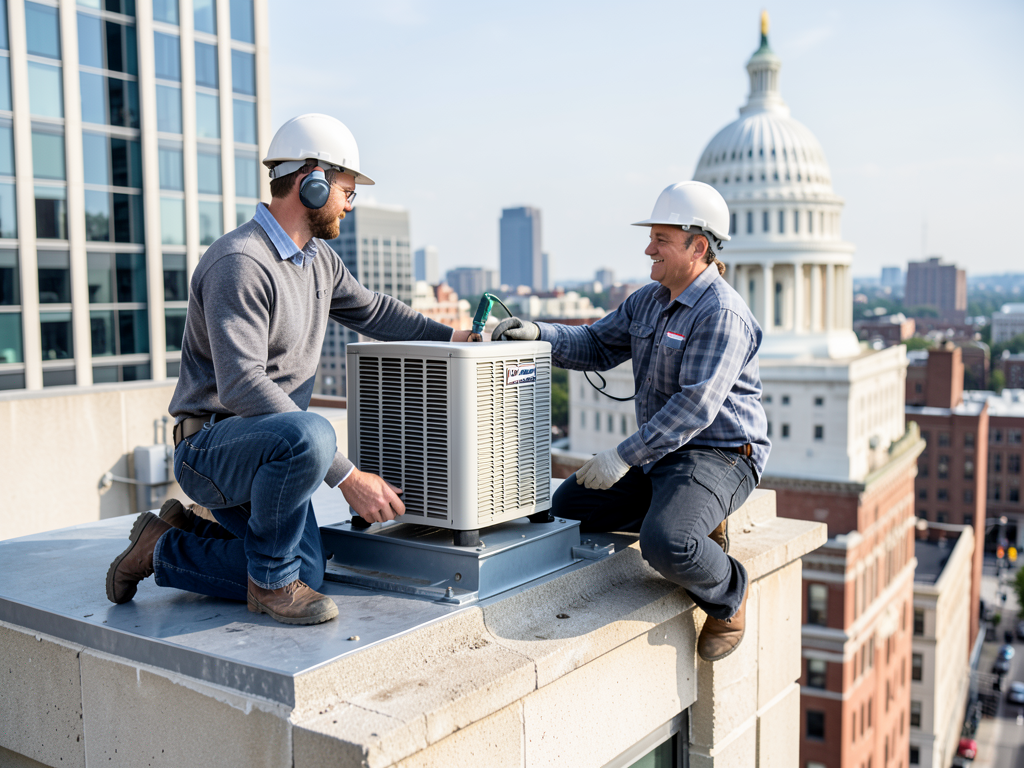
Reliable Commercial HVAC Maintenance for Businesses in Downtown DC
Businesses in Downtown DC face unique HVAC challenges from historic buildings to modern high-rises. We deliver 24/7 emergency service and preventive maintenance that keeps your systems running efficiently through every season. Our team understands the specific demands of federal buildings, hotels, and commercial offices in the District’s core. DC Building Energy Performance Standards.
Downtown DC’s high-rise density and strict energy codes make HVAC reliability critical. A single system failure can shut down operations and trigger compliance violations under the District’s Building Energy Performance Standards. We provide comprehensive maintenance contracts that prevent these costly disruptions.
Full-Service Mechanical Solutions for DC Commercial Properties
Commercial buildings in the District require specialized knowledge of multiple mechanical systems. From rooftop units to chiller plants, each component needs expert care to meet performance and regulatory requirements.
Chiller and Boiler Systems
Large commercial buildings depend on chillers for cooling and boilers for heating. These systems handle massive loads and require precise chemical treatment to prevent corrosion. We service centrifugal chillers, absorption units, and high-efficiency condensing boilers that meet DC’s strict emissions standards. The Best Heating and Cooling Solutions for Adams Morgan Condos.
Variable Refrigerant Flow (VRF) Technology
VRF systems provide zoned heating and cooling for modern office spaces. These systems require specialized training to diagnose issues like refrigerant imbalances or compressor failures. We handle Mitsubishi, Daikin, and LG VRF installations and repairs for Downtown DC’s newer commercial buildings. EPA Section 608 Certification.
Air Handling Units and Ventilation
Proper ventilation keeps indoor air quality high in occupied spaces. We clean and balance air handling units, replace filters, and ensure ductwork delivers proper airflow. This matters especially in high-rise buildings where pressure imbalances can cause doors to slam or drafts to form.
Compliance with DC Building Energy Performance Standards (BEPS)
The District’s BEPS requires buildings over 50,000 square feet to meet energy performance targets. Non-compliance can result in fines up to $10,000 per violation. We help property managers track energy usage, benchmark against similar buildings, and implement efficiency improvements.
Our maintenance programs include energy audits that identify equipment running inefficiently. We document improvements and provide reports that satisfy BEPS reporting requirements. This proactive approach prevents surprise violations and reduces utility costs.
Preventative Maintenance & Building Automation Systems
Preventive maintenance prevents 80% of HVAC failures. Our scheduled service programs include quarterly inspections, filter changes, and system calibration. We work with building automation systems to monitor performance and alert you to developing issues before they cause downtime.
24/7 Emergency Commercial Repair
When systems fail, every minute costs money. Our technicians carry common parts and can diagnose issues remotely through building automation interfaces. We guarantee response times under 2 hours for Downtown DC locations and have technicians stationed throughout the District for rapid deployment.
Industries We Serve: From Government Offices to Historical Landmarks
Downtown DC’s diverse building stock requires varied expertise. We serve federal agencies, embassies, hotels, and historic properties with equal proficiency.
Federal and Government Buildings
Government facilities require security clearance and strict documentation. We maintain GSA-compliant service records and understand the unique requirements of 24/7 mission-critical operations. Our technicians are trained on secure access procedures and can work within classified areas when required.
Hospitality and Hotel Properties
Hotels need quiet, reliable systems that maintain consistent temperatures. We service PTAC units, central plants, and kitchen ventilation systems. Our maintenance schedules minimize guest disruption and ensure energy costs stay within budget. Finding Reliable Emergency AC Repair in Capitol Hill DC During a Heatwave.
Historic and Landmark Buildings
DC’s historic buildings present unique challenges. We preserve original architectural features while upgrading mechanical systems for efficiency. This includes installing modern equipment in historic structures without damaging irreplaceable elements.
Why Local Facility Managers Trust Patriot HVAC
Facility managers in Downtown DC choose us for our reliability and technical expertise. We understand the District’s building codes, energy requirements, and the urgency of keeping commercial spaces operational. How to Choose the Right Air Conditioning Replacement for Your Foggy Bottom Townhouse.
Local Expertise and Rapid Response
Our downtown location allows us to reach any building in the core area within 30 minutes. We know the parking restrictions, loading dock requirements, and security protocols for each major property. This local knowledge saves time and prevents delays.
Certified and Licensed Technicians
All technicians hold EPA Section 608 certification for refrigerant handling and are licensed by the District of Columbia Department of Consumer and Regulatory Affairs. We maintain workers’ compensation and liability insurance specific to commercial work in DC.
Transparent Reporting and Documentation
We provide detailed service reports with photos, system readings, and recommendations. Our cloud-based platform lets property managers access records from anywhere. This documentation proves valuable during BEPS audits and helps track equipment lifecycle costs.
Energy Efficiency and Cost Savings
Energy costs represent a significant portion of commercial building expenses. Our maintenance programs identify waste and recommend upgrades that pay for themselves through utility savings.
Smart Building Integration
We integrate HVAC systems with building management platforms for automated control. This allows remote monitoring, predictive maintenance, and optimization based on occupancy patterns. Smart controls can reduce energy usage by 15-30% while maintaining comfort.
Seasonal Preparation and Load Management
DC’s climate demands systems that handle both humid summers and cold winters. We perform seasonal tune-ups that prepare equipment for peak loads. This includes cleaning condenser coils, checking refrigerant levels, and testing heating elements before cold weather arrives.
Case Studies: Downtown DC Success Stories
We’ve helped numerous Downtown DC businesses improve their HVAC reliability and efficiency. Here are a few examples of our work.
Federal Office Building Upgrade
A 12-story federal building was experiencing frequent chiller failures and high energy bills. We implemented a comprehensive maintenance program that included chemical treatment, vibration analysis, and automated controls. The building reduced energy consumption by 22% and eliminated emergency calls.
Hotel Central Plant Optimization
A downtown hotel’s aging boiler system was causing guest complaints and high utility costs. We replaced the system with high-efficiency condensing boilers and implemented a predictive maintenance program. The hotel saved $45,000 annually on energy while improving guest comfort scores.
Commercial HVAC Maintenance Agreement Options
We offer flexible maintenance agreements designed for different business needs and budgets. Each program includes priority service and discounted repair rates. Getting Fast AC Repair for Your Navy Yard Apartment or Condo.
Essential Maintenance Plan
Quarterly inspections, filter changes, and basic system checks. Ideal for smaller commercial spaces with newer equipment.
Comprehensive Maintenance Plan
Bimonthly inspections, detailed system analysis, energy monitoring, and priority scheduling. Best for buildings with critical operations or aging equipment.
Premium Maintenance Plan
Monthly inspections, 24/7 monitoring, predictive maintenance, and dedicated account management. Perfect for mission-critical facilities and government buildings.
Indoor Air Quality for High-Occupancy Offices
Modern offices require superior air quality to maintain productivity and health. We provide IAQ assessments and solutions that address ventilation, filtration, and humidity control.
Ventilation System Balancing
Proper ventilation prevents CO2 buildup and maintains healthy oxygen levels. We use airflow meters and smoke testing to balance systems and ensure each space receives adequate fresh air.
Advanced Filtration Solutions
High-efficiency filters capture airborne particles that affect health and comfort. We recommend MERV 13 or higher filters for commercial spaces and can integrate UV light systems to neutralize pathogens.
Frequently Asked Questions
How often should commercial HVAC systems be serviced?
Commercial systems need quarterly maintenance at minimum. Critical facilities benefit from monthly inspections. Seasonal tune-ups before summer and winter ensure systems handle peak loads.
What is the typical response time for emergency repairs?
We guarantee 2-hour response times for Downtown DC during business hours and 4-hour response times after hours. Our downtown location allows rapid deployment to any core area building.
How can we reduce our building’s energy costs?
Start with a comprehensive energy audit to identify waste. Common savings come from upgrading to high-efficiency equipment, implementing smart controls, and maintaining proper refrigerant levels. Many clients see 15-30% reductions.
Getting Started with Your Commercial HVAC Maintenance
Ready to improve your building’s HVAC reliability and efficiency? We make it simple to get started with a free consultation and system assessment.
Initial Site Assessment
Our technicians evaluate your current systems, review maintenance history, and identify areas for improvement. We provide a detailed report with recommendations and cost estimates.
Customized Maintenance Plan
Based on your building’s needs and budget, we create a maintenance schedule that prevents problems and optimizes performance. Plans can be adjusted as your needs change.
Implementation and Training
We handle all scheduling and provide training for your facility staff. Our online portal gives you access to service records, energy reports, and scheduling tools.
DC-Specific HVAC Challenges and Solutions
Downtown DC presents unique HVAC challenges from historic preservation requirements to modern energy codes. We’ve developed solutions for each common issue.
Historic Building Constraints
Many Downtown buildings cannot accommodate modern rooftop units due to historic preservation rules. We design custom solutions that hide equipment or use alternative locations while maintaining system efficiency.
High-Rise Building Dynamics
Tall buildings experience stack effect and pressure differentials that affect HVAC performance. We design systems that compensate for these forces and prevent issues like elevator shaft drafts or lobby temperature swings.
Urban Heat Island Effect
Downtown’s dense development creates higher ambient temperatures that stress cooling systems. We specify equipment with higher cooling capacity and implement heat recovery systems to improve efficiency.
Technology and Innovation in Commercial HVAC
We stay current with HVAC technology to provide the most efficient solutions. Our technicians receive ongoing training on new systems and control technologies.
Internet of Things Integration
Smart sensors and connected equipment allow predictive maintenance and remote monitoring. We can detect developing issues before they cause failures, reducing downtime and repair costs. Fast Furnace Repair Services for Families in Chevy Chase DC.
Energy Recovery Ventilation
ERV systems capture waste heat from exhaust air to preheat incoming fresh air. This technology can reduce heating costs by 50% while improving indoor air quality.
Variable Frequency Drives
VFDs allow motors to run at variable speeds based on demand rather than full power. This technology can reduce fan and pump energy consumption by 30-50%.
Regulatory Compliance and Documentation
Commercial HVAC work in DC requires strict adherence to regulations. We maintain current licenses and ensure all work meets code requirements.
District of Columbia Licensing
All our technicians hold valid DCRA licenses for HVAC work in the District. We pull required permits and schedule inspections as needed for each project.
EPA Refrigerant Handling
We follow all EPA regulations for refrigerant recovery, recycling, and disposal. Our technicians are certified for handling all common refrigerants including newer low-GWP alternatives.
OSHA Safety Compliance
Commercial work requires strict safety protocols. We maintain OSHA compliance, provide safety training, and carry appropriate insurance for all job sites.
Emergency Preparedness and Business Continuity
HVAC failures can halt business operations. Our emergency response plans ensure minimal disruption when issues occur.
Backup Equipment and Parts
We maintain inventory of common replacement parts and can provide temporary equipment for major repairs. This allows us to restore service quickly even when custom parts are needed.
Communication Protocols
Our emergency response includes clear communication channels. We provide status updates, estimated completion times, and documentation throughout the repair process.
Post-Emergency Analysis
After resolving emergencies, we analyze root causes and recommend preventive measures. This often includes system upgrades or modified maintenance schedules to prevent recurrence.
Building Long-Term Partnerships
We view every client as a long-term partner. Our goal is to become your trusted advisor for all HVAC needs, from routine maintenance to major system upgrades.
Account Management
Each client receives a dedicated account manager who understands your building’s history and needs. This ensures consistent service and proactive problem prevention.
Technology Integration
We integrate with your existing building management systems and provide training for your staff. Our goal is to make HVAC operation seamless and transparent.
Continuous Improvement
We regularly review system performance and suggest efficiency improvements. This includes monitoring energy usage trends and recommending upgrades when ROI makes sense.
Take Action Today
Don’t wait for an HVAC emergency to disrupt your business. Call (771) 218-6322 today to schedule your free consultation and system assessment. Our team will evaluate your current setup and recommend a maintenance plan that keeps your building comfortable and compliant year-round.
Frequently Asked Questions
What makes commercial HVAC different from residential?
Commercial systems are larger, more complex, and require specialized knowledge of building codes and energy standards. They often include multiple zones, advanced controls, and integration with building management systems.
How much does commercial HVAC maintenance cost?
Costs vary based on building size and system complexity. Basic plans start around $500 monthly for small spaces, while comprehensive coverage for large buildings can range from $2,000 to $10,000 monthly.
Do you work with government security requirements?
Yes. We maintain security clearances when required and understand government facility protocols. Our technicians receive training on secure access procedures and can work in classified areas when authorized.
What areas of Downtown DC do you serve?
We serve the entire Downtown DC core including K Street corridor, Federal Triangle, Penn Quarter, Chinatown, and surrounding areas. Our downtown location allows rapid response to any location within the central business district.
How do you handle historic preservation requirements?
We work closely with preservation boards and architects to ensure all work complies with historic requirements. This includes using equipment that meets efficiency standards while respecting architectural integrity.
What certifications do your technicians hold?
All technicians hold EPA Section 608 certification, DCRA HVAC licenses, and complete ongoing training. Many hold additional certifications in building automation, energy management, and specific equipment brands.
{
“@context”: “https://schema.org”,
“@type”: “BlogPosting”,
“headline”: “Reliable Commercial HVAC Maintenance for Businesses in Downtown DC”,
“description”: “Professional commercial HVAC maintenance for Downtown DC businesses. 24/7 emergency service, BEPS compliance, and expert care for government offices, hotels, and high-rise buildings.”,
“wordCount”: 2252,
“datePublished”: “2026-03-07T08:33:00.000Z”,
“dateModified”: “2026-03-07T08:33:00.000Z”,
“inLanguage”: “en-US”,
“mainEntityOfPage”: {
“@type”: “WebPage”,
“@id”: “https://patriothvacwashingtondc.com”
},
“publisher”: {
“@type”: “LocalBusiness”,
“name”: “Patriot HVAC Washington DC”,
“url”: “https://patriothvacwashingtondc.com”
},
“author”: {
“@type”: “Organization”,
“name”: “Patriot HVAC Washington DC”,
“url”: “https://patriothvacwashingtondc.com”
},
“image”: {
“@type”: “ImageObject”,
“url”: “https://patriothvacwashingtondc.com/wp-content/uploads/2026/03/reliable-commercial-hvac-maintenance-for-businesse-1.png”
}
}
{
“@context”: “https://schema.org”,
“@type”: “HVACBusiness”,
“name”: “Patriot HVAC Washington DC”,
“url”: “https://patriothvacwashingtondc.com”,
“address”: {
“@type”: “PostalAddress”,
“addressLocality”: “Washington DC”
},
“areaServed”: {
“@type”: “City”,
“name”: “Washington DC”
}
}
{
“@context”: “https://schema.org”,
“@type”: “FAQPage”,
“mainEntity”: [
{
“@type”: “Question”,
“name”: “How often should commercial HVAC systems be serviced?”,
“acceptedAnswer”: {
“@type”: “Answer”,
“text”: “Commercial systems need quarterly maintenance at minimum. Critical facilities benefit from monthly inspections. Seasonal tune-ups before summer and winter ensure systems handle peak loads.”
}
},
{
“@type”: “Question”,
“name”: “What is the typical response time for emergency repairs?”,
“acceptedAnswer”: {
“@type”: “Answer”,
“text”: “We guarantee 2-hour response times for Downtown DC during business hours and 4-hour response times after hours. Our downtown location allows rapid deployment to any core area building.”
}
},
{
“@type”: “Question”,
“name”: “How can we reduce our building’s energy costs?”,
“acceptedAnswer”: {
“@type”: “Answer”,
“text”: “Start with a comprehensive energy audit to identify waste. Common savings come from upgrading to high-efficiency equipment, implementing smart controls, and maintaining proper refrigerant levels. Many clients see 15-30% reductions.”
}
},
{
“@type”: “Question”,
“name”: “What makes commercial HVAC different from residential?”,
“acceptedAnswer”: {
“@type”: “Answer”,
“text”: “Commercial systems are larger, more complex, and require specialized knowledge of building codes and energy standards. They often include multiple zones, advanced controls, and integration with building management systems.”
}
},
{
“@type”: “Question”,
“name”: “How much does commercial HVAC maintenance cost?”,
“acceptedAnswer”: {
“@type”: “Answer”,
“text”: “Costs vary based on building size and system complexity. Basic plans start around $500 monthly for small spaces, while comprehensive coverage for large buildings can range from $2,000 to $10,000 monthly.”
}
},
{
“@type”: “Question”,
“name”: “Do you work with government security requirements?”,
“acceptedAnswer”: {
“@type”: “Answer”,
“text”: “Yes. We maintain security clearances when required and understand government facility protocols. Our technicians receive training on secure access procedures and can work in classified areas when authorized.”
}
},
{
“@type”: “Question”,
“name”: “What areas of Downtown DC do you serve?”,
“acceptedAnswer”: {
“@type”: “Answer”,
“text”: “We serve the entire Downtown DC core including K Street corridor, Federal Triangle, Penn Quarter, Chinatown, and surrounding areas. Our downtown location allows rapid response to any location within the central business district.”
}
},
{
“@type”: “Question”,
“name”: “How do you handle historic preservation requirements?”,
“acceptedAnswer”: {
“@type”: “Answer”,
“text”: “We work closely with preservation boards and architects to ensure all work complies with historic requirements. This includes using equipment that meets efficiency standards while respecting architectural integrity.”
}
},
{
“@type”: “Question”,
“name”: “What certifications do your technicians hold?”,
“acceptedAnswer”: {
“@type”: “Answer”,
“text”: “All technicians hold EPA Section 608 certification, DCRA HVAC licenses, and complete ongoing training. Many hold additional certifications in building automation, energy management, and specific equipment brands.”
}
}
]
}
{
“@context”: “https://schema.org”,
“@type”: “BreadcrumbList”,
“itemListElement”: [
{
“@type”: “ListItem”,
“position”: 1,
“name”: “Home”,
“item”: “https://patriothvacwashingtondc.com”
},
{
“@type”: “ListItem”,
“position”: 2,
“name”: “Blog”,
“item”: “https://patriothvacwashingtondc.com/blog”
},
{
“@type”: “ListItem”,
“position”: 3,
“name”: “Reliable Commercial HVAC Maintenance for Businesses in Downtown DC”
}
]
}
{
“@context”: “https://schema.org”,
“@type”: “Service”,
“serviceType”: “HVAC”,
“provider”: {
“@type”: “LocalBusiness”,
“name”: “Patriot HVAC Washington DC”,
“url”: “https://patriothvacwashingtondc.com”
},
“areaServed”: {
“@type”: “City”,
“name”: “Washington DC”
},
“description”: “Professional commercial HVAC maintenance for Downtown DC businesses. 24/7 emergency service, BEPS compliance, and expert care for government offices, hotels, and high-rise buildings.”
}