
How to Cool a Top-Floor Sunroom in Your Woodridge Bungalow
A sunroom should be a retreat not a sauna. In Woodridge many bungalows feature these glass-enclosed spaces that trap heat like a greenhouse. The problem is worse in DC where summer humidity and intense sunlight push temperatures 15-20 degrees higher than the rest of your home. Standard central air rarely reaches these spaces because they often lack ductwork and are added as afterthoughts. The good news You have options that work with your home’s architecture not against it. DC Sustainable Energy Utility rebates.
Why Your Sunroom Gets So Hot
Glass conducts heat far more efficiently than walls. A typical sunroom can gain 200-400 BTUs per hour per square foot just from solar radiation. Add DC’s high humidity which prevents sweat from evaporating and you get a space that feels like a steam room. The heat gain is compounded by the fact that most sunrooms sit on the top floor where rising warm air collects. Without proper ventilation the temperature can climb to 90-100 degrees even when it is only 85 outside.
Another factor is the lack of thermal breaks in the construction. Many Woodridge bungalows were built before modern insulation codes. The sunroom’s glass-to-frame connection allows heat to transfer directly into your living space. Even with blinds the heat continues radiating after sunset creating a cycle that makes the room uncomfortable from late afternoon through evening.
Ductless Mini-Split Systems The Professional Choice
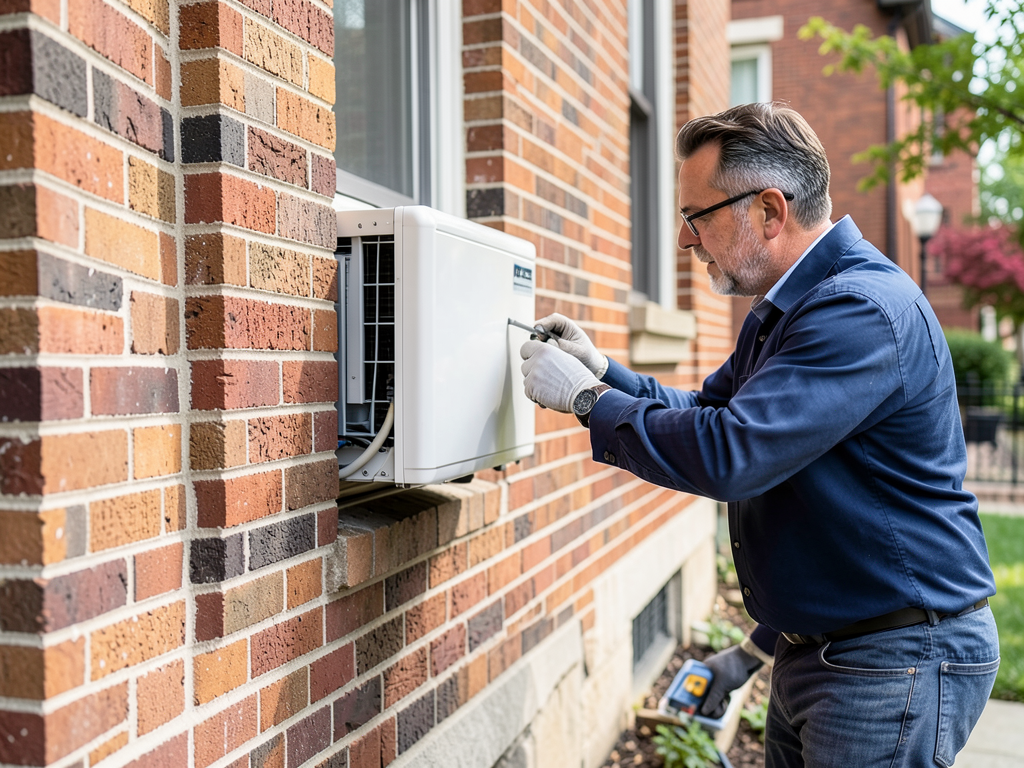
A ductless mini-split is the most effective solution for a ventless sunroom. These systems consist of an indoor air handler mounted high on the wall and an outdoor condenser. The compressor uses inverter technology to adjust cooling output based on the room’s needs rather than cycling on and off. This means consistent temperatures and better humidity control. The Best Heating and Cooling Solutions for Adams Morgan Condos.
For a typical 200-square-foot sunroom you need a 9000-12000 BTU unit. In DC’s climate look for a model with a SEER2 rating of 18 or higher and a built-in dehumidifier mode. The indoor unit should be placed on the wall opposite the largest windows to create optimal airflow. Professional installation takes about 4-6 hours and includes mounting the condenser on a pad or brackets outside.
The upfront cost ranges from $3500 to $5500 installed. While this seems high the energy savings are significant. A mini-split uses 30-50% less electricity than a portable AC unit because it only conditions the space you are using. Many DC homeowners recoup the cost within 3-5 years through lower utility bills and increased home comfort.
Call (771) 218-6322 today to schedule your inspection.
Alternative Mechanical Solutions
If a mini-split is outside your budget there are other mechanical options. Portable air conditioners cost $300-600 but have limitations. They need an exhaust hose routed through a window or wall. Most units remove only 50-70% of the humidity compared to a mini-split’s 80-90%. They also struggle when outdoor temperatures exceed 90 degrees which is common in July and August.
Window units are another option but they come with challenges in DC. Many historic districts including parts of Woodridge have restrictions on exterior modifications. A window AC blocks natural light and can create security concerns. The units also tend to be noisy which defeats the purpose of a peaceful sunroom.
PTAC (Packaged Terminal Air Conditioner) units are worth considering for larger sunrooms. These through-the-wall systems provide both cooling and heating. They require a dedicated 220-volt circuit and a sleeve cut into an exterior wall. Installation costs run $1500-2500 but they offer better performance than portable units.
Passive Cooling Tactics That Actually Work
Before investing in mechanical cooling try these passive strategies. Low-E window film reduces solar heat gain by 40-60% while still allowing light to pass through. Professional installation costs $5-8 per square foot but can lower indoor temperatures by 5-10 degrees. The film also blocks UV rays that fade furniture and flooring.
Thermal curtains or cellular shades add an extra insulation layer. Look for products with a solar heat gain coefficient (SHGC) below 0.3. When closed during peak sun hours they can reduce heat gain by 25%. For best results combine them with exterior awnings which block sunlight before it hits the glass.
Ceiling fans improve comfort by creating a wind chill effect. In a sunroom with a vaulted ceiling choose a fan with a blade span of at least 52 inches and a CFM (cubic feet per minute) rating above 5000. Run the fan counterclockwise in summer to push air downward. This makes the room feel 4-5 degrees cooler without changing the actual temperature. How to Choose the Right Air Conditioning Replacement for Your Foggy Bottom Townhouse.
DC Climate Considerations
DC’s humid subtropical climate (Cfa) creates unique challenges for sunroom cooling. The region experiences 40-45 inches of annual rainfall and summer dew points often exceed 70 degrees. This moisture-laden air holds more heat energy making dehumidification as important as cooling. A system that only lowers temperature without removing humidity will leave you feeling sticky and uncomfortable.
The urban heat island effect intensifies the problem in neighborhoods like Woodridge. Asphalt roads and brick buildings absorb heat during the day and release it at night preventing the natural cooling that occurs in rural areas. This means your sunroom stays hot longer into the evening.
DCSEU (DC Sustainable Energy Utility) offers rebates for high-efficiency cooling equipment. As of 2026 you can receive up to $300 for qualifying mini-split installations. The program requires units to meet specific SEER2 and EER thresholds. These rebates can offset 10-15% of your installation cost making professional cooling more affordable.
Cost and Return on Investment
Here is how the costs break down for different cooling options in a typical 200-square-foot sunroom:
| Solution | Initial Cost | Monthly Operating Cost | Lifespan | Best For |
|---|---|---|---|---|
| Ductless Mini-Split | $3500-5500 | $25-40 | 15-20 years | Year-round comfort |
| Portable AC | $300-600 | $40-60 | 3-5 years | Temporary use |
| Window Unit | $400-800 | $35-50 | 5-7 years | Budget option |
| PTAC | $1500-2500 | $30-45 | 10-15 years | Large spaces |
The mini-split’s higher upfront cost is offset by lower operating costs and longer lifespan. Over 10 years a mini-split costs about $6000 total while a portable unit costs $4800-6000 when you factor in replacement and higher electricity use. The mini-split also adds value to your home which portable units do not.
DC Building Code and Permit Requirements
Installing outdoor HVAC equipment in DC requires a permit from the Department of Buildings. For a mini-split condenser the rules depend on your property’s zoning. In R-2 zones like much of Woodridge the condenser must be at least 10 feet from side lot lines and cannot exceed 48 inches in height unless screened by existing structures.
Historic districts have additional restrictions. If your bungalow is within a historic district you may need approval from the Historic Preservation Office before installing any exterior equipment. The key is choosing a condenser with a low profile and neutral color that blends with your home’s architecture.
Electrical work must comply with the 2020 NEC (National Electrical Code). This means using AFCI (Arc Fault Circuit Interrupter) protection for the dedicated circuit and ensuring proper grounding. A licensed electrician must pull the electrical permit even if the HVAC contractor handles the mechanical permit.
Making the Right Choice for Your Woodridge Home
The best cooling solution depends on how you use the space. If you entertain frequently or use the sunroom as a home office invest in a mini-split. The comfort and energy savings justify the cost. If you only use the room occasionally a portable unit might suffice though you will sacrifice performance.
Consider your home’s architecture. Many Woodridge bungalows have mature trees that provide afternoon shade. This natural cooling can reduce the size of the cooling system you need. A professional load calculation takes these factors into account and prevents you from buying an oversized unit that short cycles and wastes energy. Short Cycling.
Think about the long term. A quality mini-split installation can last 20 years with proper maintenance. That is longer than most homeowners stay in one house. The system also appeals to future buyers especially in DC where energy efficiency is increasingly important.
Pick up the phone and call (771) 218-6322 before the next heat wave hits.
Frequently Asked Questions
Can I extend my existing ductwork to the sunroom?
Extending ductwork is usually not recommended. Sunrooms often lack the space for ducts and the long runs create pressure imbalances that reduce efficiency in the rest of your home. A ductless system is more effective and avoids these issues.
How much does a sunroom cooling system increase my home’s value?
A professionally installed mini-split can increase your home’s value by $2000-4000. Buyers see it as a finished living space rather than an unusable hot room. The energy-efficient equipment also appeals to environmentally conscious buyers.
Will a cooling system work in winter too?
Most mini-splits provide both cooling and heating. In DC’s climate a heat pump mini-split can heat your sunroom efficiently down to about 20 degrees outside. Below that temperature it switches to electric backup heat. This gives you year-round use of the space.
How long does installation take?
Professional installation of a mini-split system typically takes 4-6 hours. The indoor unit mounts to the wall the refrigerant lines run through a small hole to the outdoor condenser and the electrical connections are made. Most installations are completed in one day. For more information, visit Energy.gov ductless mini-split guide.
{
“@context”: “https://schema.org”,
“@type”: “BlogPosting”,
“headline”: “How to cool a top-floor sunroom in your Woodridge bungalow”,
“description”: “Struggling with a hot sunroom in your Woodridge bungalow? Learn why standard HVAC fails and discover professional cooling solutions tailored for DC’s humid climate.”,
“wordCount”: 1572,
“datePublished”: “2026-04-27T15:54:00.000Z”,
“dateModified”: “2026-04-27T15:54:00.000Z”,
“inLanguage”: “en-US”,
“mainEntityOfPage”: {
“@type”: “WebPage”,
“@id”: “https://patriothvacwashingtondc.com”
},
“publisher”: {
“@type”: “LocalBusiness”,
“name”: “Patriot HVAC Washington DC”,
“url”: “https://patriothvacwashingtondc.com”
},
“author”: {
“@type”: “Organization”,
“name”: “Patriot HVAC Washington DC”,
“url”: “https://patriothvacwashingtondc.com”
},
“image”: {
“@type”: “ImageObject”,
“url”: “https://patriothvacwashingtondc.com/wp-content/uploads/2026/03/how-to-cool-a-top-floor-sunroom-in-your-woodridge-1.png”
}
}
{
“@context”: “https://schema.org”,
“@type”: “HVACBusiness”,
“name”: “Patriot HVAC Washington DC”,
“url”: “https://patriothvacwashingtondc.com”,
“address”: {
“@type”: “PostalAddress”,
“addressLocality”: “Washington DC”
},
“areaServed”: {
“@type”: “City”,
“name”: “Washington DC”
}
}
{
“@context”: “https://schema.org”,
“@type”: “FAQPage”,
“mainEntity”: [
{
“@type”: “Question”,
“name”: “Can I extend my existing ductwork to the sunroom?”,
“acceptedAnswer”: {
“@type”: “Answer”,
“text”: “Extending ductwork is usually not recommended. Sunrooms often lack the space for ducts and the long runs create pressure imbalances that reduce efficiency in the rest of your home. A ductless system is more effective and avoids these issues.”
}
},
{
“@type”: “Question”,
“name”: “How much does a sunroom cooling system increase my home’s value?”,
“acceptedAnswer”: {
“@type”: “Answer”,
“text”: “A professionally installed mini-split can increase your home’s value by $2000-4000. Buyers see it as a finished living space rather than an unusable hot room. The energy-efficient equipment also appeals to environmentally conscious buyers.”
}
},
{
“@type”: “Question”,
“name”: “Will a cooling system work in winter too?”,
“acceptedAnswer”: {
“@type”: “Answer”,
“text”: “Most mini-splits provide both cooling and heating. In DC’s climate a heat pump mini-split can heat your sunroom efficiently down to about 20 degrees outside. Below that temperature it switches to electric backup heat. This gives you year-round use of the space.”
}
},
{
“@type”: “Question”,
“name”: “How long does installation take?”,
“acceptedAnswer”: {
“@type”: “Answer”,
“text”: “Professional installation of a mini-split system typically takes 4-6 hours. The indoor unit mounts to the wall the refrigerant lines run through a small hole to the outdoor condenser and the electrical connections are made. Most installations are completed in one day. For more information, visit Energy.gov ductless mini-split guide.”
}
}
]
}
{
“@context”: “https://schema.org”,
“@type”: “BreadcrumbList”,
“itemListElement”: [
{
“@type”: “ListItem”,
“position”: 1,
“name”: “Home”,
“item”: “https://patriothvacwashingtondc.com”
},
{
“@type”: “ListItem”,
“position”: 2,
“name”: “Blog”,
“item”: “https://patriothvacwashingtondc.com/blog”
},
{
“@type”: “ListItem”,
“position”: 3,
“name”: “How to cool a top-floor sunroom in your Woodridge bungalow”
}
]
}
{
“@context”: “https://schema.org”,
“@type”: “Service”,
“serviceType”: “HVAC”,
“provider”: {
“@type”: “LocalBusiness”,
“name”: “Patriot HVAC Washington DC”,
“url”: “https://patriothvacwashingtondc.com”
},
“areaServed”: {
“@type”: “City”,
“name”: “Washington DC”
},
“description”: “Struggling with a hot sunroom in your Woodridge bungalow? Learn why standard HVAC fails and discover professional cooling solutions tailored for DC’s humid climate.”
}