
How 16th Street Heights trees actually help (and hurt) your air conditioner
Living in 16th Street Heights means enjoying mature trees and lush greenery. But those beautiful oaks, maples, and cherry trees can create hidden challenges for your air conditioning system. The right tree placement can cut your cooling costs by up to 25%, while poor positioning can lead to expensive repairs and reduced efficiency. The Best Heating and Cooling Solutions for Adams Morgan Condos.
Washington DC’s humid summers put extra strain on AC units. When trees block airflow or drop debris into your condenser, your system works harder and costs more to run. This guide shows you exactly how to balance shade benefits with maintenance needs for optimal performance. DC Municipal Code Section 12-301.
The Golden Rule: Minimum Clearance Requirements
Your AC condenser needs breathing room to function properly. The 2-3 foot clearance rule isn’t arbitrary—it’s based on airflow physics and compressor protection.
Side clearance: Maintain 2-3 feet between the unit and any tree, shrub, or structure. This allows heat to dissipate and prevents debris buildup on coils.
Top clearance: Keep 5 feet of vertical space above the unit. This prevents leaves and branches from falling directly onto the condenser.
Why airflow matters: Restricted airflow can reduce your SEER rating by 15-30%, meaning your system uses significantly more electricity for the same cooling output.
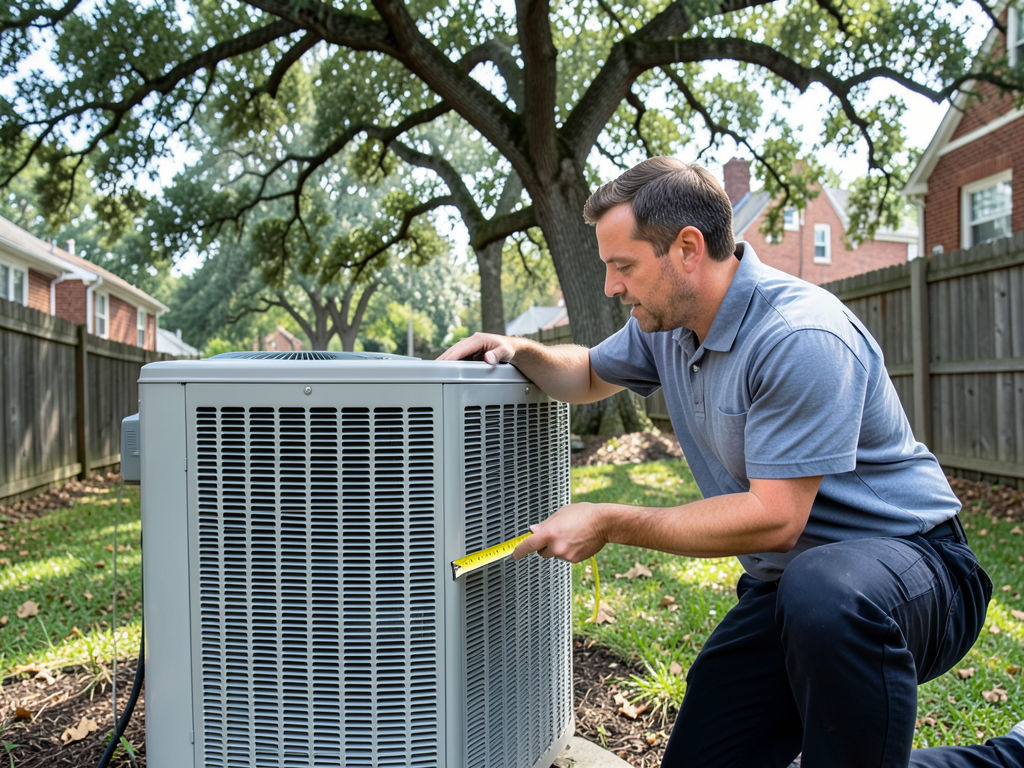
Diagram showing proper 2-3 foot side clearance and 5-foot top clearance for AC units near trees in urban DC settings.
The Pros and Cons of Shading Your AC Unit
Strategic shading can improve efficiency, but only when done correctly. Here’s what actually works in Washington DC’s climate.
Energy savings: A shaded condenser can reduce energy consumption by 10-25% during peak summer months. The cooler air around the unit means it doesn’t have to work as hard to reject heat.. Read more about Why your AC is literally covered in ice during a Riggs Park heatwave.
Risk factors: Trees too close trap humidity, create debris buildup, and can lead to mold growth on coils. This reduces efficiency over time.
DC-specific considerations: Our high humidity (often 70%+) means shaded units are more prone to moisture-related issues than in drier climates.
Best (and Worst) Trees for DC HVAC Systems
Not all trees affect your AC equally. Some native species are HVAC-friendly, while others create constant maintenance headaches.
| Tree Type | Debris Level | Root Impact | AC Compatibility |
|---|---|---|---|
| Cherry Blossom | High (petals, fruit) | Moderate | Poor |
| Oak | High (acorns, leaves) | High | Poor |
| Maple | Moderate (helicopters, leaves) | Moderate | Fair |
| Douglas Fir | Low (needles) | High | Poor |
| Dogwood | Low (minimal debris) | Low | Excellent |
| Serviceberry | Very Low | Very Low | Excellent |
DC native trees that won’t clog your AC: Eastern Redbud, American Holly, and Sweetbay Magnolia all produce minimal debris and have non-invasive root systems.
Problematic species in 16th Street Heights: Silver Maple and Bradford Pear may look nice but drop excessive debris and have aggressive roots that can damage underground refrigerant lines.. Read more about How to tell if your Foxhall home has a refrigerant leak (and the cost to fix it).
Seasonal Maintenance: Managing DC Debris
Washington DC’s distinct seasons create different challenges for AC units near trees. Here’s your monthly maintenance calendar.
March-April: Cherry blossom season brings delicate pink petals that can clog condenser fins. Check and clean your unit weekly during peak bloom.
May-June: Oak pollen coats everything in yellow dust. This fine powder can reduce heat exchange efficiency by up to 20% if not removed.
July-September: Summer storms bring down branches and leaves. After any major weather event, inspect for physical damage and clear debris.
October-November: Fall leaves accumulate rapidly. Even with 2-3 foot clearance, wind can blow leaves under units. Weekly checks prevent buildup.
December-February: Ice storms can cause branches to fall. Check for any damage after freezing weather, especially to refrigerant lines.
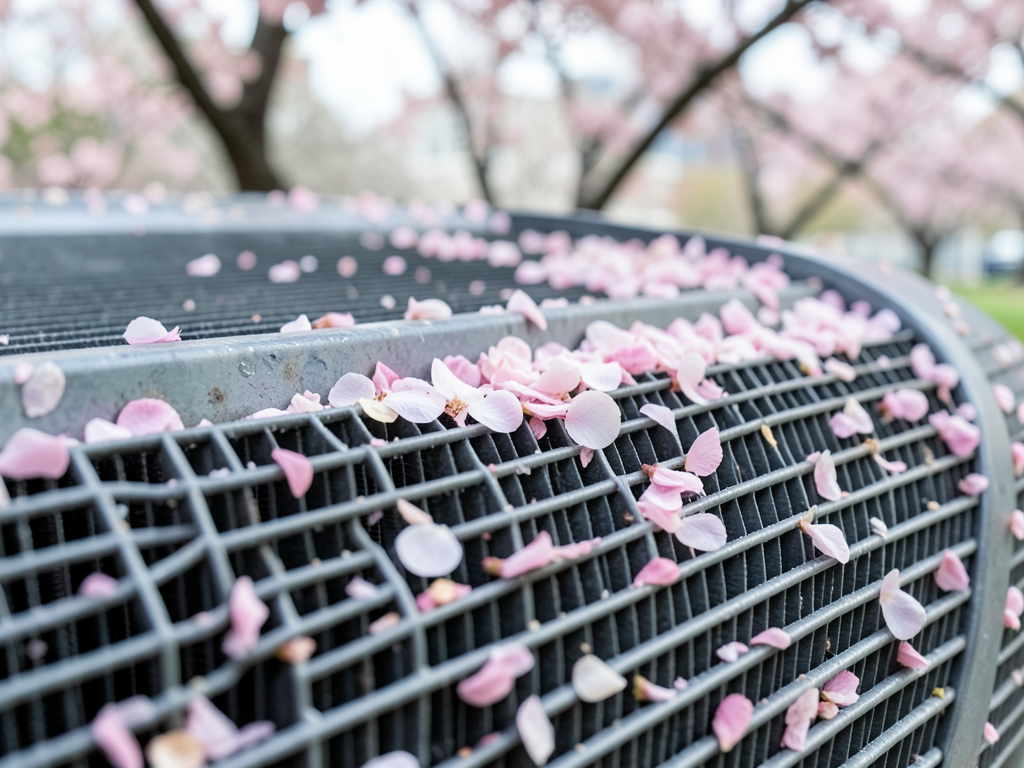
Photo showing technician cleaning AC coils after cherry blossom season in Washington DC, with debris visibly clogging the fins.
When to Call a Professional
Some tree-related AC issues require expert diagnosis. Here are the warning signs that indicate professional service is needed.
Unusual noises: Grinding or rattling sounds often indicate debris in the fan or compressor damage from restricted airflow.
Reduced cooling: If your system runs constantly but doesn’t cool properly, restricted airflow from tree debris could be the cause.
Ice formation: Ice on refrigerant lines suggests airflow problems, often caused by debris-clogged coils or restricted intake.
Root damage: If you notice refrigerant line damage or unit tilting, tree roots may have encroached on your system’s foundation.
Diagnostic test: A professional technician uses a fin comb to measure coil cleanliness and an airflow meter to check if your unit is getting adequate ventilation. Getting Fast AC Repair for Your Navy Yard Apartment or Condo.
According to DC Municipal Code Section 12-301, property owners are responsible for maintaining safe distances between vegetation and utility equipment, including HVAC systems.
DC-Specific Landscaping Strategies
16th Street Heights presents unique challenges due to lot sizes and tree maturity. Here’s how to work with your specific situation.
Narrow lots: Many DC rowhomes have just 10-15 feet between buildings. In these cases, choose low-debris shrubs rather than trees near your AC. How to Choose the Right Air Conditioning Replacement for Your Foggy Bottom Townhouse.
Mature tree canopy: If you have established trees, consider installing a shade cloth or awning instead of planting new vegetation near your unit.
Soil considerations: DC’s clay-heavy soil retains moisture, which can lead to corrosion around AC bases. Ensure proper drainage away from your unit.
Urban heat island effect: DC’s concrete and asphalt absorb heat, making proper AC function even more critical. Don’t sacrifice efficiency for aesthetics. urban heat island effect.
DIY Maintenance Tips for Tree-Lined Properties
You can handle most tree-related AC maintenance yourself with these simple steps.
Monthly coil cleaning: Turn off power, remove the top grille, and gently spray coils with a garden hose (no pressure washers). This removes pollen and dust.
Debris inspection: Check the area around your unit weekly during growing season. Remove any leaves, twigs, or seed pods within 3 feet.
Trim strategically: When pruning trees near your AC, cut branches back to the main trunk rather than leaving stubs that can rot and fall.
Monitor clearance: As trees grow, they can gradually encroach on your AC’s space. Mark your 3-foot boundary and maintain it year-round.
Base protection: Place gravel or pavers around your unit’s base to prevent soil moisture from causing corrosion or creating a habitat for pests.
The Financial Impact of Tree Management
Proper tree management around your AC isn’t just about preventing problems—it’s about saving money.
Energy savings: A well-shaded but properly spaced unit can save $150-300 annually on cooling costs in Washington DC.
Repair prevention: Regular maintenance prevents the most common AC failures, potentially saving $500-2,000 in emergency repairs. Fast Furnace Repair Services for Families in Chevy Chase DC.
System longevity: Clean, well-ventilated units last 3-5 years longer than those constantly battling debris and restricted airflow.
Property value: A properly maintained HVAC system is a selling point that can add $2,000-5,000 to your home’s value.
Emergency Situations to Watch For
Some tree-related AC problems require immediate attention to prevent system damage.
Storm damage: After severe weather, check for fallen branches on your unit or damage to refrigerant lines.
Rapid debris accumulation: If you notice leaves or debris piling up quickly, investigate the source—a nearby tree may be dropping more than usual.
Strange odors: Musty smells from your AC often indicate mold growth in debris-clogged coils, which requires professional cleaning.
Electrical issues: If you see sparks or smell burning near your unit during storms, turn off power immediately and call for emergency service.
Call (771) 218-6322 today to schedule your inspection. Our technicians know exactly how 16th Street Heights trees affect local AC systems and can help you optimize your setup for maximum efficiency and minimum maintenance.
Before and after photo showing AC unit with debris-clogged coils versus professionally cleaned coils ready for summer operation.
Frequently Asked Questions
How far should trees be from my AC unit?
Maintain at least 2-3 feet of clearance on all sides and 5 feet above your AC unit. This allows proper airflow and prevents debris accumulation.
Can I plant trees to shade my AC unit?
Yes, but choose low-debris species and plant them at least 5 feet away. Fast-growing trees like Leyland Cypress work well when properly spaced.
What’s the best time of year to trim trees near my AC?
Late winter or early spring is ideal, before heavy growing season begins. This prevents excessive debris during peak cooling months.
How often should I clean my AC coils if I have trees nearby?
Check monthly during growing season and clean as needed. In 16th Street Heights, you may need cleaning every 2-3 months due to our dense tree canopy.
Will tree roots damage my AC’s underground lines?
Yes, aggressive tree roots can crush or puncture refrigerant lines. Keep trees with invasive roots at least 10 feet from your unit’s location.
Don’t wait until your AC fails during a DC heatwave. Pick up the phone and call (771) 218-6322 before the next storm hits. Our local technicians understand the specific challenges of maintaining HVAC systems in tree-lined neighborhoods like 16th Street Heights. For more information, visit landscaping for energy efficiency.
{
“@context”: “https://schema.org”,
“@type”: “BlogPosting”,
“headline”: “How 16th Street Heights trees actually help (and hurt) your air conditioner”,
“description”: “Learn how 16th Street Heights trees impact your AC efficiency. Discover proper clearances, best tree species, and maintenance tips for optimal cooling performance.”,
“wordCount”: 1514,
“datePublished”: “2026-05-09T09:34:00.000Z”,
“dateModified”: “2026-05-09T09:34:00.000Z”,
“inLanguage”: “en-US”,
“mainEntityOfPage”: {
“@type”: “WebPage”,
“@id”: “https://patriothvacwashingtondc.com”
},
“publisher”: {
“@type”: “LocalBusiness”,
“name”: “Patriot HVAC Washington DC”,
“url”: “https://patriothvacwashingtondc.com”
},
“author”: {
“@type”: “Organization”,
“name”: “Patriot HVAC Washington DC”,
“url”: “https://patriothvacwashingtondc.com”
},
“image”: {
“@type”: “ImageObject”,
“url”: “https://patriothvacwashingtondc.com/wp-content/uploads/2026/03/how-16th-street-heights-trees-actually-help-and-hu-1.png”
}
}
{
“@context”: “https://schema.org”,
“@type”: “HVACBusiness”,
“name”: “Patriot HVAC Washington DC”,
“url”: “https://patriothvacwashingtondc.com”,
“address”: {
“@type”: “PostalAddress”,
“addressLocality”: “Washington DC”
},
“areaServed”: {
“@type”: “City”,
“name”: “Washington DC”
}
}
{
“@context”: “https://schema.org”,
“@type”: “FAQPage”,
“mainEntity”: [
{
“@type”: “Question”,
“name”: “How far should trees be from my AC unit?”,
“acceptedAnswer”: {
“@type”: “Answer”,
“text”: “Maintain at least 2-3 feet of clearance on all sides and 5 feet above your AC unit. This allows proper airflow and prevents debris accumulation.”
}
},
{
“@type”: “Question”,
“name”: “Can I plant trees to shade my AC unit?”,
“acceptedAnswer”: {
“@type”: “Answer”,
“text”: “Yes, but choose low-debris species and plant them at least 5 feet away. Fast-growing trees like Leyland Cypress work well when properly spaced.”
}
},
{
“@type”: “Question”,
“name”: “What’s the best time of year to trim trees near my AC?”,
“acceptedAnswer”: {
“@type”: “Answer”,
“text”: “Late winter or early spring is ideal, before heavy growing season begins. This prevents excessive debris during peak cooling months.”
}
},
{
“@type”: “Question”,
“name”: “How often should I clean my AC coils if I have trees nearby?”,
“acceptedAnswer”: {
“@type”: “Answer”,
“text”: “Check monthly during growing season and clean as needed. In 16th Street Heights, you may need cleaning every 2-3 months due to our dense tree canopy.”
}
},
{
“@type”: “Question”,
“name”: “Will tree roots damage my AC’s underground lines?”,
“acceptedAnswer”: {
“@type”: “Answer”,
“text”: “Yes, aggressive tree roots can crush or puncture refrigerant lines. Keep trees with invasive roots at least 10 feet from your unit’s location.”
}
}
]
}
{
“@context”: “https://schema.org”,
“@type”: “BreadcrumbList”,
“itemListElement”: [
{
“@type”: “ListItem”,
“position”: 1,
“name”: “Home”,
“item”: “https://patriothvacwashingtondc.com”
},
{
“@type”: “ListItem”,
“position”: 2,
“name”: “Blog”,
“item”: “https://patriothvacwashingtondc.com/blog”
},
{
“@type”: “ListItem”,
“position”: 3,
“name”: “How 16th Street Heights trees actually help (and hurt) your air conditioner”
}
]
}
{
“@context”: “https://schema.org”,
“@type”: “Service”,
“serviceType”: “HVAC”,
“provider”: {
“@type”: “LocalBusiness”,
“name”: “Patriot HVAC Washington DC”,
“url”: “https://patriothvacwashingtondc.com”
},
“areaServed”: {
“@type”: “City”,
“name”: “Washington DC”
},
“description”: “Learn how 16th Street Heights trees impact your AC efficiency. Discover proper clearances, best tree species, and maintenance tips for optimal cooling performance.”
}