
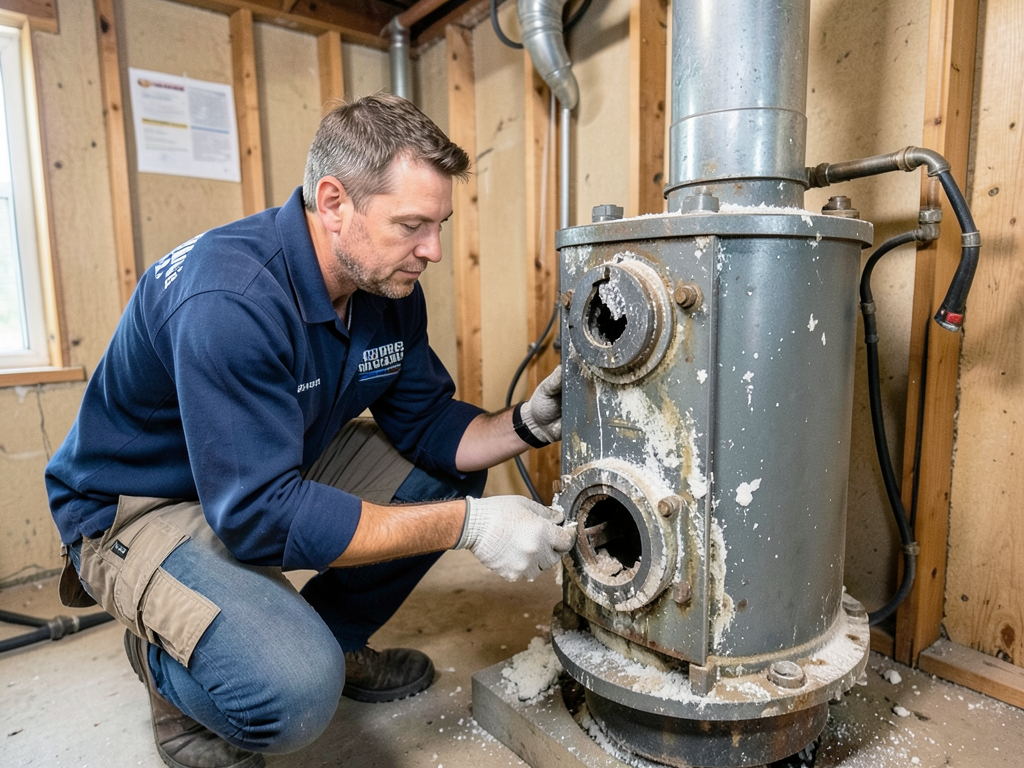
Understanding white flakes and sediment in your Shepherd Park boiler
White flakes and sediment buildup in your boiler system isn’t just an aesthetic problem. It’s a warning sign that your heating system is working harder than it should. In Shepherd Park homes with older boiler systems, this issue becomes especially common due to the area’s water chemistry and the age of many residential heating systems. The Best Heating and Cooling Solutions for Adams Morgan Condos.
The white flakes you’re seeing are typically calcium carbonate deposits. When water heats up in your boiler, dissolved minerals precipitate out and settle at the bottom of the tank. Over time, these deposits create a layer of insulation between your boiler’s heat source and the water it’s trying to heat. This forces your system to burn more fuel to achieve the same heating results. Boiler Services.
In Shepherd Park, the District of Columbia Water and Sewer Authority reports water hardness levels between 120-150 parts per million. This moderate hardness means mineral buildup happens gradually but consistently throughout the heating season. Homes near Rock Creek Park often experience slightly different water characteristics than those closer to Georgia Avenue, affecting how quickly sediment accumulates.
Common symptoms include kettling noises (sounds like a tea kettle boiling), reduced heating efficiency, and those telltale white flakes appearing in your radiators or around pressure relief valves. You might also notice your boiler cycling more frequently as it struggles to maintain temperature through the insulating layer of sediment.. Read more about Why your smart thermostat might be fighting your boiler in a Mount Rainier home.
The problem compounds over time. What starts as a thin layer can grow to several inches thick, dramatically reducing your boiler’s efficiency. According to the U.S. Department of Energy, even a quarter-inch of scale buildup can reduce heating efficiency by up to 15 percent. EPA WaterSense program.
Common causes of sediment buildup in DC boiler systems
Beyond water hardness, several factors specific to Shepherd Park and the broader DC area contribute to sediment problems. The age of many homes in this neighborhood means boiler systems often haven’t been properly maintained for years or even decades.
Older cast iron boilers are particularly susceptible to sediment accumulation. Their large water capacity and slower heating rates allow more time for minerals to precipitate out. Many Shepherd Park homes built between the 1920s and 1950s still operate with their original boiler systems, making them prime candidates for sediment issues.
Another factor is the intermittent use patterns common in DC’s climate. During shoulder seasons, boilers cycle on and off frequently, creating temperature fluctuations that promote mineral precipitation. The area’s humid summers also contribute when systems sit idle for months, allowing sediment to compact and harden.
Corrosion products from aging pipes and radiators can mix with mineral deposits, creating a black sludge that’s even more problematic than white flakes. This magnetite sludge can block heat exchangers and reduce system efficiency by up to 25 percent according to industry studies.
Water main work in the neighborhood can also stir up sediment that enters your system. Shepherd Park residents near ongoing infrastructure projects should be particularly vigilant about checking their boiler water quality.
Step-by-step guide to flushing your boiler system
If you’re comfortable with basic plumbing tasks, you can perform a basic boiler flush. However, if you’re unsure about any step or your system has safety controls, call a professional instead.
- Turn off power and fuel
Shut off electricity at the breaker and turn off the gas supply valve. Allow the system to cool completely – at least 4-6 hours for safety.
- Connect drainage equipment
Attach a garden hose to the boiler’s drain valve. Run the other end to a floor drain or outside. Place a bucket under the pressure relief valve to catch initial discharge.
- Drain the system
Open the drain valve slowly. Water will initially be very hot. Drain until flow becomes clear, which may take 20-30 minutes for a heavily sedimented system.
- Refill and flush
Close the drain valve and slowly refill the system with fresh water. Allow it to circulate for 15 minutes, then drain again. Repeat this process 2-3 times until water runs clear.
- Add chemical treatment
For persistent sediment, add a boiler descaling agent according to manufacturer instructions. Circulate for the recommended time, then drain completely.
- Final rinse and refill
Perform one final fresh water flush. Close all valves and refill with treated water, adding corrosion inhibitor as directed.
- Restart and check
Restore power and fuel. Check for leaks and monitor pressure gauge readings. Bleed radiators if needed to remove trapped air.
During this process, you’ll likely see the white flakes and sediment flowing out through your drainage hose. The water may appear cloudy at first, then gradually clear as mineral deposits are flushed away.
For Shepherd Park homes with steam boilers, the process differs slightly. Steam systems require careful pressure management and often benefit from professional power flushing to avoid damaging the low water cut-off safety device.
Professional power flushing vs. standard drain-and-fill
While basic flushing removes loose sediment, power flushing provides a much more thorough cleaning. This professional service uses specialized equipment to circulate cleaning chemicals at high velocity through your system.
Power flushing machines can generate flow rates up to 100 gallons per minute – compared to maybe 5-10 gallons per minute through your boiler’s normal circulator pump. This high-velocity flow scours pipe walls and heat exchanger surfaces, removing stubborn deposits that standard flushing leaves behind.
The process typically takes 4-6 hours for a residential system. Technicians connect the power flushing machine to your boiler’s flow and return pipes, then circulate a combination of descaling agents and neutralizing solutions. The machine’s magnetic filter captures magnetite sludge that would otherwise remain in your system.
For Shepherd Park homes with cast iron radiators, power flushing can restore heating performance that’s been declining for years. Many homeowners report radiators heating more evenly and rooms warming faster after professional cleaning.
The cost difference is significant – standard flushing might cost $200-400 while power flushing runs $600-1,200 depending on system size. However, the efficiency gains often pay for themselves within 1-2 heating seasons through reduced fuel consumption.
Professional service also includes system testing that DIY methods miss. Technicians check for hidden leaks, verify safety control operation, and ensure proper water chemistry to prevent rapid re-accumulation of deposits.
Risks of DIY sediment removal for DC homeowners
Boiler work carries serious risks that many DIYers underestimate. The combination of high-temperature water, pressurized systems, and natural gas creates hazards that can cause severe injury or property damage.
Scalding is the most immediate danger. Boiler water can exceed 200°F, and even “cooled” systems may retain dangerous temperatures. A sudden pressure release can spray boiling water across a basement, causing third-degree burns within seconds.
Gas line work presents explosion risks. While flushing doesn’t typically require gas line manipulation, many DIYers accidentally disturb connections or fail to properly relight pilots. Natural gas leaks in enclosed spaces create immediate life-threatening situations.
Pressure relief valve mishandling can turn a safety device into a hazard. These valves are designed to release at specific pressures. Improper testing or replacement can result in failure during actual overpressure conditions, potentially causing boiler rupture.
Older Shepherd Park homes often have galvanized steel pipes that corrode internally. Aggressive flushing can dislodge corrosion plugs that have been preventing leaks, suddenly creating multiple water damage situations throughout the system.
Another risk involves water chemistry. DC’s water contains chlorine and other treatment chemicals. Improper disposal of flushed water violates District regulations and can harm local waterways. Professional services capture and dispose of contaminated water according to EPA guidelines.
Finally, DIY work can void manufacturer warranties or violate local mechanical codes. The District of Columbia requires permits for many HVAC modifications, and unpermitted work can create issues when selling your home.
Maintenance schedule for DC’s historic heating systems
Preventive maintenance prevents most sediment problems before they start. For Shepherd Park homes, a seasonal maintenance schedule keeps your boiler running efficiently and safely.
Spring maintenance (April-May): After heating season ends, schedule professional inspection. This timing allows identification of issues before they worsen during summer dormancy. Technicians check for corrosion, test safety controls, and recommend cleaning if sediment is visible.
Summer check (July-August): With the system off, inspect visible components. Check around the boiler for water stains indicating slow leaks. Look for white crusty deposits around valves – these suggest minor leaks that concentrate minerals as water evaporates.
Fall preparation (September-October): Before cold weather arrives, have your system professionally serviced. This includes combustion analysis, cleaning of burners, and inspection of heat exchangers for scale buildup.
Monthly during heating season: Monitor boiler pressure (typically 12-15 psi for residential systems). Check the pressure relief valve discharge pipe for signs of weeping. Listen for changes in burner sound or kettling noises that indicate developing problems.
Annual professional service: Every 12 months, regardless of apparent performance, have a licensed HVAC technician inspect your system. They’ll check for issues you can’t see, like heat exchanger cracks or deteriorating gaskets.. Read more about Managing the Annual Transition from Steam Heat to Window Units in Your Park View Rental.
Shepherd Park’s older housing stock often requires more frequent attention. Homes over 50 years old benefit from bi-annual professional inspections, as aging components fail gradually and may not show obvious symptoms until major damage occurs.
Energy efficiency and cost implications
Scale buildup directly impacts your heating bills. The U.S. Department of Energy estimates that just 1/16 inch of scale reduces boiler efficiency by approximately 10 percent. For Shepherd Park homes with already aging systems, this efficiency loss compounds existing performance issues. U.S. Department of Energy heating systems guide.
Consider a typical Shepherd Park rowhouse with a 100,000 BTU boiler. At current natural gas prices, a 15 percent efficiency loss means wasting about $300-400 per heating season. Over a boiler’s 15-20 year lifespan, that’s $4,500-8,000 in unnecessary fuel costs.
Beyond direct fuel waste, sediment causes premature component failure. Scale insulates heat exchangers, creating hot spots that crack metal. The cost of replacing a heat exchanger often exceeds $1,000 – money that could have paid for multiple preventive cleanings.
System longevity also suffers. Scale accelerates corrosion by creating temperature differentials that stress metal. A well-maintained boiler might last 25-30 years, while a scaled unit often fails at 12-15 years, necessitating costly replacement.
Environmental impact matters too. Inefficient boilers produce more carbon emissions per unit of heat delivered. Removing scale and maintaining efficiency reduces your carbon footprint – approximately 1.5 tons of CO2 per year for a typical Shepherd Park home.
Insurance implications exist as well. Some carriers offer premium discounts for documented HVAC maintenance. Conversely, claims related to neglected heating systems may face coverage limitations or higher deductibles.
Local case study: Shepherd Park historic home restoration
A 1925 Colonial Revival on Ninth Street NW exemplifies common Shepherd Park boiler issues. The homeowners noticed white flakes in radiators and kettling sounds during the 2024 heating season. Their 1970s-era boiler had never been professionally cleaned.
Patriot HVAC performed a comprehensive assessment. Water analysis showed 140 ppm hardness – above DC’s average. The system had accumulated approximately 1.5 inches of scale in the heat exchanger, reducing efficiency by an estimated 22 percent.
Power flushing removed 15 pounds of scale, rust, and sediment from the system. Post-cleaning efficiency testing showed a 28 percent improvement in heat transfer. The homeowners reported even heating across all radiators for the first time in years.
Energy monitoring over the following winter showed a 19 percent reduction in natural gas consumption compared to the previous year, despite similar weather conditions. The system also operated more quietly, with the characteristic kettling sounds eliminated.
This case demonstrates how sediment removal restores not just efficiency but also comfort and reliability. For Shepherd Park’s historic housing stock, such restoration often proves more cost-effective than premature system replacement.
Choosing the right service provider in Shepherd Park
Not all HVAC companies have boiler expertise. Shepherd Park’s older homes require technicians familiar with vintage equipment and historic preservation considerations.
Look for NATE certification specifically in hydronic heating. This certification ensures technicians understand water chemistry, pressure systems, and the nuances of older boiler designs. Ask about experience with cast iron sectional boilers common in Shepherd Park homes.
Verify licensing through the District of Columbia Department of Consumer and Regulatory Affairs. DC requires specific HVAC master licenses for boiler work, and technicians must carry proper insurance for liability and worker’s compensation.
Request references from other Shepherd Park or nearby historic district homeowners. Companies familiar with local housing stock understand the access challenges in rowhouse basements and the preservation requirements of historic districts.
Ask about water testing capabilities. Quality providers analyze your water’s mineral content and pH before recommending treatment. This prevents over-treatment that can damage system components or under-treatment that fails to address the problem.
Emergency availability matters for boiler systems. Unlike furnaces, boilers can develop dangerous conditions that require immediate attention. Choose a provider offering 24/7 emergency service with guaranteed response times. Fast Furnace Repair Services for Families in Chevy Chase DC.
Finally, review warranty policies. Reputable companies stand behind their work with satisfaction guarantees and warranty coverage on both labor and materials. Avoid providers unwilling to provide written guarantees.
Frequently Asked Questions
How often should I have my Shepherd Park boiler cleaned?
For most Shepherd Park homes, professional cleaning every 2-3 years prevents major sediment buildup. Homes with very hard water or older systems may need annual service. Monitor for symptoms like reduced heating efficiency or white flakes appearing in radiators.
Can I use vinegar or other household chemicals to clean my boiler?
Household acids can damage boiler components and create dangerous chemical reactions. Professional descaling agents are specifically formulated for heating systems with corrosion inhibitors. Improper chemical use often causes more damage than the original sediment problem.
What’s the difference between sediment and rust in my boiler system?
Sediment consists of mineral deposits like calcium carbonate, appearing as white or off-white flakes. Rust, or magnetite, appears as black or dark brown particles and indicates corrosion within the system. Both reduce efficiency but require different treatment approaches.
How much does professional boiler cleaning cost in the DC area?
Standard cleaning typically costs $200-400, while power flushing ranges from $600-1,200 depending on system size and condition. The higher cost of power flushing often pays for itself through fuel savings within 1-2 heating seasons.
Should I replace my old boiler or clean it?
If your boiler is over 25 years old or has significant corrosion, replacement might be more cost-effective than cleaning. However, many Shepherd Park homes have boilers that last 30-40 years with proper maintenance. A professional assessment can determine the most economical option.
Protecting your investment and comfort
White flakes and sediment in your boiler system signal a problem that won’t resolve itself. In Shepherd Park’s climate, where winters demand reliable heating, addressing sediment buildup protects both your comfort and your wallet. Finding Reliable Emergency AC Repair in Capitol Hill DC During a Heatwave.
The combination of DC’s water chemistry and the age of many local heating systems creates perfect conditions for mineral accumulation. Regular maintenance prevents the efficiency losses, comfort issues, and premature failures that sediment causes.
Whether you choose DIY maintenance for basic flushing or professional power cleaning for comprehensive restoration, addressing sediment promptly pays dividends through lower energy bills, improved comfort, and extended equipment life. How to Choose the Right Air Conditioning Replacement for Your Foggy Bottom Townhouse.
For Shepherd Park homeowners dealing with persistent sediment issues or unsure about their system’s condition, professional assessment provides peace of mind. Modern diagnostic tools can detect problems before they cause system failures or create safety hazards.
Don’t wait for complete system failure or a dangerous malfunction. If you’re seeing white flakes, hearing kettling noises, or noticing reduced heating performance, take action now. Your boiler works hard to keep your family comfortable – proper maintenance ensures it can continue doing so safely and efficiently for years to come.
Call (771) 218-6322 today to schedule your boiler inspection and cleaning service. Our NATE-certified technicians understand Shepherd Park’s unique heating challenges and provide reliable, professional service that keeps your home warm when it matters most.
{
“@context”: “https://schema.org”,
“@type”: “BlogPosting”,
“headline”: “Dealing with white flakes and sediment in your Shepherd Park boiler system”,
“description”: “Learn how to identify and remove white flakes and sediment from your Shepherd Park boiler system. Get expert tips on maintenance and when to call Patriot HVAC for professional service.”,
“wordCount”: 2668,
“datePublished”: “2026-05-04T07:59:00.000Z”,
“dateModified”: “2026-05-04T07:59:00.000Z”,
“inLanguage”: “en-US”,
“mainEntityOfPage”: {
“@type”: “WebPage”,
“@id”: “https://patriothvacwashingtondc.com”
},
“publisher”: {
“@type”: “LocalBusiness”,
“name”: “Patriot HVAC Washington DC”,
“url”: “https://patriothvacwashingtondc.com”
},
“author”: {
“@type”: “Organization”,
“name”: “Patriot HVAC Washington DC”,
“url”: “https://patriothvacwashingtondc.com”
},
“image”: {
“@type”: “ImageObject”,
“url”: “https://patriothvacwashingtondc.com/wp-content/uploads/2026/03/dealing-with-white-flakes-and-sediment-in-your-she-1.png”
}
}
{
“@context”: “https://schema.org”,
“@type”: “HVACBusiness”,
“name”: “Patriot HVAC Washington DC”,
“url”: “https://patriothvacwashingtondc.com”,
“address”: {
“@type”: “PostalAddress”,
“addressLocality”: “Washington DC”
},
“areaServed”: {
“@type”: “City”,
“name”: “Washington DC”
}
}
{
“@context”: “https://schema.org”,
“@type”: “FAQPage”,
“mainEntity”: [
{
“@type”: “Question”,
“name”: “How often should I have my Shepherd Park boiler cleaned?”,
“acceptedAnswer”: {
“@type”: “Answer”,
“text”: “For most Shepherd Park homes, professional cleaning every 2-3 years prevents major sediment buildup. Homes with very hard water or older systems may need annual service. Monitor for symptoms like reduced heating efficiency or white flakes appearing in radiators.”
}
},
{
“@type”: “Question”,
“name”: “Can I use vinegar or other household chemicals to clean my boiler?”,
“acceptedAnswer”: {
“@type”: “Answer”,
“text”: “Household acids can damage boiler components and create dangerous chemical reactions. Professional descaling agents are specifically formulated for heating systems with corrosion inhibitors. Improper chemical use often causes more damage than the original sediment problem.”
}
},
{
“@type”: “Question”,
“name”: “What’s the difference between sediment and rust in my boiler system?”,
“acceptedAnswer”: {
“@type”: “Answer”,
“text”: “Sediment consists of mineral deposits like calcium carbonate, appearing as white or off-white flakes. Rust, or magnetite, appears as black or dark brown particles and indicates corrosion within the system. Both reduce efficiency but require different treatment approaches.”
}
},
{
“@type”: “Question”,
“name”: “How much does professional boiler cleaning cost in the DC area?”,
“acceptedAnswer”: {
“@type”: “Answer”,
“text”: “Standard cleaning typically costs $200-400, while power flushing ranges from $600-1,200 depending on system size and condition. The higher cost of power flushing often pays for itself through fuel savings within 1-2 heating seasons.”
}
},
{
“@type”: “Question”,
“name”: “Should I replace my old boiler or clean it?”,
“acceptedAnswer”: {
“@type”: “Answer”,
“text”: “If your boiler is over 25 years old or has significant corrosion, replacement might be more cost-effective than cleaning. However, many Shepherd Park homes have boilers that last 30-40 years with proper maintenance. A professional assessment can determine the most economical option.”
}
}
]
}
{
“@context”: “https://schema.org”,
“@type”: “HowTo”,
“name”: “How to flush a boiler system”,
“step”: [
{
“@type”: “HowToStep”,
“position”: 1,
“name”: “Turn off power and fuel”,
“text”: “Shut off electricity at the breaker and turn off the gas supply valve. Allow the system to cool completely – at least 4-6 hours for safety.”
},
{
“@type”: “HowToStep”,
“position”: 2,
“name”: “Connect drainage equipment”,
“text”: “Attach a garden hose to the boiler’s drain valve. Run the other end to a floor drain or outside. Place a bucket under the pressure relief valve to catch initial discharge.”
},
{
“@type”: “HowToStep”,
“position”: 3,
“name”: “Drain the system”,
“text”: “Open the drain valve slowly. Water will initially be very hot. Drain until flow becomes clear, which may take 20-30 minutes for a heavily sedimented system.”
},
{
“@type”: “HowToStep”,
“position”: 4,
“name”: “Refill and flush”,
“text”: “Close the drain valve and slowly refill the system with fresh water. Allow it to circulate for 15 minutes, then drain again. Repeat this process 2-3 times until water runs clear.”
},
{
“@type”: “HowToStep”,
“position”: 5,
“name”: “Add chemical treatment”,
“text”: “For persistent sediment, add a boiler descaling agent according to manufacturer instructions. Circulate for the recommended time, then drain completely.”
},
{
“@type”: “HowToStep”,
“position”: 6,
“name”: “Final rinse and refill”,
“text”: “Perform one final fresh water flush. Close all valves and refill with treated water, adding corrosion inhibitor as directed.”
},
{
“@type”: “HowToStep”,
“position”: 7,
“name”: “Restart and check”,
“text”: “Restore power and fuel. Check for leaks and monitor pressure gauge readings. Bleed radiators if needed to remove trapped air.”
}
],
“image”: “https://patriothvacwashingtondc.com/wp-content/uploads/2026/03/dealing-with-white-flakes-and-sediment-in-your-she-1.png”
}
{
“@context”: “https://schema.org”,
“@type”: “BreadcrumbList”,
“itemListElement”: [
{
“@type”: “ListItem”,
“position”: 1,
“name”: “Home”,
“item”: “https://patriothvacwashingtondc.com”
},
{
“@type”: “ListItem”,
“position”: 2,
“name”: “Blog”,
“item”: “https://patriothvacwashingtondc.com/blog”
},
{
“@type”: “ListItem”,
“position”: 3,
“name”: “Dealing with white flakes and sediment in your Shepherd Park boiler system”
}
]
}
{
“@context”: “https://schema.org”,
“@type”: “Service”,
“serviceType”: “HVAC”,
“provider”: {
“@type”: “LocalBusiness”,
“name”: “Patriot HVAC Washington DC”,
“url”: “https://patriothvacwashingtondc.com”
},
“areaServed”: {
“@type”: “City”,
“name”: “Washington DC”
},
“description”: “Learn how to identify and remove white flakes and sediment from your Shepherd Park boiler system. Get expert tips on maintenance and when to call Patriot HVAC for professional service.”
}