
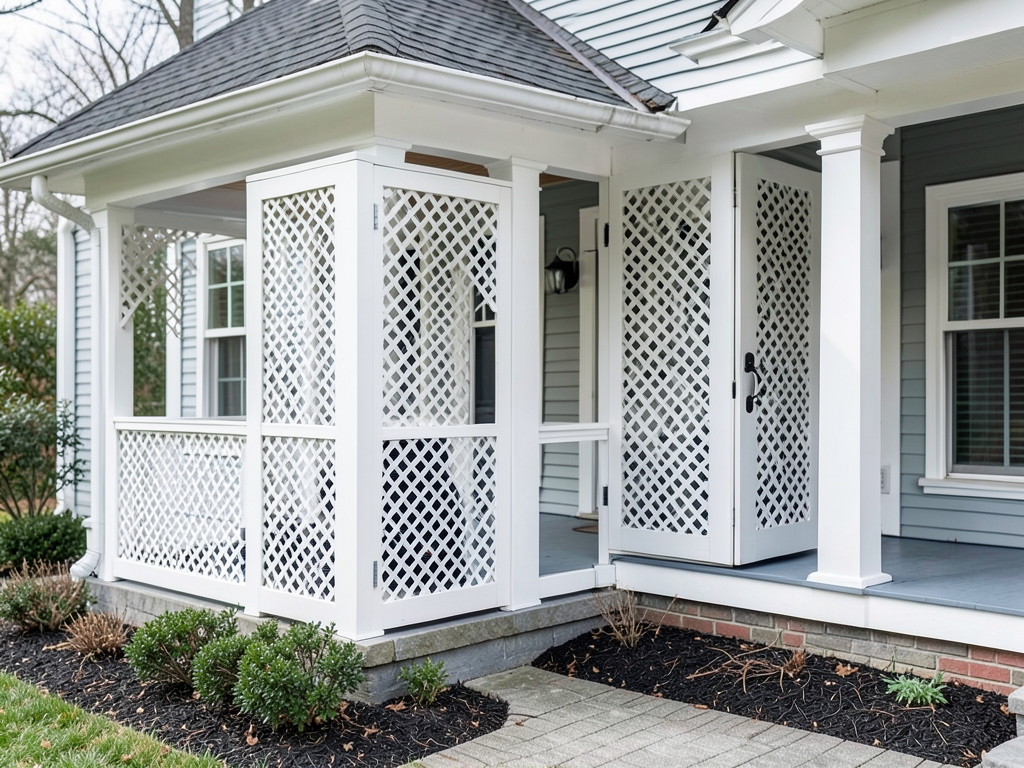
Creative ways to hide your outdoor AC unit in a Colonial Village backyard
Living in Colonial Village means balancing historic charm with modern comfort. Your outdoor AC unit keeps your home cool during Washington DC’s humid summers but can clash with your landscaping. The good news is you can hide it without sacrificing performance. The key is maintaining proper airflow while creating an attractive screen that complements your Colonial Revival or Cape Cod style home. DC Department of Consumer and Regulatory Affairs.
Before you build anything you need to understand the technical requirements. AC condensers need at least 24 inches of clearance on all sides for proper airflow. Blocking this space causes the unit to overheat reducing efficiency and potentially voiding your warranty. In Colonial Village many homes sit on compact lots where every inch counts. That makes smart design even more important.
Understanding airflow requirements for your AC unit
Your condenser works by expelling heat. When airflow gets restricted the system struggles and runs longer. This increases your energy bills and shortens the unit’s lifespan. The 24-inch rule applies to all sides including the top. That means any enclosure must be open on at least two sides or have significant gaps for ventilation. Short Cycling.
DC’s humid climate adds another layer of complexity. Poor ventilation creates a heat trap that can raise the unit’s temperature by 10 to 15 degrees. In Colonial Village where summer humidity often exceeds 70% this can push your system past its design limits. Always check your manufacturer’s specifications before building any enclosure.
DC-specific regulations and historic district considerations
Colonial Village falls within DC’s R-2 zoning district. While it’s not a designated historic district you still need to follow setback requirements. AC units must be at least five feet from side property lines and ten feet from rear lot lines. If you’re in a neighboring historic district like Kent or Chevy Chase DC the Historic Preservation Office has stricter rules about exterior modifications.
DC Municipal Regulations 11-4-1410 covers mechanical equipment placement. It requires that any screening structure be removable for maintenance access. This means hinged panels or gates are better than permanent walls. The code also addresses noise concerns. Condensers cannot exceed 70 decibels at the property line between 7 AM and 10 PM.
Top materials for AC unit enclosures
Choosing the right material affects both appearance and function. Wood lattice offers classic appeal and good airflow but requires maintenance. Cedar and redwood resist rot naturally but cost more upfront. Pressure-treated pine is budget-friendly but needs sealing every few years. How to Choose the Right Air Conditioning Replacement for Your Foggy Bottom Townhouse.
Composite materials like Trex resist moisture and insects making them ideal for DC’s climate. They cost 30 to 50% more than wood but last 25 to 30 years with minimal upkeep. Metal screens provide modern aesthetics and excellent durability. Powder-coated aluminum won’t rust but can dent if hit by lawn equipment.
For a truly custom look consider masonry. Brick or stone enclosures match Colonial Village’s architectural character but require professional installation. They also retain heat which can be problematic in summer. If you choose masonry add a reflective coating to reduce heat absorption.
Landscaping solutions that blend with Colonial Village architecture
Plants offer natural screening but require careful selection. Boxwoods work well in DC’s Zone 7b climate. They grow slowly to about three feet tall and maintain a neat appearance year-round. Plant them at least 24 inches from the unit to allow maintenance access.
Ornamental grasses provide movement and texture. Maiden grass reaches five to six feet and creates a soft screen. Switchgrass offers similar height with more upright form. Both species handle DC’s humidity and occasional drought. Space them 24 to 30 inches apart to prevent overcrowding.
Holly varieties like ‘Nellie R. Stevens’ grow dense and tolerate pruning. They produce berries that attract birds adding life to your backyard. Keep them trimmed to maintain the 24-inch clearance rule. Avoid flowering plants that drop petals or produce excessive pollen which can clog condenser coils.
DIY vs professional installation considerations
Building your own enclosure saves money but requires planning. Simple lattice screens cost $100 to $300 in materials. More elaborate structures with gates or planters run $400 to $800. Factor in your time and tools. A circular saw, drill, and level are essential.
Professional installation ensures code compliance and proper airflow design. Expect to pay $800 to $2,500 depending on materials and complexity. Contractors know how to integrate drainage solutions crucial in DC’s clay soil which retains water. They also understand warranty implications. Some manufacturers void coverage if enclosures aren’t professionally installed.
Consider your skill level honestly. Complex designs with electricity for lighting or irrigation require permits and inspections. In Colonial Village where homes often share property lines mistakes can affect neighbors. When in doubt call a professional.
Maintenance access and seasonal considerations
Your enclosure must allow full technician access. This means removable panels or gates on all sides. Hinges should use stainless steel or galvanized hardware to prevent rust in DC’s humid climate. Latches need to be easy to operate even with gloves on.
Winter brings unique challenges. Snow and ice can damage enclosures if not designed properly. Sloped or removable tops prevent snow accumulation. In Colonial Village where winter storms can drop 6 to 12 inches of snow this matters. Ensure your design allows snow removal without damaging plants or structures.
Summer maintenance is equally important. DC’s heat and humidity create ideal conditions for mold and mildew. Choose materials and plants that resist these issues. Pressure-treated wood should be sealed annually. Composite materials need only occasional cleaning with mild soap and water.
Noise reduction strategies
Older AC units can be noisy disturbing the peace in Colonial Village’s quiet streets. Sound-dampening enclosures can reduce noise by 5 to 10 decibels. This isn’t enough to make a loud unit quiet but it helps. The most effective designs use mass-loaded vinyl barriers inside the enclosure.. Read more about How 16th Street Heights trees actually help (and hurt) your air conditioner.
Plants also absorb sound. Dense evergreens like arborvitae create effective noise barriers. They grow quickly to 10 to 15 feet providing both visual and acoustic screening. However they need regular pruning to maintain the required clearance around your AC unit.
Consider the unit’s location carefully. Placing it on a vibration-absorbing pad reduces noise transmission to your home’s structure. This simple step often makes more difference than elaborate enclosures.
Cost breakdown and ROI
Simple lattice screens: $100 to $300 materials, 4 to 8 hours DIY time
Privacy fence panels: $200 to $600 materials, 8 to 16 hours DIY time
Professional lattice enclosure: $800 to $1,500 installed
Custom masonry enclosure: $2,000 to $5,000 installed
Landscaping package (plants + mulch): $300 to $1,000
ROI comes from increased property value and energy efficiency. A well-designed enclosure can improve your home’s curb appeal by 5 to 10%. Proper airflow maintenance can reduce energy costs by 5 to 15% annually. These benefits often offset the initial investment within 3 to 5 years.
Common mistakes to avoid
The biggest mistake is ignoring airflow requirements. Enclosures that look great but restrict ventilation cause more problems than they solve. Another common error is using materials that trap heat like solid wood panels without ventilation gaps.
Planting too close to the unit creates maintenance nightmares. Technicians need room to work. Shrubs that grow into the clearance zone must be pruned aggressively or removed. Some homeowners make the mistake of choosing fast-growing plants that quickly outgrow their space.
Ignoring local regulations leads to costly corrections. Always check with DC’s Department of Consumer and Regulatory Affairs before building. They can tell you if your design meets setback and noise requirements. EPA energy efficiency guidelines.
Before and after: planning your project
Start by measuring your space carefully. Note the unit’s dimensions and required clearances. Sketch your design including access points and ventilation gaps. Consider how the enclosure will look from your home’s windows and from the street.
Choose materials that match your home’s architecture. Colonial Village homes feature brick, siding, and traditional trim. Your enclosure should complement these elements not clash with them. Consider the long-term maintenance requirements of your chosen materials.
Plan for the future. Your AC unit might be replaced in 10 to 15 years. Will your enclosure still work with a larger or differently shaped unit? Design with flexibility in mind.
Frequently Asked Questions
Can I build a solid wall around my AC unit?
No. Solid walls without ventilation gaps trap heat and cause your system to fail prematurely. Always maintain 24 inches of clearance and ensure adequate airflow on at least two sides.
Will enclosing my AC unit void the warranty?
It depends on the manufacturer. Some void warranties if enclosures restrict airflow or prevent proper maintenance. Always check your warranty terms and keep documentation of any modifications.
How close can I plant shrubs to my AC unit?
Plant shrubs at least 24 inches from the unit’s outer edge. This allows for growth, maintenance access, and proper airflow. Choose slow-growing varieties that won’t quickly encroach on this space.
Do I need a permit to build an AC enclosure in DC?
Most simple enclosures don’t require permits. However if you’re building a structure over 6 feet tall or connecting it to your home’s foundation you’ll need approval from DCRA. Check local regulations before starting.
What’s the best way to hide both the AC unit and the refrigerant lines?
Use a combination approach. Build an enclosure for the unit and run the lines through a decorative conduit or bury them underground. Ensure all connections remain accessible for maintenance.
Call (771) 218-6322 for a professional assessment
Ready to improve your Colonial Village backyard while protecting your AC investment? Our team understands DC’s unique climate challenges and building codes. We’ll assess your current setup and recommend solutions that balance aesthetics with performance.
Don’t risk voiding your warranty or reducing your system’s efficiency with a DIY approach. Call (771) 218-6322 today to schedule your consultation. We serve Colonial Village and all of Washington DC with expert HVAC solutions that last.
Pick up the phone and call (771) 218-6322 before the next heat wave hits. Your comfort and your home’s value depend on getting this right the first time. Getting Fast AC Repair for Your Navy Yard Apartment or Condo.
{
“@context”: “https://schema.org”,
“@type”: “BlogPosting”,
“headline”: “Creative ways to hide your outdoor AC unit in a Colonial Village backyard”,
“description”: “Discover safe and stylish ways to conceal your outdoor AC unit in Colonial Village. Learn DC-specific solutions that protect airflow, meet codes, and boost curb appeal.”,
“wordCount”: 1711,
“datePublished”: “2026-05-08T14:10:00.000Z”,
“dateModified”: “2026-05-08T14:10:00.000Z”,
“inLanguage”: “en-US”,
“mainEntityOfPage”: {
“@type”: “WebPage”,
“@id”: “https://patriothvacwashingtondc.com”
},
“publisher”: {
“@type”: “LocalBusiness”,
“name”: “Patriot HVAC Washington DC”,
“url”: “https://patriothvacwashingtondc.com”
},
“author”: {
“@type”: “Organization”,
“name”: “Patriot HVAC Washington DC”,
“url”: “https://patriothvacwashingtondc.com”
},
“image”: {
“@type”: “ImageObject”,
“url”: “https://patriothvacwashingtondc.com/wp-content/uploads/2026/03/creative-ways-to-hide-your-outdoor-ac-unit-in-a-co-1.png”
}
}
{
“@context”: “https://schema.org”,
“@type”: “HVACBusiness”,
“name”: “Patriot HVAC Washington DC”,
“url”: “https://patriothvacwashingtondc.com”,
“address”: {
“@type”: “PostalAddress”,
“addressLocality”: “Washington DC”
},
“areaServed”: {
“@type”: “City”,
“name”: “Washington DC”
}
}
{
“@context”: “https://schema.org”,
“@type”: “FAQPage”,
“mainEntity”: [
{
“@type”: “Question”,
“name”: “Can I build a solid wall around my AC unit?”,
“acceptedAnswer”: {
“@type”: “Answer”,
“text”: “No. Solid walls without ventilation gaps trap heat and cause your system to fail prematurely. Always maintain 24 inches of clearance and ensure adequate airflow on at least two sides.”
}
},
{
“@type”: “Question”,
“name”: “Will enclosing my AC unit void the warranty?”,
“acceptedAnswer”: {
“@type”: “Answer”,
“text”: “It depends on the manufacturer. Some void warranties if enclosures restrict airflow or prevent proper maintenance. Always check your warranty terms and keep documentation of any modifications.”
}
},
{
“@type”: “Question”,
“name”: “How close can I plant shrubs to my AC unit?”,
“acceptedAnswer”: {
“@type”: “Answer”,
“text”: “Plant shrubs at least 24 inches from the unit’s outer edge. This allows for growth, maintenance access, and proper airflow. Choose slow-growing varieties that won’t quickly encroach on this space.”
}
},
{
“@type”: “Question”,
“name”: “Do I need a permit to build an AC enclosure in DC?”,
“acceptedAnswer”: {
“@type”: “Answer”,
“text”: “Most simple enclosures don’t require permits. However if you’re building a structure over 6 feet tall or connecting it to your home’s foundation you’ll need approval from DCRA. Check local regulations before starting.”
}
},
{
“@type”: “Question”,
“name”: “What’s the best way to hide both the AC unit and the refrigerant lines?”,
“acceptedAnswer”: {
“@type”: “Answer”,
“text”: “Use a combination approach. Build an enclosure for the unit and run the lines through a decorative conduit or bury them underground. Ensure all connections remain accessible for maintenance.”
}
}
]
}
{
“@context”: “https://schema.org”,
“@type”: “BreadcrumbList”,
“itemListElement”: [
{
“@type”: “ListItem”,
“position”: 1,
“name”: “Home”,
“item”: “https://patriothvacwashingtondc.com”
},
{
“@type”: “ListItem”,
“position”: 2,
“name”: “Blog”,
“item”: “https://patriothvacwashingtondc.com/blog”
},
{
“@type”: “ListItem”,
“position”: 3,
“name”: “Creative ways to hide your outdoor AC unit in a Colonial Village backyard”
}
]
}
{
“@context”: “https://schema.org”,
“@type”: “Service”,
“serviceType”: “HVAC”,
“provider”: {
“@type”: “LocalBusiness”,
“name”: “Patriot HVAC Washington DC”,
“url”: “https://patriothvacwashingtondc.com”
},
“areaServed”: {
“@type”: “City”,
“name”: “Washington DC”
},
“description”: “Discover safe and stylish ways to conceal your outdoor AC unit in Colonial Village. Learn DC-specific solutions that protect airflow, meet codes, and boost curb appeal.”
}