
Keeping Your New Crestwood Attic Office Cool Without Extending Your Existing Ductwork
Attic offices in Washington DC’s Crestwood neighborhood face unique cooling challenges. The combination of summer humidity, heat-trapping rooflines, and electronics-generated warmth creates a workspace that can feel like a sauna by mid-afternoon. Before you consider expensive ductwork modifications, several proven solutions can transform your uncomfortable attic into a productive office environment. The Best Heating and Cooling Solutions for Adams Morgan Condos.
DC’s humid subtropical climate means your attic office experiences both high sensible heat (temperature) and latent heat (moisture). This dual challenge requires a strategic approach that addresses both the temperature and the humidity that makes the space feel oppressive. The good news is that you can achieve comfortable working conditions without tearing into your existing HVAC system.
Understanding Your Attic Office’s Heat Load
Attic spaces accumulate heat through multiple pathways. Solar radiation heats your roof, which then radiates into the attic space. Warm air rises naturally through the stack effect, and electronics like computers, monitors, and routers generate additional heat. In Crestwood’s historic homes, many attics were never designed for year-round occupancy, making them particularly vulnerable to temperature extremes.
The first step is calculating your heat gain. A typical home office setup with multiple monitors, a computer, printer, and router can generate 1,500-2,000 BTUs per hour just from electronics. Add to that the solar heat gain through windows and roof, and you’re looking at a significant cooling challenge that requires more than just a fan.
Immediate Solutions for Quick Relief
Before investing in major equipment, several low-cost strategies can provide immediate temperature reduction. Thermal curtains or cellular shades can block up to 70% of solar heat gain through windows. Light-colored window films reflect infrared radiation while maintaining visibility. These simple additions can reduce your attic’s temperature by 5-10 degrees.
Strategic fan placement creates effective cross-ventilation. Position a box fan in a window facing outward to exhaust hot air, while another fan near the door draws in cooler air from below. This creates a chimney effect that can significantly improve air circulation. For video conferencing, consider a quiet oscillating fan that provides air movement without distracting noise.
Heat-generating electronics deserve special attention. Use smart power strips to completely cut power to devices when not in use. Consider relocating your router and modem to a cooler area of the house. Even small changes like switching to LED desk lamps instead of incandescent bulbs reduce heat output.
Insulation and Air Sealing: The Foundation of Comfort
Proper insulation is critical for attic offices. The International Energy Conservation Code (IECC) recommends R-49 to R-60 insulation for attics in Washington DC’s climate zone. Many older Crestwood homes have only R-19 to R-30 insulation, leaving significant room for improvement. Energy Star ductless mini-splits.
Air sealing is equally important. Hot air infiltration through gaps around light fixtures, wiring penetrations, and the attic access door can undermine even the best insulation. Use spray foam or caulk to seal these gaps. Install an insulated attic tent or cover over the access opening to prevent conditioned air from escaping.
Consider the insulation type carefully. Spray foam provides superior air sealing and higher R-value per inch than fiberglass batts. However, fiberglass remains cost-effective and works well when properly installed with air sealing. The choice depends on your budget and the specific construction of your attic space.
Ventilation Strategies for Attic Comfort
Proper ventilation prevents heat buildup and moisture accumulation. Passive ventilation through soffit and ridge vents allows hot air to escape naturally. However, in DC’s humid climate, passive ventilation alone often proves insufficient for occupied attic spaces.
Solar-powered attic fans offer an energy-efficient solution. These units activate when sunlight hits the roof, exhausting hot air without drawing power from your home. Modern units include humidity sensors that activate during damp conditions, addressing both temperature and moisture concerns.
For more consistent control, consider a powered attic ventilator with a thermostat and humidistat. These units maintain predetermined temperature and humidity levels, providing reliable operation regardless of weather conditions. The initial investment pays dividends through improved comfort and potentially lower cooling costs for the rest of your home. Finding Reliable Emergency AC Repair in Capitol Hill DC During a Heatwave.
Ductless Mini-Split Systems: The Gold Standard
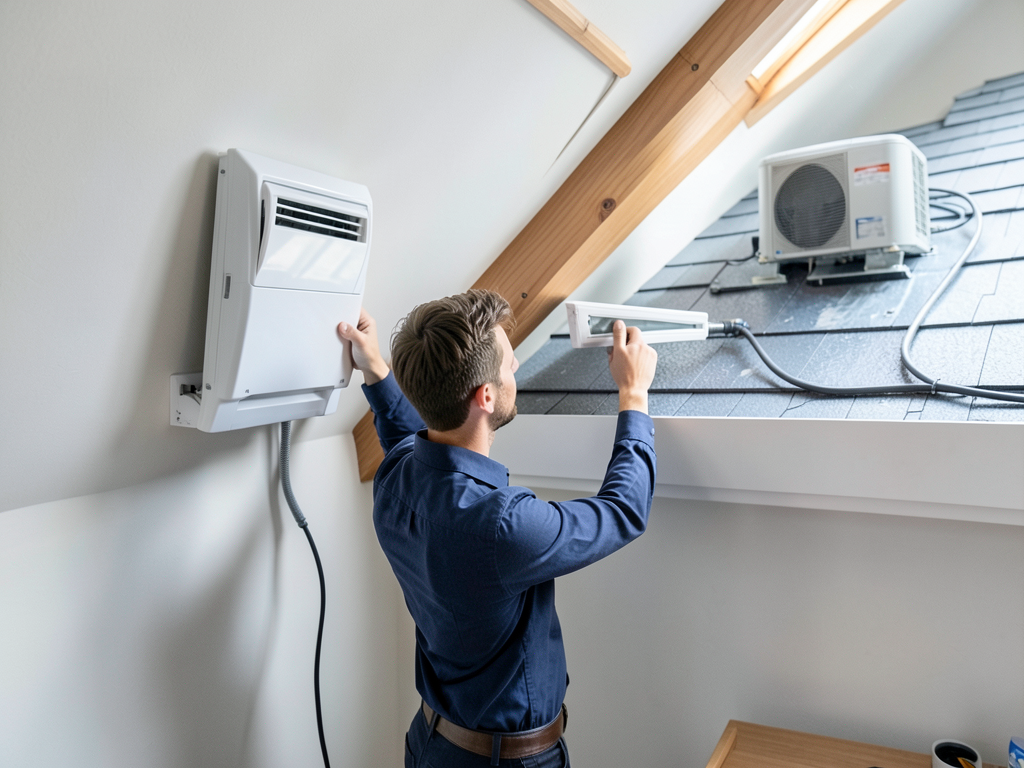
When insulation and ventilation improvements aren’t enough, a ductless mini-split system provides targeted cooling without extending existing ductwork. These systems consist of an outdoor compressor and one or more indoor air handlers connected by refrigerant lines.
Mini-splits offer several advantages for attic offices. They operate at 20-30% higher efficiency than central air systems because they avoid duct losses. Installation requires only a small hole for refrigerant lines and wiring, preserving your home’s structure. Most units include heat pump capability, providing year-round comfort.
Modern mini-splits feature advanced filtration that removes allergens and particulates, improving indoor air quality. Many units operate at sound levels below 25 decibels, quieter than a whisper. This makes them ideal for video calls and focused work. Look for units with SEER2 ratings of 18 or higher for optimal efficiency.
Portable Air Conditioners: A Temporary Solution
Portable AC units offer flexibility but come with limitations. Single-hose units exhaust hot air through a window, creating negative pressure that can draw hot air from other parts of the house. Dual-hose units perform better by using one hose for intake and another for exhaust, but they still struggle with efficiency compared to mini-splits.
The venting challenge is particularly relevant in Crestwood’s historic homes. Many windows are not designed for modern venting solutions, and some historic districts restrict exterior modifications. Creative solutions include venting through a ceiling tile into an attic space or using a dryer vent kit, though these approaches require careful planning.
Portable units work best as temporary solutions or for supplemental cooling. They typically provide 8,000-14,000 BTUs, suitable for small to medium attic offices. However, their noise levels often exceed 50 decibels, potentially interfering with phone calls and concentration.
Managing Humidity: The Hidden Challenge
Washington DC’s humidity creates a unique challenge. At 85°F and 70% relative humidity, the apparent temperature feels like 96°F. This moisture load often exceeds what standard cooling equipment can handle, leaving your space feeling clammy despite comfortable temperatures.
Standalone dehumidifiers can remove 20-70 pints of moisture per day, significantly improving comfort. However, they generate heat as a byproduct, potentially raising your room temperature by 2-3 degrees. The solution is to use a dehumidifier in conjunction with cooling equipment.
Some mini-split systems include dedicated dehumidification modes that optimize moisture removal without excessive cooling. These modes can reduce humidity by 10-15% while maintaining stable temperatures. For severe humidity problems, consider a whole-house dehumidifier integrated with your existing HVAC system.
Heat Load Calculations for Electronic Equipment
Modern home offices contain substantial heat-generating equipment. A typical setup might include:
- Desktop computer: 300-500 BTU/hr
- Multiple monitors: 150-300 BTU/hr total
- Router/modem: 50-100 BTU/hr
- Printer/scanner: 50-150 BTU/hr
- Laptop docking station: 30-80 BTU/hr
These heat sources add up quickly, especially in confined attic spaces. The heat load increases further when you add human occupants, typically contributing 250-400 BTU/hr per person.
Calculate your total heat load by adding equipment heat gain to the solar and infiltration heat. This calculation helps determine the cooling capacity you need. As a rule of thumb, add 600 BTU/hr for each occupant and 1,000 BTU/hr for each major heat-generating device.
Window Solutions for Heat Reduction
Windows represent a major heat gain pathway in attic offices. Low-emissivity (Low-E) window films can reduce solar heat gain by 50-80% while maintaining visibility. These films work by reflecting infrared radiation while allowing visible light to pass through.
Exterior shading provides even better performance. Awnings, exterior blinds, or solar screens can block up to 90% of solar radiation before it reaches the glass. While more expensive than window films, exterior shading also protects windows from UV damage and extends their lifespan.
For historic Crestwood homes, check local preservation guidelines before installing exterior shading. Many modifications require approval from the DC Historic Preservation Office. Interior solutions like cellular shades with reflective backing offer good performance while maintaining the home’s exterior appearance.
Radiant Barriers and Reflective Insulation
Radiant barriers can reduce attic heat gain by 20-40%. These reflective materials work by reflecting radiant heat rather than absorbing it. Installation typically involves stapling foil-faced material to the underside of roof rafters or laying it over existing insulation.
Reflective insulation combines radiant barrier properties with traditional insulation. These products sandwich a reflective layer between layers of foam or fiberglass, providing both conductive and radiant heat resistance. The effectiveness depends on proper installation with adequate air gaps.
In DC’s climate, radiant barriers work best when installed in conjunction with traditional insulation. The combination provides superior performance to either solution alone. However, radiant barriers require professional installation to avoid moisture trapping and ensure proper ventilation.
Energy Efficiency and Cost Considerations
Energy efficiency should factor into your cooling solution selection. Mini-splits with high SEER2 ratings may cost more upfront but provide significant operational savings. A unit with SEER2 20 versus SEER2 16 can save $100-200 annually in cooling costs.
Consider available incentives. Washington DC offers various energy efficiency rebates through Pepco, and federal tax credits may apply to qualifying equipment. These incentives can offset 10-30% of installation costs, improving the return on investment.
Calculate the payback period by comparing installation costs to projected energy savings. A $3,000 mini-split installation that saves $200 annually in cooling costs and $100 in heating costs achieves payback in approximately 7-10 years, after which you benefit from pure savings.
Professional Assessment and Installation
While many cooling solutions can be DIY projects, professional assessment ensures optimal performance. A qualified HVAC technician can perform a Manual J load calculation to determine your exact cooling requirements. This calculation considers your attic’s size, orientation, insulation levels, and heat-generating equipment.
Professional installation becomes crucial for systems requiring refrigerant handling. EPA regulations mandate certification for anyone working with refrigerants under Section 608 of the Clean Air Act. Improper installation can void warranties and create safety hazards. EPA Section 608 certification.
When selecting a contractor, verify their DC license and insurance. Ask about their experience with historic homes and attic conversions. Request references from similar projects in the Crestwood area. A qualified professional can identify potential issues like electrical capacity limitations or structural concerns before installation begins.
Maintenance for Long-Term Performance
Regular maintenance ensures your cooling solution operates efficiently. Clean or replace filters monthly during heavy use periods. Keep outdoor units clear of debris and vegetation. Check condensate drains for clogs that can cause water damage.
For mini-splits, schedule annual professional maintenance. This service includes checking refrigerant levels, cleaning coils, and verifying proper operation. Well-maintained systems operate 10-15% more efficiently than neglected units and typically last 15-20 years versus 10-12 years for poorly maintained equipment.
Monitor your system’s performance throughout the cooling season. Unusual noises, reduced cooling capacity, or increased energy consumption often indicate developing problems that are easier to address when caught early.
Creating Your Ideal Attic Workspace
The right cooling solution transforms your attic office from a seasonal afterthought to a year-round productive space. Consider your specific needs: Do you need absolute quiet for video calls? Is humidity control more important than temperature? Are you planning to expand your equipment setup? How to Choose the Right Air Conditioning Replacement for Your Foggy Bottom Townhouse.
Combine multiple strategies for optimal results. A mini-split system provides primary cooling, while thermal curtains reduce solar gain. A dehumidifier manages moisture, and smart power strips eliminate phantom heat loads. This layered approach addresses all aspects of attic comfort.
Remember that comfort extends beyond temperature. Good air quality, appropriate humidity levels, and quiet operation all contribute to a productive workspace. The investment in proper cooling pays dividends through improved comfort, productivity, and potentially increased home value.
Frequently Asked Questions
How much does it cost to cool an attic office without extending ductwork?
Costs vary widely based on the solution. DIY improvements like insulation and window film cost $200-1,000. Portable AC units run $300-800. Mini-split systems typically cost $2,500-5,000 installed, depending on capacity and features.
Can I install a mini-split system myself?
While technically possible, DIY mini-split installation is not recommended. These systems require refrigerant handling certification under EPA regulations, and improper installation can void warranties and create safety hazards. Professional installation ensures optimal performance and compliance with local codes.
How do I know what size cooling system I need?
A Manual J load calculation determines the exact cooling capacity required. This calculation considers your attic’s square footage, insulation levels, window orientation, and heat-generating equipment. Most attic offices require 9,000-18,000 BTU units, but professional assessment prevents oversizing or undersizing.
Ready to Transform Your Attic Office?
Don’t let heat and humidity compromise your productivity. Whether you need a quick DIY solution or a complete mini-split installation, professional guidance ensures you get the right system for your specific needs. Crestwood’s historic homes deserve solutions that preserve their character while providing modern comfort.
Call (771) 218-6322 today to schedule your attic office assessment. Our experienced technicians understand the unique challenges of Washington DC’s historic homes and can recommend the most effective cooling solutions for your space. Don’t wait for the next heat wave to make your attic unbearable.
Pick up the phone and call (771) 218-6322 before the next storm hits. We’ll help you create a comfortable, productive workspace that you can enjoy year-round.
Patriot HVAC serves Crestwood and all of Washington DC with expert heating and cooling solutions. Our team is ready to help you achieve the perfect attic office environment.
{
“@context”: “https://schema.org”,
“@type”: “BlogPosting”,
“headline”: “Keeping Your New Crestwood Attic Office Cool Without Extending Your Existing Ductwork”,
“description”: “Discover effective ways to cool your attic office in Washington DC without extending ductwork. Learn about mini-splits, insulation, and humidity control for Crestwood homes.”,
“wordCount”: 2250,
“datePublished”: “2026-05-10T11:28:00.000Z”,
“dateModified”: “2026-05-10T11:28:00.000Z”,
“inLanguage”: “en-US”,
“mainEntityOfPage”: {
“@type”: “WebPage”,
“@id”: “https://patriothvacwashingtondc.com”
},
“publisher”: {
“@type”: “LocalBusiness”,
“name”: “Patriot HVAC Washington DC”,
“url”: “https://patriothvacwashingtondc.com”
},
“author”: {
“@type”: “Organization”,
“name”: “Patriot HVAC Washington DC”,
“url”: “https://patriothvacwashingtondc.com”
},
“image”: {
“@type”: “ImageObject”,
“url”: “https://patriothvacwashingtondc.com/wp-content/uploads/2026/03/keeping-your-new-crestwood-attic-office-cool-witho-1.png”
}
}
{
“@context”: “https://schema.org”,
“@type”: “HVACBusiness”,
“name”: “Patriot HVAC Washington DC”,
“url”: “https://patriothvacwashingtondc.com”,
“address”: {
“@type”: “PostalAddress”,
“addressLocality”: “Washington DC”
},
“areaServed”: {
“@type”: “City”,
“name”: “Washington DC”
}
}
{
“@context”: “https://schema.org”,
“@type”: “FAQPage”,
“mainEntity”: [
{
“@type”: “Question”,
“name”: “How much does it cost to cool an attic office without extending ductwork?”,
“acceptedAnswer”: {
“@type”: “Answer”,
“text”: “Costs vary widely based on the solution. DIY improvements like insulation and window film cost $200-1,000. Portable AC units run $300-800. Mini-split systems typically cost $2,500-5,000 installed, depending on capacity and features.”
}
},
{
“@type”: “Question”,
“name”: “Can I install a mini-split system myself?”,
“acceptedAnswer”: {
“@type”: “Answer”,
“text”: “While technically possible, DIY mini-split installation is not recommended. These systems require refrigerant handling certification under EPA regulations, and improper installation can void warranties and create safety hazards. Professional installation ensures optimal performance and compliance with local codes.”
}
},
{
“@type”: “Question”,
“name”: “How do I know what size cooling system I need?”,
“acceptedAnswer”: {
“@type”: “Answer”,
“text”: “A Manual J load calculation determines the exact cooling capacity required. This calculation considers your attic’s square footage, insulation levels, window orientation, and heat-generating equipment. Most attic offices require 9,000-18,000 BTU units, but professional assessment prevents oversizing or undersizing.”
}
},
{
“@type”: “Question”,
“name”: “Ready to Transform Your Attic Office?”,
“acceptedAnswer”: {
“@type”: “Answer”,
“text”: “Don’t let heat and humidity compromise your productivity. Whether you need a quick DIY solution or a complete mini-split installation, professional guidance ensures you get the right system for your specific needs. Crestwood’s historic homes deserve solutions that preserve their character while providing modern comfort.”
}
}
]
}
{
“@context”: “https://schema.org”,
“@type”: “BreadcrumbList”,
“itemListElement”: [
{
“@type”: “ListItem”,
“position”: 1,
“name”: “Home”,
“item”: “https://patriothvacwashingtondc.com”
},
{
“@type”: “ListItem”,
“position”: 2,
“name”: “Blog”,
“item”: “https://patriothvacwashingtondc.com/blog”
},
{
“@type”: “ListItem”,
“position”: 3,
“name”: “Keeping Your New Crestwood Attic Office Cool Without Extending Your Existing Ductwork”
}
]
}
{
“@context”: “https://schema.org”,
“@type”: “Service”,
“serviceType”: “HVAC”,
“provider”: {
“@type”: “LocalBusiness”,
“name”: “Patriot HVAC Washington DC”,
“url”: “https://patriothvacwashingtondc.com”
},
“areaServed”: {
“@type”: “City”,
“name”: “Washington DC”
},
“description”: “Discover effective ways to cool your attic office in Washington DC without extending ductwork. Learn about mini-splits, insulation, and humidity control for Crestwood homes.”
}