Menu

Emergency Furnace Repair in Washington, D.C. | Same-Day Response When Your Heat Fails

When your furnace quits on a freezing D.C. night, you need a technician at your door fast. Patriot HVAC Washington DC dispatches certified emergency furnace repair teams 24/7 to restore heat and prevent frozen pipes before catastrophic damage occurs.

Slider Image 1
Slider Image 2
Slider Image 3
Slider Image 4
Slider Image 5
Slider Image 7
Slider Image 8
Slider Image 9
Slider Image 10
Slider Image 11

Why a Dead Furnace in Washington, D.C. Is a Race Against the Clock

Winter temperatures in Washington, D.C. regularly drop into the teens and twenties overnight. When your furnace fails during a cold snap, you have about four to six hours before exposed pipes in unheated crawl spaces begin to freeze. Historic row homes in Capitol Hill and older properties in Georgetown often have galvanized plumbing running through uninsulated basements. These pipes freeze faster than modern PEX systems.

A dead furnace also forces your family into unsafe decisions. Space heaters spike fire risk. Gas stoves used for heat produce carbon monoxide. Elderly residents and young children lose body heat faster than healthy adults. The Potomac River's proximity increases humidity levels even in winter, which makes the cold feel more penetrating and dangerous.

When you search for urgent heating repair at 2 a.m., you are not looking for information. You need a technician with a fully stocked van rolling toward your address. You need someone who understands that delayed 24/7 furnace service can mean burst pipes flooding finished basements or frozen heat exchangers cracking beyond repair. The difference between a two-hour response and a next-day callback can be thousands in secondary water damage.

Immediate heating system repair is not a luxury service in D.C. winters. It is essential infrastructure. A failed ignitor or tripped limit switch should not leave your family shivering under blankets waiting for sunrise. Patriot HVAC Washington DC keeps emergency heater repair crews on rotating standby because we know the stakes when the temperature falls and your furnace goes silent.

Why a Dead Furnace in Washington, D.C. Is a Race Against the Clock
How We Diagnose and Fix Your Furnace Under Emergency Conditions

How We Diagnose and Fix Your Furnace Under Emergency Conditions

Emergency furnace repair requires diagnostic precision under pressure. Our technicians arrive with thermal imaging cameras to identify heat loss patterns and multimeters to test voltage at the thermostat, transformer, and circuit board. Most homeowners assume their furnace is dead, but the actual failure point could be a faulty flame sensor, a stuck gas valve, or a pressure switch reading false negatives because of a blocked condensate drain.

We start by checking the thermostat's call for heat. If the thermostat sends 24 volts to the furnace but the blower does not engage, the issue sits downstream. We inspect the ignitor for cracks. Silicon nitride ignitors last longer than older silicon carbide models, but they still fail. A cracked ignitor glows but cannot reach the 1,800 degrees needed to open the gas valve. Replacing the ignitor takes 15 minutes.

If the ignitor glows and gas flows but the burners do not stay lit, the flame sensor is likely coated in carbon buildup. The sensor acts as a safety device. It confirms flame presence by detecting microamps of electric current. When corrosion blocks conductivity, the control board shuts off the gas valve within three seconds. We remove the sensor, clean it with fine-grit emery cloth, and reinstall it to proper clearance from the burner flame.

Cracked heat exchangers are rare in emergencies but catastrophic when they occur. We use a combustion analyzer to measure carbon monoxide levels in the flue and compare them to readings near the supply plenum. Elevated CO near the plenum indicates cracks allowing exhaust gases into your ductwork. That furnace gets red-tagged immediately. We explain your options for same-day replacement or temporary electric heat while you arrange financing.

What Happens When You Call for 24 Hour Furnace Repair

Emergency Furnace Repair in Washington, D.C. | Same-Day Response When Your Heat Fails
01

Emergency Dispatch and Arrival

You call (771) 218-6322 and speak to a live dispatcher, not an answering service. We collect your address, symptom description, and furnace age. A technician receives your job details within minutes and calls you with an estimated arrival time. Most District locations receive service within 90 minutes. Our vans carry replacement ignitors, flame sensors, capacitors, contactors, and gas valves for the most common furnace brands: Carrier, Trane, Lennox, Goodman, and Rheem.
02

Onsite Diagnosis and Repair

The technician examines your thermostat settings, checks your circuit breaker, and inspects the furnace for obvious issues like tripped limit switches or clogged air filters. Using diagnostic tools, he isolates the failed component. If the repair requires a part we carry, he completes the fix onsite and tests the furnace through a full heating cycle. If the repair requires a special-order part or your furnace is beyond economical repair, he explains your options clearly with no pressure.
03

Heat Restored and Safety Check

Before leaving, the technician measures supply air temperature at the register, confirms proper airflow, and checks for gas leaks at the valve and manifold connections. He tests the thermostat's ability to cycle the furnace on and off correctly. You receive a written invoice detailing the failure, the repair performed, and recommendations for preventing future breakdowns. Your home is warm again. Your pipes are safe. You can sleep knowing the furnace will run through the night.

Why D.C. Residents Trust Patriot HVAC Washington DC for Urgent Heating Repair

Washington, D.C. has strict mechanical codes enforced by the Department of Consumer and Regulatory Affairs. Any HVAC contractor working in the District must pull permits for equipment replacement and pass inspection for gas line connections, combustion venting, and electrical wiring. Patriot HVAC Washington DC maintains all required licensing and insurance to work legally in D.C., Maryland, and Northern Virginia. We know the local inspection process and schedule inspections promptly so your new furnace passes on the first attempt.

Our familiarity with D.C.'s housing stock matters during emergencies. Row homes in Shaw and Columbia Heights often have furnaces installed in tight basement mechanical rooms with limited access. Older homes in Chevy Chase and American University Park may still have gravity furnaces or octopus-style ductwork that requires custom adapter fittings. We have replaced furnaces in historic properties near Logan Circle where ductwork runs through walls that cannot be opened without damaging plaster medallions and crown molding. This experience translates to faster diagnosis and fewer surprises during emergency repairs.

We also understand the urgency gradient in D.C. neighborhoods. A furnace failure in a single-family home in Brookland is serious. A furnace failure in a fourplex near H Street affects multiple families and potentially triggers code violations if tenants report lack of heat to DCRA. Landlords and property managers call us because we respond immediately and document repairs thoroughly for compliance records.

Our emergency service vehicles carry enough inventory to fix 80 percent of furnace failures without leaving your property. We stock parts for both old and new systems because D.C.'s housing mix includes everything from 1920s boilers to last year's modulating furnaces. You will not wait three days for a part to ship while your family freezes.

What to Expect During Your Emergency Furnace Repair

Response Time and Availability

Patriot HVAC Washington DC operates true 24/7 emergency heating repair with technicians on call every night, weekend, and holiday. You will not be told to wait until Monday morning. We dispatch within minutes of your call and provide real-time arrival updates. Most customers in the District, Arlington, Alexandria, and Silver Spring see a technician within two hours. During extreme cold snaps when call volume spikes, we prioritize homes with elderly residents, young children, or medical equipment that requires climate control. We also fast-track calls involving frozen pipes or gas odors.

Transparent Diagnosis and Pricing

Before we perform any repair, the technician explains what failed, why it failed, and what the fix involves. You receive a written estimate that breaks down labor and parts separately. Emergency calls carry a dispatch fee that covers the first hour of diagnostic time. If you approve the repair, that fee applies toward the total bill. We do not use scare tactics or invent problems. If your furnace has multiple issues, we explain which repairs are urgent and which can wait. You make the final decision on what gets fixed tonight and what can be scheduled later.

Quality of Repair Work

We use OEM replacement parts whenever possible because aftermarket components have higher failure rates. Gas valves, pressure switches, and circuit boards are always OEM. For minor components like flame sensors and ignitors, we use high-quality aftermarket parts that meet or exceed manufacturer specifications. Every repair gets tested through multiple heating cycles before we leave. We measure combustion efficiency, check for gas leaks with electronic detectors, and confirm proper venting. If the furnace cannot be repaired safely, we explain why and discuss replacement options with same-day installation availability if needed.

Post-Repair Support and Maintenance

Emergency repairs come with a service warranty on both parts and labor. If the same component fails within the warranty period, we return at no charge to make it right. We also provide maintenance recommendations to prevent future breakdowns. Most furnace emergencies trace back to deferred maintenance like dirty filters restricting airflow or neglected flame sensors causing nuisance shutdowns. We offer annual maintenance agreements that include priority emergency dispatch, discounted repairs, and pre-season tune-ups before winter and summer. Customers on maintenance plans experience fewer emergency calls because we catch problems during routine service visits.

Frequently Asked Questions

You Have Questions,
We Have Answers

How much is an emergency furnace call? +

Emergency furnace service in Washington, D.C. typically costs between $100 and $300 for the diagnostic visit, with repairs charged separately. After-hours calls, weekends, and holidays carry premium rates. Many local companies waive the diagnostic fee if you approve the repair. The total cost depends on the problem: a simple igniter replacement differs from a cracked heat exchanger. During D.C.'s cold snaps, demand spikes and availability tightens. Ask for upfront pricing before work begins. Most reputable contractors offer financing options or payment plans to ease the immediate financial burden during an emergency.

What to do if you can't afford to fix your furnace? +

If you cannot afford immediate furnace repair in Washington, D.C., contact your utility provider first. Washington Gas and Pepco offer payment assistance programs for low-income households. The D.C. Department of Energy and Environment runs emergency heating assistance through the Low Income Home Energy Assistance Program. Many HVAC contractors offer financing through third-party lenders with flexible terms. You can also request a payment plan directly with the service provider. Space heaters can provide temporary relief, but use them safely. Do not ignore a broken furnace in winter. Freezing temperatures can burst pipes, creating a more expensive crisis.

What to do while waiting for furnace repair? +

While waiting for emergency furnace repair in Washington, D.C., close off unused rooms and focus heating efforts in occupied spaces. Use electric space heaters safely, keeping them away from curtains and never running them unattended. Reverse ceiling fans to push warm air downward. Open curtains on south-facing windows during daylight to capture solar heat. Dress in layers and use blankets. Check your thermostat batteries and circuit breaker before the technician arrives. If you smell gas or carbon monoxide, evacuate immediately and call 911. Keep pets and children in the warmest rooms. D.C.'s humidity can make cold feel worse.

What is the $5000 rule? +

The $5,000 rule is a decision-making guideline for furnace replacement. Multiply the age of your furnace by the estimated repair cost. If the total exceeds $5,000, replacement makes more financial sense than repair. For example, a 15-year-old furnace needing $400 in repairs equals $6,000, suggesting replacement. This rule accounts for diminishing efficiency and the likelihood of future breakdowns in aging equipment. In Washington, D.C., where furnaces work hard during cold winters, older systems lose efficiency and drive up utility bills. A new high-efficiency furnace offers better reliability and lower energy costs long-term.

What qualifies as an HVAC emergency? +

An HVAC emergency requires immediate professional response to protect safety or prevent property damage. Gas leaks, carbon monoxide detector alarms, and electrical burning smells demand instant action. A complete heating failure when outdoor temperatures drop below freezing qualifies as an emergency in Washington, D.C., especially with vulnerable occupants or risk of frozen pipes. Loud banging, screeching, or rumbling noises signal dangerous mechanical failure. Water leaking from your furnace can flood basements and damage foundations. Strange chemical odors or visible smoke require immediate shutdown and professional assessment. Do not attempt DIY repairs during emergencies. Call a licensed technician immediately.

What is the most expensive thing to fix on a furnace? +

Heat exchanger replacement is the most expensive furnace repair, often costing 40 to 60 percent of a new furnace price. This component transfers heat from combustion gases to your home's air. Cracks develop from thermal stress and age, allowing carbon monoxide to leak into living spaces. In Washington, D.C.'s older row homes and historic properties, original furnaces often have deteriorated heat exchangers. Replacement requires extensive labor, disassembly, and precision work. Most technicians recommend full furnace replacement instead, especially for units over 15 years old. A cracked heat exchanger is a safety hazard and cannot be repaired, only replaced.

How can I heat my house with a broken furnace? +

Heat your Washington, D.C. home temporarily using portable electric space heaters rated for indoor use. Place them on flat, hard surfaces away from foot traffic and flammable materials. Never use gas-powered generators, grills, or camp stoves indoors due to carbon monoxide risk. Layer clothing and use blankets. Close doors to unused rooms and hang heavy curtains to trap heat. Your oven can provide temporary warmth, but never leave it unattended. Reverse ceiling fans to push warm air down. Stay in one room together if possible. Freezing pipes are a serious concern in D.C.'s older housing stock, so keep cabinet doors open under sinks.

How to pay for a new furnace with no money? +

Finance a new furnace in Washington, D.C. through manufacturer rebates, utility incentives, and third-party lenders. Washington Gas offers rebates for high-efficiency equipment. The D.C. Sustainable Energy Utility provides financing for energy-efficient upgrades. Many HVAC contractors partner with lenders offering zero-percent financing for qualified buyers. Apply for a personal loan through your bank or credit union. Some contractors offer in-house payment plans. Check if you qualify for the federal Energy Efficient Home Improvement Credit. Non-profit organizations like Rebuilding Together DC assist low-income homeowners with emergency heating system replacement. Explore all options before winter hits hard.

Is it cheaper to fix a furnace or replace it? +

Repair your furnace if the unit is under 10 years old, the fix costs less than one-third of replacement, and breakdowns are infrequent. Replace when your furnace exceeds 15 years, requires repeated expensive repairs, or efficiency has dropped significantly. In Washington, D.C., where heating seasons are moderate but real, older furnaces waste energy and money. Modern high-efficiency units reduce utility bills by 20 to 40 percent. Calculate the payback period by dividing replacement cost by annual energy savings. Factor in improved comfort, reliability, and safety. A technician can assess your specific situation honestly.

What temperature is dangerously cold for a house? +

Indoor temperatures below 55 degrees Fahrenheit pose health risks and property damage threats. Hypothermia can occur at temperatures in the 50s, especially for infants, elderly residents, and those with health conditions. Water pipes freeze when home temperatures drop to 32 degrees or below, common in Washington, D.C.'s uninsulated basements and crawl spaces. Frozen pipes burst, causing thousands in water damage. Keep your thermostat at 55 degrees minimum if you must leave home during winter. If your furnace fails and indoor temperature drops toward 50 degrees, seek emergency repair immediately. Do not wait. Protect your family and property.

How D.C.'s Freeze-Thaw Cycles and Row Home Construction Increase Furnace Failure Risk

Washington, D.C. sits in a freeze-thaw zone where winter temperatures swing from the teens at night to the forties during the day. These temperature fluctuations stress furnace components harder than steady cold. The heat exchanger expands and contracts repeatedly, accelerating metal fatigue and increasing crack risk. Condensing furnaces are especially vulnerable because the secondary heat exchanger operates in a corrosive environment where acidic condensate accelerates rust. Row homes and attached properties common in Capitol Hill, Dupont Circle, and Mount Pleasant compound the problem because shared walls trap heat unevenly, causing some rooms to overheat while others stay cold. Homeowners compensate by adjusting the thermostat constantly, which short-cycles the furnace and wears out the ignitor and gas valve faster.

D.C. code requires annual inspections for rental properties, but many single-family homeowners skip furnace maintenance until something breaks. Patriot HVAC Washington DC has served District residents for years, building relationships with property managers in Penn Quarter, Navy Yard, and NoMa who need reliable 24-hour furnace repair for tenant emergencies. We understand that D.C. landlords face strict habitability requirements. When a tenant calls DCRA to report no heat, the property owner has 24 hours to restore service or face fines. We prioritize these calls because we know the regulatory stakes and the urgency of keeping tenants safe and compliant.
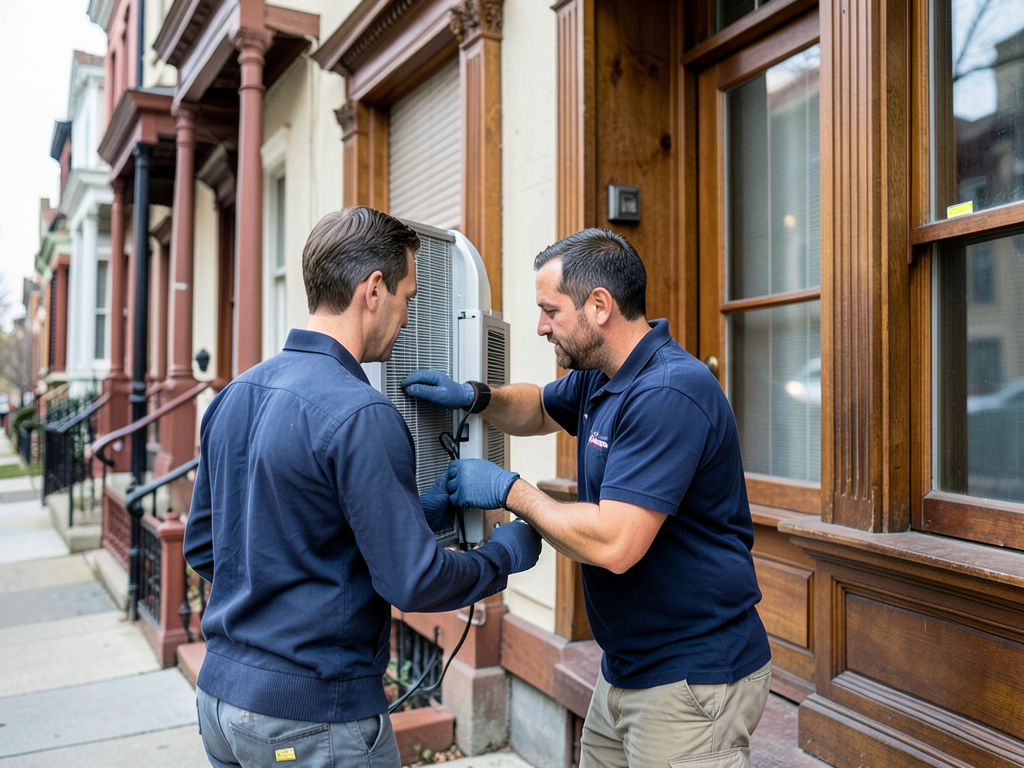
HVAC Services in The Washington DC Area

Easily locate Patriot HVAC and explore our service area on the map below. We are strategically positioned to provide prompt and efficient heating, ventilation, and air conditioning services across Washington D.C. and its neighboring communities. Whether you're seeking a quick repair or a new installation, our team is ready to serve your comfort needs.

Address:
Patriot HVAC Washington DC, 20 F St NW, Washington, DC, 20001

Additional Services We Offer

Our news updates

Latest Articles & News from The Blogs

The Best Air Filter Upgrades for Georgetown Homes with Sensitive Historic Woodwork Georgetown's Federal-style rowhouses and Victorian homes need special…

The Best Air Filter Upgrades for Georgetown Homes with Sensitive Historic Woodwork

The Best Air Filter Upgrades for Georgetown Homes with Sensitive Historic Woodwork Georgetown's Federal-style rowhouses and Victorian homes need special…

The Best Air Filter Upgrades for Georgetown Homes with Sensitive Historic Woodwork

The Best Air Filter Upgrades for Georgetown Homes with Sensitive Historic Woodwork Georgetown's historic rowhouses and Federal-style homes face a…

The Best Air Filter Upgrades for Georgetown Homes with Sensitive Historic Woodwork

The Best Air Filter Upgrades for Georgetown Homes with Sensitive Historic Woodwork Georgetown's historic rowhouses and Federal-style homes feature exquisite…

Contact Us

Do not spend another hour in the cold. Call Patriot HVAC Washington DC now at (771) 218-6322 for immediate emergency furnace repair. Our technicians are standing by with fully stocked vans ready to restore your heat and protect your home.