
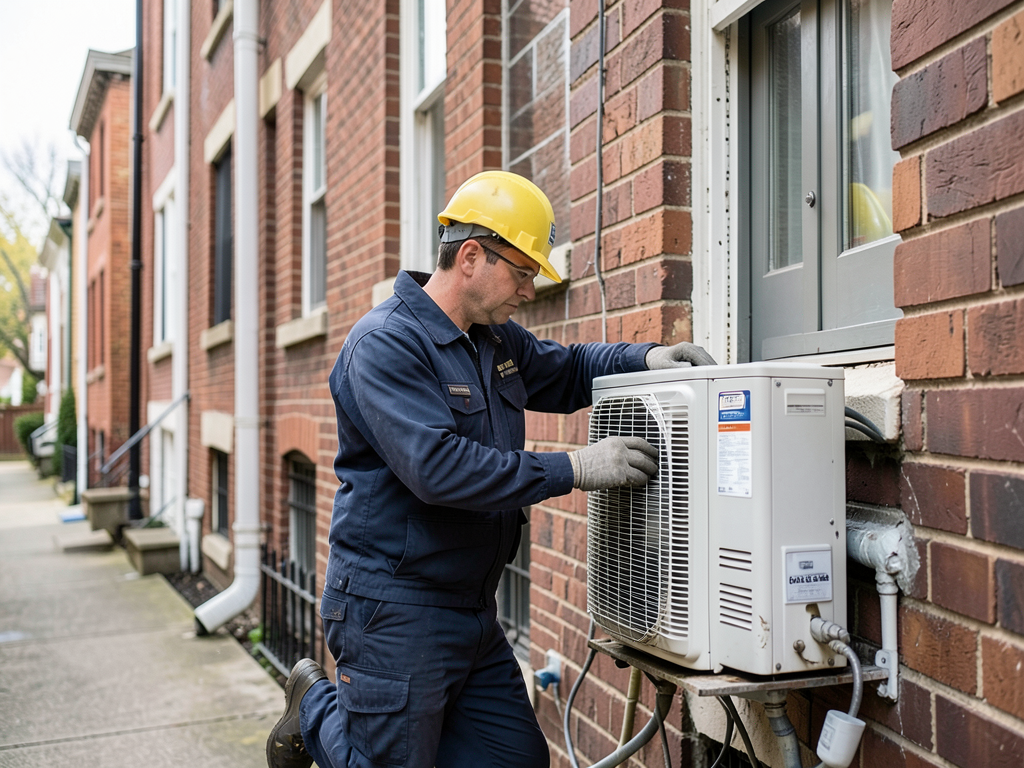
Finding Reliable Emergency AC Repair in Capitol Hill DC During a Heatwave
When your air conditioning stops working on a 95-degree day in Washington DC, every minute feels like an hour. Capitol Hill row houses with their thick brick walls can trap heat quickly, turning your home into an oven. This guide explains exactly what to do when your AC fails during a heatwave and how to get fast emergency service from technicians who understand Capitol Hill’s unique cooling challenges. DC Department of Licensing and Consumer Protection.
The first 30 minutes after your AC fails are critical. Your home’s temperature rises rapidly, and the humidity from the Potomac River basin makes the heat feel even worse. Most Capitol Hill homes built before 1950 weren’t designed with central air conditioning in mind, which means many systems are working overtime during DC’s humid summers.
Why Capitol Hill AC Systems Fail During Heatwaves
Capitol Hill’s historic row houses face specific cooling challenges that newer construction doesn’t have. Many homes have outdated electrical panels that can’t handle modern AC units. The narrow lots and historic preservation rules limit outdoor condenser placement. Some homes use high-velocity systems like SpacePak that require specialized knowledge to repair. EPA Section 608 Certification.
During a heatwave, AC systems work at maximum capacity. This creates several failure points. Refrigerant lines can develop leaks under pressure. Capacitors overheat and fail. Condenser coils get clogged with pollen and urban dust. The compressor, which is the heart of your system, can shut down from thermal overload.
Capitol Hill’s soil composition also plays a role. The area sits on Piedmont clay soil that retains moisture. This creates higher humidity levels inside homes, forcing AC systems to work harder to remove moisture from the air. When the system can’t keep up, it freezes or shuts down completely.
Common AC Emergencies We See in Capitol Hill
Frozen evaporator coils are the most frequent emergency call we get during heatwaves. You’ll notice reduced airflow and ice forming on the refrigerant lines. This happens when the system runs constantly without proper maintenance. The ice blocks airflow, and the system shuts down to prevent damage.
Refrigerant leaks are another common problem. Capitol Hill homes often have older copper lines that develop pinhole leaks from corrosion. When refrigerant levels drop, the system can’t cool effectively. You might hear a hissing sound or notice the AC running constantly without cooling.
Electrical failures increase during heat waves. The extra load on your system can cause capacitors to fail. These small but crucial components give your compressor and fan motors the initial jolt they need to start. When they fail, your system won’t start at all.
Condenser fan motor failures are also common. The outdoor unit’s fan cools the refrigerant. If it stops working, the system overheats and shuts down. You’ll notice the outdoor unit is completely silent or making a clicking sound.
Immediate Steps When Your AC Fails
Before calling for emergency service, take these steps to potentially save your system and speed up repairs. First, check your thermostat settings. Make sure it’s set to “cool” and the temperature is lower than the current room temperature. This sounds obvious, but thermostat batteries can die during power fluctuations.
Next, check your circuit breaker. AC systems draw a lot of power. If your breaker trips, the system won’t work. Look for a breaker labeled “AC,” “air conditioner,” or something similar. If it’s tripped, reset it once. If it trips again immediately, don’t reset it a second time. This indicates a serious electrical problem.
Check your air filter. A completely clogged filter can cause your system to freeze up. If the filter looks dirty or hasn’t been changed in months, replace it with a clean one. This might solve your problem if the system froze due to restricted airflow.
Inspect the outdoor unit. Make sure nothing is blocking the airflow around it. Remove any leaves, debris, or objects within two feet of the unit. Check if the fan is spinning when the system should be running. If it’s not, this confirms a fan motor or capacitor issue.
Finally, check for ice buildup. If you see ice on the refrigerant lines or outdoor unit, turn off the system immediately. Running a frozen system can destroy the compressor. Let it thaw for several hours before attempting to restart it.
What to Expect From Emergency AC Service in Capitol Hill
Emergency AC repair in Capitol Hill requires different skills than standard HVAC service. Technicians need to understand historic building constraints, limited outdoor space, and the specific challenges of row house cooling. They should arrive with parts common to Capitol Hill systems and know how to work in tight spaces.
Response time is critical during a heatwave. Most emergency calls require service within two hours. Technicians should diagnose the problem within 15-20 minutes and have a clear plan for repair. They should explain the issue in plain language and provide options for repair or replacement.
Cost transparency is essential. Emergency service typically includes a dispatch fee plus diagnostic time. The technician should explain all costs before starting work. Some companies charge extra for emergency calls, while others maintain standard pricing 24/7.
Quality emergency service includes a warranty on repairs. Most reputable companies offer at least a 90-day warranty on parts and labor for emergency repairs. This protects you if the same problem recurs shortly after service.
Capitol Hill’s Unique AC Challenges
Capitol Hill’s historic district designation creates specific constraints for AC installation and repair. The DC Historic Preservation Office requires that any exterior modifications maintain the building’s historic character. This means condenser units often must be placed in less-than-ideal locations or use specialized mounting systems.
Many Capitol Hill homes have limited outdoor space. Some properties share walls with neighbors, making outdoor unit placement challenging. Technicians must work around these constraints while ensuring proper airflow and noise reduction for both you and your neighbors.
The age of Capitol Hill’s housing stock means many systems are past their expected lifespan. Most AC units last 15-20 years. If your system is older than that, emergency repairs might be a temporary fix. A technician should help you understand when replacement makes more sense than repeated repairs.
Capitol Hill’s location near the National Mall and major government buildings means higher summer electrical demand. This can cause voltage fluctuations that stress AC components. Surge protection and proper electrical connections become even more important in this area.
Preventing Future AC Emergencies
Regular maintenance prevents most AC emergencies. A professional tune-up twice yearly keeps your system running efficiently. During maintenance, technicians check refrigerant levels, clean coils, test electrical components, and identify worn parts before they fail.
Changing your air filter monthly during cooling season is one of the most important things you can do. A clean filter improves airflow, reduces energy consumption, and prevents many common AC problems. Set a calendar reminder or use a smart thermostat that tracks filter life.
Keep the area around your outdoor unit clear. Maintain at least two feet of clearance on all sides. Trim bushes, remove leaves, and ensure nothing blocks airflow. This simple step can prevent many condenser failures.
Consider a smart thermostat. These devices can detect problems early by monitoring system performance. They can alert you to issues like reduced cooling capacity or unusual cycling patterns before you notice discomfort.
If your system is over 15 years old, start planning for replacement. New AC units are much more efficient and reliable. Planning ahead means you can schedule replacement during cooler weather rather than waiting for an emergency failure.
Understanding Emergency AC Repair Costs in Capitol Hill
Emergency AC repair costs vary based on the problem and time of service. A typical emergency call includes a dispatch fee of $75-$150 plus diagnostic time at $75-$125 per hour. Parts costs vary widely – a capacitor might cost $50-$150, while a compressor replacement could exceed $2,000.
Time of service affects pricing. Calls during evenings, weekends, or holidays often include premium rates. Some companies charge 1.5x to 2x standard rates for after-hours service. Others maintain flat emergency rates regardless of when you call.
The age and condition of your system affect repair costs. Older systems may require hard-to-find parts or have multiple failing components. A technician should provide a clear estimate before starting work and explain whether repair or replacement makes more economic sense.
Energy efficiency should factor into your decision. A new high-efficiency system might cost more upfront but save $30-$50 monthly on cooling costs. Over a few years, these savings can offset the higher initial cost compared to repairing an old, inefficient unit.
Choosing the Right Emergency AC Service in Capitol Hill
When selecting an emergency AC service, look for specific qualifications. The technician should be licensed by the District of Columbia Department of Licensing and Consumer Protection. They should carry EPA Section 608 certification for handling refrigerants. NATE certification indicates advanced technical training.
Local experience matters. Capitol Hill’s unique housing stock requires technicians who understand historic building constraints and common local system configurations. Ask how many Capitol Hill homes they service annually. Experience with high-velocity systems, ductless mini-splits, and historic retrofits is valuable.
Check reviews specifically for emergency service. Look for comments about response time, diagnostic accuracy, and repair quality. Reviews mentioning Capitol Hill or specific nearby landmarks indicate genuine local service.
Insurance and bonding protect you if something goes wrong. The company should carry general liability insurance and workers’ compensation. This protects you from liability if a technician is injured while working on your property.
Transparent pricing is non-negotiable. The company should provide clear pricing information before sending a technician. Avoid companies that refuse to discuss pricing over the phone or pressure you into immediate decisions.
Capitol Hill Service Area Specifics
Our emergency AC service covers all of Capitol Hill, including the areas near Eastern Market, Lincoln Park, Stanton Park, and the Navy Yard. We respond to calls from zip codes 20002, 20003, and 20003. Our technicians know the quickest routes through Capitol Hill’s narrow streets and can navigate the area’s parking challenges.
We understand the specific needs of homes near major landmarks. Properties near the Capitol or Library of Congress often have unique electrical service requirements. Homes near Eastern Market may have different cooling needs than those closer to the Anacostia River.
Traffic patterns affect response times. Capitol Hill’s proximity to major government buildings means rush hour can significantly impact travel times. Our dispatch system accounts for current traffic conditions to provide accurate arrival estimates.
Weather patterns in Capitol Hill differ slightly from other DC areas. The proximity to the Anacostia River and National Mall can create localized humidity effects. Our technicians adjust their diagnostic approach based on these micro-climate factors.
Emergency AC Repair vs. Replacement Decision Guide
Deciding between emergency repair and replacement depends on several factors. System age is the primary consideration. If your AC is over 15 years old and requires expensive repairs, replacement often makes more sense financially.
Repair costs matter too. If repairs will cost more than 50% of a new system’s price, replacement is usually the better long-term investment. New systems offer better efficiency, reliability, and warranty coverage.
Energy costs play a role. Older systems often operate at 8-10 SEER efficiency. New systems start at 14 SEER and go much higher. The monthly energy savings can offset the higher upfront cost over time.
Comfort level is important. If your system struggles to cool your home even when working properly, replacement might be the best solution. New systems provide more consistent temperatures and better humidity control.
Environmental considerations matter to many Capitol Hill residents. Newer systems use more environmentally friendly refrigerants and operate more efficiently, reducing your carbon footprint.
Frequently Asked Questions
How quickly can emergency AC service arrive in Capitol Hill?
Most emergency AC calls in Capitol Hill receive service within 2 hours. Traffic and time of day affect response times. Calls during peak hours or extreme weather may take slightly longer. We prioritize emergency calls based on severity and arrival time.
What should I do while waiting for the AC technician?
Close blinds and curtains to block sunlight. Use fans to circulate air. Stay hydrated and avoid strenuous activity. Move to the lowest level of your home if possible, as heat rises. These steps help manage comfort until repairs are completed.
How much does emergency AC repair cost in Capitol Hill?
Emergency AC repair typically costs $150-$500 for common issues, plus parts. Dispatch fees range from $75-$150. Complex repairs like compressor replacement can exceed $1,500. We provide clear estimates before starting any work.
Can I prevent AC emergencies during heatwaves?
Regular maintenance prevents most emergencies. Change filters monthly, keep outdoor units clear, and schedule professional tune-ups twice yearly. Consider upgrading old systems before peak cooling season. These steps significantly reduce breakdown risk.
What brands of AC systems do you service in Capitol Hill?
We service all major AC brands including Carrier, Trane, Lennox, Rheem, Goodman, and York. Our technicians carry common parts for these brands and can source specialized components quickly for Capitol Hill’s unique systems.
Don’t Wait Until It’s Too Late
AC failure during a DC heatwave isn’t just uncomfortable – it can be dangerous, especially for elderly residents, young children, and those with health conditions. The humidity in Capitol Hill makes heat feel even more oppressive, and homes can reach dangerous temperatures within hours.
If your AC isn’t cooling properly or has stopped working completely, don’t wait for the problem to worsen. Early intervention often means simpler, less expensive repairs. A small refrigerant leak or failing capacitor is much easier to fix than a destroyed compressor.
Capitol Hill’s unique housing stock requires technicians who understand historic building constraints and common local system configurations. Generic HVAC service often misses the specific challenges of row house cooling. You need someone who knows how to work in tight spaces, navigate historic preservation rules, and service the specific systems common in this area.
Remember that emergency AC repair is about more than just restoring comfort. It’s about protecting your home from heat damage, preventing mold growth in our humid climate, and ensuring your family’s safety during extreme weather events.
When your AC fails during a Capitol Hill heatwave, every minute counts. Don’t waste time searching for help or waiting for a technician who doesn’t understand your home’s unique needs. Call the experts who know Capitol Hill inside and out.
Call (771) 218-6322 now for emergency AC repair in Capitol Hill. Our technicians are standing by to restore your comfort and protect your home from the summer heat.
We serve all of Capitol Hill including zip codes 20002, 20003, and 20003. Our response time averages 90 minutes or less, and we carry common parts to complete most repairs on the first visit. Don’t suffer through another hour of heat – call now and let our Capitol Hill AC experts solve your cooling emergency.
{
“@context”: “https://schema.org”,
“@type”: “BlogPosting”,
“headline”: “Finding Reliable Emergency AC Repair in Capitol Hill DC During a Heatwave”,
“description”: “Capitol Hill residents need fast, reliable emergency AC repair during DC heatwaves. Learn what to do when your system fails and how to get help fast.”,
“wordCount”: 2481,
“datePublished”: “2026-02-11T12:11:00.000Z”,
“dateModified”: “2026-02-11T12:11:00.000Z”,
“inLanguage”: “en-US”,
“mainEntityOfPage”: {
“@type”: “WebPage”,
“@id”: “https://patriothvacwashingtondc.com”
},
“publisher”: {
“@type”: “LocalBusiness”,
“name”: “Patriot HVAC Washington DC”,
“url”: “https://patriothvacwashingtondc.com”
},
“author”: {
“@type”: “Organization”,
“name”: “Patriot HVAC Washington DC”,
“url”: “https://patriothvacwashingtondc.com”
},
“image”: {
“@type”: “ImageObject”,
“url”: “https://patriothvacwashingtondc.com/wp-content/uploads/2026/03/finding-reliable-emergency-ac-repair-in-capitol-hi-1-4.png”
}
}
{
“@context”: “https://schema.org”,
“@type”: “HVACBusiness”,
“name”: “Patriot HVAC Washington DC”,
“url”: “https://patriothvacwashingtondc.com”,
“address”: {
“@type”: “PostalAddress”,
“addressLocality”: “Washington DC”
},
“areaServed”: {
“@type”: “City”,
“name”: “Washington DC”
}
}
{
“@context”: “https://schema.org”,
“@type”: “FAQPage”,
“mainEntity”: [
{
“@type”: “Question”,
“name”: “How quickly can emergency AC service arrive in Capitol Hill?”,
“acceptedAnswer”: {
“@type”: “Answer”,
“text”: “Most emergency AC calls in Capitol Hill receive service within 2 hours. Traffic and time of day affect response times. Calls during peak hours or extreme weather may take slightly longer. We prioritize emergency calls based on severity and arrival time.”
}
},
{
“@type”: “Question”,
“name”: “What should I do while waiting for the AC technician?”,
“acceptedAnswer”: {
“@type”: “Answer”,
“text”: “Close blinds and curtains to block sunlight. Use fans to circulate air. Stay hydrated and avoid strenuous activity. Move to the lowest level of your home if possible, as heat rises. These steps help manage comfort until repairs are completed.”
}
},
{
“@type”: “Question”,
“name”: “How much does emergency AC repair cost in Capitol Hill?”,
“acceptedAnswer”: {
“@type”: “Answer”,
“text”: “Emergency AC repair typically costs $150-$500 for common issues, plus parts. Dispatch fees range from $75-$150. Complex repairs like compressor replacement can exceed $1,500. We provide clear estimates before starting any work.”
}
},
{
“@type”: “Question”,
“name”: “Can I prevent AC emergencies during heatwaves?”,
“acceptedAnswer”: {
“@type”: “Answer”,
“text”: “Regular maintenance prevents most emergencies. Change filters monthly, keep outdoor units clear, and schedule professional tune-ups twice yearly. Consider upgrading old systems before peak cooling season. These steps significantly reduce breakdown risk.”
}
},
{
“@type”: “Question”,
“name”: “What brands of AC systems do you service in Capitol Hill?”,
“acceptedAnswer”: {
“@type”: “Answer”,
“text”: “We service all major AC brands including Carrier, Trane, Lennox, Rheem, Goodman, and York. Our technicians carry common parts for these brands and can source specialized components quickly for Capitol Hill’s unique systems.”
}
}
]
}
{
“@context”: “https://schema.org”,
“@type”: “BreadcrumbList”,
“itemListElement”: [
{
“@type”: “ListItem”,
“position”: 1,
“name”: “Home”,
“item”: “https://patriothvacwashingtondc.com”
},
{
“@type”: “ListItem”,
“position”: 2,
“name”: “Blog”,
“item”: “https://patriothvacwashingtondc.com/blog”
},
{
“@type”: “ListItem”,
“position”: 3,
“name”: “Finding Reliable Emergency AC Repair in Capitol Hill DC During a Heatwave”
}
]
}
{
“@context”: “https://schema.org”,
“@type”: “Service”,
“serviceType”: “HVAC”,
“provider”: {
“@type”: “LocalBusiness”,
“name”: “Patriot HVAC Washington DC”,
“url”: “https://patriothvacwashingtondc.com”
},
“areaServed”: {
“@type”: “City”,
“name”: “Washington DC”
},
“description”: “Capitol Hill residents need fast, reliable emergency AC repair during DC heatwaves. Learn what to do when your system fails and how to get help fast.”
}