
Menu

Heat Pump Repair & Installation in Washington, D.C. | Year-Round Comfort in the Capital's Four-Season Climate

Patriot HVAC Washington DC delivers expert heat pump service designed for the District's temperature swings, from humid summers to freezing winters, keeping your home or business efficient through every season.

Slider Image 1
Slider Image 2
Slider Image 3
Slider Image 4
Slider Image 5
Slider Image 7
Slider Image 8
Slider Image 9
Slider Image 10
Slider Image 11

Why Heat Pumps Fail Faster in Washington's Humid, Four-Season Climate

Washington, D.C. demands more from heat pumps than most climates. Summer humidity hovers above 70 percent, forcing your system to work overtime removing moisture while cooling. Winter temperatures drop into the teens, pushing heat pumps to their thermal limits. Spring and fall bring rapid temperature swings that cycle your compressor on and off constantly, accelerating wear on reversing valves and contactors.

The District's older housing stock compounds these problems. Row homes and pre-war buildings often lack proper airflow, creating pressure imbalances that strain heat pump components. Clay soil beneath many D.C. neighborhoods shifts with seasonal moisture changes, cracking concrete pads and misaligning outdoor units. You hear the grinding. You notice ice building up on the outdoor coil in January. Your energy bills climb even though you have not changed your habits.

Heat pump replacement becomes necessary when compressor failure occurs, but emergency heat pump repair can address many issues before total system breakdown. Refrigerant leaks, failed capacitors, and stuck reversing valves account for most service calls in the metro area. Heat pump installers who understand the District's specific challenges know how to size systems for both the cooling load of August and the heating demand of February. Heat pump system installation requires accounting for ductwork limitations in historic properties and selecting models that handle humidity without short cycling.

When your heat pump struggles to maintain temperature or runs constantly without delivering comfort, the problem will not resolve itself. D.C.'s climate guarantees system stress.

Why Heat Pumps Fail Faster in Washington's Humid, Four-Season Climate
How We Diagnose and Fix Heat Pump Problems Correctly

How We Diagnose and Fix Heat Pump Problems Correctly

Heat pump service starts with testing under load, not just checking static pressures. We measure superheat and subcooling while your system runs in both heating and cooling modes. This reveals compressor efficiency, refrigerant charge accuracy, and metering device function. Most companies check voltage and call it done. We measure amp draw on every component, compare it to nameplate specs, and identify failing parts before they leave you without heating or cooling.

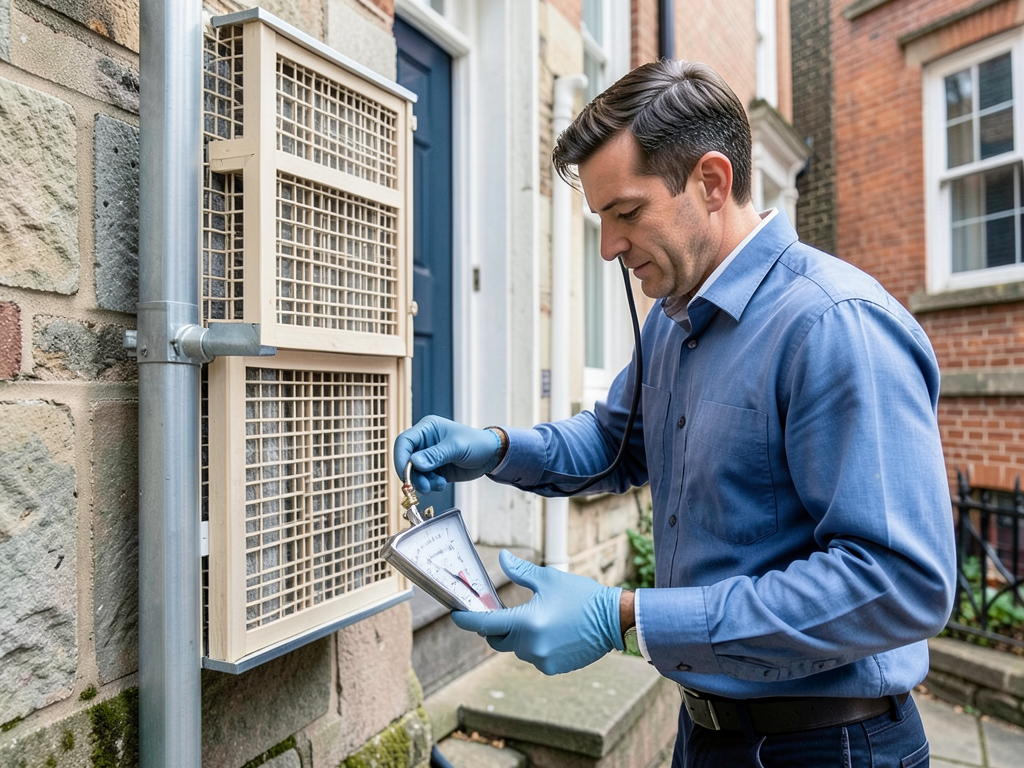
Refrigerant leaks require more than topping off the charge. We use nitrogen pressure tests and electronic leak detectors to find pinhole leaks in evaporator coils and service valves. D.C.'s temperature extremes cause thermal expansion and contraction that loosens flare fittings and cracks brazed joints. We repair leaks properly, pull a vacuum to remove moisture and non-condensables, then charge to manufacturer specifications using subcooling or superheat method based on your metering device type.

Reversing valve problems show up as a system that heats when you want cooling or vice versa. We test solenoid coil resistance, check for 24-volt signal from the thermostat, and verify the valve shifts smoothly. Sometimes the issue is a failed defrost board misreading coil temperature sensors, keeping the valve energized. We replace the actual failed component instead of throwing parts at the problem.

For heat pump replacement, we perform Manual J load calculations specific to your building envelope, insulation levels, and window efficiency. Oversized units short cycle and fail to dehumidify. Undersized units run constantly and cannot keep up during temperature extremes. We match equipment capacity to your actual needs, select models with appropriate HSPF ratings for D.C.'s heating season, and install with proper refrigerant line sizing and condensate management.

What Happens During Your Heat Pump Service Call

Heat Pump Repair & Installation in Washington, D.C. | Year-Round Comfort in the Capital's Four-Season Climate
01

System Performance Testing

We start by running your heat pump through complete heating and cooling cycles while monitoring temperatures, pressures, and electrical consumption. Digital manifold gauges track refrigerant state in real time. Infrared thermometers measure supply and return air temperature splits. Clamp-on ammeters verify compressor, fan motor, and auxiliary heat strip amp draw matches specifications. This baseline data reveals whether your system operates within design parameters or needs correction.
02

Component-Level Diagnosis

After identifying performance issues, we test individual components for failure. Capacitors get checked for microfarad rating and voltage handling. Contactor points are inspected for pitting and resistance. Reversing valve solenoids are tested for proper coil resistance. Defrost sensors and boards are verified against actual coil temperatures. Blower motors are evaluated for bearing noise and proper speed in each fan setting. We find the actual problem, not just the symptom.
03

Repair and Verification

Once we identify failed parts, we replace them with OEM or equivalent quality components rated for your climate. After repairs, we retest the entire system under load. Refrigerant charge is verified using superheat or subcooling method. Airflow is measured at supply registers. Temperature differential is confirmed across the indoor coil. You get documentation showing before and after performance data. Your system either works right or we keep diagnosing until it does.

Why Washington Residents Trust Patriot HVAC for Heat Pump Service

The District's building codes require specific installation practices that many contractors ignore. Heat pumps installed in row homes must account for shared wall construction and limited outdoor space for condenser placement. Systems serving multi-level townhouses need proper refrigerant line sizing to handle vertical runs up to 30 feet. We follow D.C. code requirements for disconnect placement, condensate disposal, and electrical connections because failed inspections delay occupancy and cost you money.

Historic districts in Georgetown, Capitol Hill, and Dupont Circle have additional restrictions on outdoor unit visibility and noise levels. We help navigate Historic Preservation Review Board requirements, selecting equipment that meets sound ordinances and positioning condensers to minimize visual impact. Some properties require split systems with concealed air handlers instead of traditional outdoor units visible from the street.

Our heat pump installers understand the mechanical limitations of older buildings. Many D.C. homes have undersized electrical panels that cannot support heat strip auxiliary heating. We calculate heat pump heating capacity at 17-degree outdoor temperature, the coldest design condition for the District, and verify your electrical service can handle the load. If not, we recommend cold climate heat pumps that maintain capacity down to negative temperatures without relying on electric resistance heat.

Patriot HVAC maintains relationships with local suppliers who stock parts for common heat pump brands installed throughout the metro area. When your Carrier, Trane, or Lennox system fails on a weekend, we have access to compressors, reversing valves, and control boards without waiting for Monday delivery. Emergency heat pump repair means restoring comfort quickly, not scheduling you for next week.

We work in every D.C. neighborhood from Shaw to Spring Valley. Your local challenges are problems we solve daily.

What to Expect from Professional Heat Pump Service

Response Times and Availability

Emergency heat pump repair gets priority scheduling when your system fails completely. We dispatch technicians within hours for no-heat or no-cool situations during temperature extremes. Standard service calls for performance issues or maintenance get scheduled within 48 hours. We arrive in a fully stocked van with diagnostic tools, common replacement parts, and refrigerant to complete most repairs in a single visit. You receive a call 30 minutes before arrival so you can plan your day. Evening and weekend appointments accommodate work schedules without forcing you to take time off.

Diagnostic Process and Transparency

Heat pump service begins with a complete performance evaluation before we recommend repairs. You get a written assessment explaining what failed, why it failed, and what fixes are necessary versus optional. We show you failed parts, explain how they function, and demonstrate the problem when possible. Repair estimates include parts and labor costs broken out clearly. For heat pump replacement decisions, we provide efficiency comparisons and projected energy cost differences between repair and replacement. You make informed decisions based on facts, not pressure.

Quality of Work and Code Compliance

Heat pump system installation meets National Electric Code requirements, manufacturer specifications, and D.C. building codes. Refrigerant lines are sized per ACCA Manual S standards based on actual line length and elevation change. We pull required permits for system replacements and ensure inspections pass on first attempt. Condensate drains get properly trapped and piped to code-approved disposal points. Electrical disconnects are installed within sight of the outdoor unit. Ductwork modifications use proper gauge metal and sealed connections. Your system works correctly because we install it correctly.

Maintenance and Long-Term Support

Scheduled maintenance extends heat pump life and prevents emergency breakdowns. Twice-yearly service includes cleaning coils, checking refrigerant charge, testing electrical components, lubricating motors, and verifying defrost operation. We track system performance over time to identify degradation before failure occurs. Filter replacement reminders help maintain proper airflow. When repairs become frequent or costly, we provide honest assessments about whether continued repair makes financial sense or heat pump replacement is the smarter choice. You get objective advice based on your situation, not our sales goals.

Frequently Asked Questions

You Have Questions,
We Have Answers

What is the average cost of a heat pump installation? +

Heat pump installation costs vary based on system size, efficiency rating, and your home's existing ductwork. In Washington, D.C., expect total project costs to include equipment, labor, refrigerant lines, electrical work, and permits. Ductless mini-split systems differ in pricing from ducted units. Older homes near Capitol Hill or Georgetown often require additional electrical upgrades to handle modern heat pump loads. High-efficiency models cost more upfront but lower utility bills during humid D.C. summers and cold winters. Get multiple quotes that itemize equipment specifications, SEER2 ratings, and warranty coverage to compare value.

What is the $5000 rule for HVAC? +

The $5000 rule helps you decide between repair and replacement for aging HVAC equipment. Multiply your system's age by the repair estimate. If the result exceeds $5000, replacement makes better financial sense. For example, a 12-year-old heat pump needing $450 in repairs equals $5400, suggesting replacement. In Washington, D.C., factor in rising energy costs and the Inflation Reduction Act rebates when applying this rule. Older systems operate less efficiently during our humid summers, driving up electric bills. This guideline provides a rational framework but consider efficiency gains and remaining lifespan too.

What is the average labor cost to install a heat pump? +

Labor costs for heat pump installation depend on project complexity, system type, and existing infrastructure. In Washington, D.C., labor includes refrigerant line installation, electrical connections, ductwork modifications, thermostat wiring, and startup testing. Ductless mini-split installations require different labor than replacing ducted systems. Homes in historic districts may need additional permitting and inspection time. Complex jobs involving electrical panel upgrades or extensive ductwork changes increase labor hours. Quality installation directly affects system efficiency and lifespan, so prioritize experienced technicians familiar with D.C. building codes over the lowest bid.

What is the most common problem with heat pumps? +

Refrigerant leaks and reversing valve failures top the list of heat pump problems. In Washington, D.C., high humidity accelerates coil corrosion, creating pinhole leaks that reduce heating and cooling capacity. The reversing valve switches between heating and cooling modes. When it fails, your system gets stuck in one mode. Frozen outdoor coils occur during winter when defrost cycles malfunction. Dirty air filters restrict airflow, forcing the compressor to work harder. Electrical issues from power surges during summer storms damage capacitors and contactors. Regular maintenance catches these problems before they escalate into complete system failures.

What is the average lifespan of a heat pump? +

Heat pumps last 10 to 15 years with proper maintenance in Washington, D.C. climate conditions. Our humid summers and variable winters stress components more than moderate climates. Systems running year-round for both heating and cooling wear faster than furnace-AC combinations used seasonally. Coastal moisture near the Potomac accelerates metal corrosion on outdoor units. Annual maintenance including refrigerant checks, coil cleaning, and electrical testing extends lifespan. Quality installation matters. Undersized or oversized systems cycle frequently, wearing compressors prematurely. Units protected from direct weather exposure and maintained professionally reach the 15-year mark more often.

How much does a heat pump cost for a 2000 square foot home? +

A 2000 square foot home in Washington, D.C. needs a properly sized heat pump based on insulation, window quality, ceiling height, and sun exposure. Older row houses in Shaw or Columbia Heights with poor insulation require larger capacity than newer construction. Total project costs include the outdoor condenser, indoor air handler, ductwork modifications, electrical work, refrigerant lines, permits, and labor. High-efficiency models cost more but perform better during July humidity and January cold snaps. Ductless mini-split systems price differently than central ducted units. Get a Manual J load calculation to ensure proper sizing.

Is a new HVAC system tax deductible in 2025? +

The Inflation Reduction Act offers tax credits for qualifying heat pump installations through 2032. You can claim 30% of equipment and installation costs, up to specific limits for Energy Star certified systems. Washington, D.C. residents may qualify for additional local utility rebates through Pepco or Washington Gas. These incentives stack with federal credits. Income-qualified households access enhanced rebates covering larger portions of installation costs. Ductless mini-splits, central heat pumps, and heat pump water heaters qualify under different categories. Consult a tax professional about your specific situation and save all installation receipts and manufacturer certification documents.

What is the 3 minute rule for AC? +

The 3 minute rule prevents compressor damage by allowing refrigerant pressure to equalize before restarting. When you shut off your AC or heat pump, high and low pressure sides need time to balance. Restarting too quickly forces the compressor to start against high pressure, causing electrical stress and potential failure. Most modern systems include delay timers that enforce this waiting period automatically. In Washington, D.C., power flickers during summer thunderstorms can cause rapid cycling. If your breaker trips, wait at least 3 minutes before resetting. This simple practice extends compressor lifespan significantly.

What is the best month to buy an HVAC system? +

October and November offer the best pricing for heat pump installations in Washington, D.C. Demand drops after cooling season ends and before heating emergencies begin. Contractors offer off-season discounts to keep crews busy. You avoid the premium pricing and long wait times of July heat waves or January cold snaps. Spring also works, particularly March and April before humidity arrives. Buying during peak summer or winter means paying more and waiting longer for installation. Planning ahead lets you research systems, compare quotes, and schedule installation when technicians have availability for careful, unhurried work.

Why don't contractors like heat pumps? +

Some contractors resist heat pumps due to unfamiliarity with newer refrigerants, installation techniques, and cold-climate models. Traditional HVAC training focused on separate furnace and AC systems. Heat pumps require understanding refrigerant circuits, reversing valves, and defrost cycles. In Washington, D.C., older technicians trained on gas furnaces may prefer familiar equipment. Quality heat pump installation demands precise refrigerant charging and airflow balancing. Poor installations generate callbacks that hurt profitability. Forward-thinking contractors embrace heat pumps because they solve heating and cooling with one efficient system, meeting rising demand from homeowners prioritizing efficiency and electrification.

How D.C.'s Humidity and Temperature Swings Accelerate Heat Pump Wear

Washington sits at the intersection of humid subtropical and humid continental climate zones. Summer dew points regularly exceed 70 degrees, forcing heat pumps to remove gallons of moisture daily while cooling. This constant latent load stresses compressors and evaporator coils. Winter brings Arctic air masses that drop temperatures into the teens, pushing heat pumps below their rated capacity and triggering auxiliary heat. Spring and fall temperature swings of 30 degrees in 24 hours cycle systems on and off repeatedly, wearing contactors and reversing valves faster than stable climates. Heat pump installers in temperate regions cannot appreciate these demands. D.C. requires equipment and service approaches specific to four-season stress.

The District's housing diversity means heat pump service cannot follow a one-size approach. Victorian row homes in Columbia Heights have different ductwork constraints than 1960s ramblers in Friendship Heights. Condos in Penn Quarter high-rises use packaged terminal heat pumps with different service requirements than single-family splits in Chevy Chase. Historic properties require sensitivity to preservation standards while meeting modern efficiency expectations. Patriot HVAC has worked in every building type across all eight wards. We understand Advisory Neighborhood Commission concerns, condo association restrictions, and landlord-tenant maintenance responsibilities. Local expertise means knowing who to call at DCRA when permits get delayed and which suppliers stock obsolete parts for older buildings.
HVAC Services in The Washington DC Area

Easily locate Patriot HVAC and explore our service area on the map below. We are strategically positioned to provide prompt and efficient heating, ventilation, and air conditioning services across Washington D.C. and its neighboring communities. Whether you're seeking a quick repair or a new installation, our team is ready to serve your comfort needs.

Address:
Patriot HVAC Washington DC, 20 F St NW, Washington, DC, 20001

Additional Services We Offer

Our news updates

Latest Articles & News from The Blogs

Integrating Your HVAC System with a Full Smart Home Setup in Brentwood Smart home technology is transforming how Washington DC…

Integrating Your HVAC System with a Full Smart Home Setup in Brentwood

Integrating Your HVAC System with a Full Smart Home Setup in Brentwood Smart home technology is transforming how Washington DC…

Keeping your piano and hardwood floors safe from dry winter air in Foxhall Village

Keeping your piano and hardwood floors safe from dry winter air in Foxhall Village Winter in Washington DC turns Foxhall…

What That Burning Dust Smell Means When You Turn Your Heat On in Colonial Village

What That Burning Dust Smell Means When You Turn Your Heat On in Colonial Village The first time you fire…

Contact Us

Your comfort cannot wait when heat pumps fail. Call Patriot HVAC Washington DC at (771) 218-6322 for same-day emergency heat pump repair or schedule heat pump system installation with D.C.'s climate experts. We diagnose problems accurately and fix them right the first time.